




REDWAY BATTERY / KNOWLEDGE
How Do You Equalize Charge Forklift Battery?
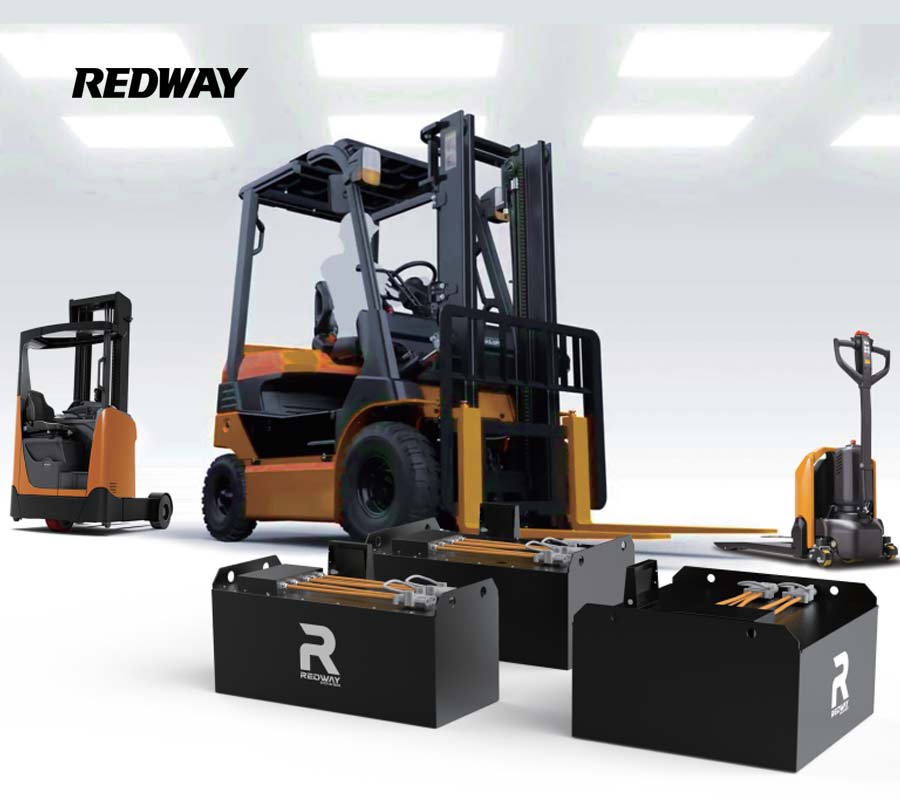
Equalizing charge on a forklift battery is a crucial process for maintaining lead-acid batteries, which involves applying a higher voltage to break down sulfate crystals and ensure proper cell balance. This technique is vital for extending battery life and optimizing performance. However, lithium batteries, such as those offered by Redway Battery, require no equalization, thanks to their built-in Battery Management System (BMS).
What Is Equalize Charge for Forklift Battery?
Equalizing a forklift battery refers to the process of overcharging a lead-acid battery at a higher voltage (around 2.65V per cell) after it has been fully charged. This overcharge causes the electrolyte to mix and removes the sulfate build-up on the battery plates, improving the battery’s performance and lifespan. Forklift batteries, particularly flooded lead-acid types, suffer from sulfation—where lead sulfate builds up on the plates and reduces the battery’s capacity. Regular equalization helps dissolve these crystals, balancing the cells and ensuring a longer, more efficient runtime.
For businesses relying on lead-acid batteries in multi-shift environments, this maintenance step can significantly reduce downtime. Redway Battery, a trusted OEM manufacturer based in Shenzhen, offers lithium alternatives that automatically balance cells through a built-in BMS, eliminating the need for manual equalization.
Why Is Equalize Charge Important for Forklift Batteries?
Equalize charge plays a critical role in preventing sulfation, which occurs when lead sulfate hardens on the battery plates. This build-up decreases the battery’s capacity and overall performance. By restoring balance to the cells and maintaining the electrolyte mixture, equalization helps to keep the battery at peak performance for longer periods, reducing downtime and increasing operational efficiency.
Without regular equalization, forklift batteries are more prone to imbalances, leading to premature failure. For businesses that rely on forklift fleets for day-to-day operations, this could result in unexpected battery replacements and costly downtime. Redway Battery’s LiFePO4 forklift batteries, on the other hand, offer a hassle-free solution with a built-in BMS that balances the cells automatically, preventing sulfation and ensuring long-lasting, efficient power.
| Benefit | Impact on Forklift Operations |
|---|---|
| Removes Sulfation | Restores 20-50% lost capacity |
| Balances Cells | Ensures uniform voltage, longer shifts |
| Prevents Stratification | Maintains electrolyte mixture, safer runtime |
| Extends Life | Up to 30% more cycles |
When Should You Perform Equalize Charge on Forklift Battery?
Equalizing forklift batteries should be done weekly, every 5-10 cycles, or according to the manufacturer’s specifications. The frequency of equalization depends on the usage of the battery—heavy-duty operations may require more frequent equalization. For example, if you are running multi-shift operations in a warehouse, it’s advisable to equalize the battery on weekends when the forklift is not in use for extended periods.
Battery performance can also be monitored by checking the specific gravity of the electrolyte in each cell. If there’s a variation of more than 0.015 between cells, it’s time for equalization. For those using lithium batteries like Redway’s LiFePO4 options, equalization is unnecessary, as these batteries come with advanced BMS that handles balancing automatically.
How Do You Equalize Charge a Forklift Battery Step-by-Step?
To equalize a forklift battery, follow these steps:
Step 1: Fully charge the battery and disconnect the load.
Step 2: Attach the compatible charger and verify it has an equalize mode (typically found on lead-acid battery chargers).
Step 3: Set the charger to the appropriate voltage (2.65V per cell) and initiate the equalizing cycle. This may result in vigorous bubbling as the electrolyte stirs.
Step 4: Monitor the specific gravity of the electrolyte every hour using a hydrometer. Stop when it stabilizes.
Step 5: After the process, allow the battery to cool down for 6-8 hours. Top up the electrolyte with distilled water if needed.
Safety precautions include wearing appropriate protective gear, ensuring adequate ventilation, and never performing the procedure in an enclosed space.
What Charger Do You Need for Equalize Charging Forklift Batteries?
To perform an equalization charge, you need a charger that has a dedicated equalize mode or one that automatically balances the battery cells during charging. Some chargers allow manual settings where you can apply an overcharge of 110% voltage, while others do this automatically.
Redway Battery’s lithium LiFePO4 forklift batteries come with an integrated BMS that automatically balances the cells during normal charging, meaning there is no need for a separate equalization cycle. This makes them an excellent choice for businesses looking for low-maintenance, high-performance energy solutions.
Are There Risks in Equalizing Forklift Batteries?
Equalizing forklift batteries comes with certain risks, particularly if not monitored closely. Overcharging the battery can lead to overheating, excessive gassing, and potential damage to the battery plates. Over-equalizing can also result in the loss of active material on the plates, shortening the battery’s lifespan.
Proper ventilation is essential, as the overcharge process generates hydrogen gas. Ensure that the equalization process is conducted in a well-ventilated area. For lithium batteries, like those manufactured by Redway Battery, the risk is eliminated, as these batteries are designed to self-balance and do not require equalization.
Can Lithium Forklift Batteries Skip Equalize Charging?
Yes, lithium LiFePO4 forklift batteries do not require equalization. These batteries are equipped with an advanced BMS that ensures the cells remain balanced throughout the charging process. The BMS automatically manages the voltage and current, preventing issues such as sulfation or stratification.
Unlike lead-acid batteries, which require regular equalization to maintain performance, lithium batteries are maintenance-free and have a longer lifespan. Redway Battery’s LiFePO4 forklift batteries are an excellent alternative for businesses looking for a more reliable and hassle-free solution.
| Lead-Acid vs. LiFePO4 (Redway Battery) | Lead-Acid | LiFePO4 |
|---|---|---|
| Needs Equalization? | Yes, weekly | No, BMS auto |
| Charge Time | 8+ hours | 1-2 hours |
| Lifespan (Cycles) | 1,000-1,500 | 3,000+ |
| Maintenance | High | None |
This topic belongs to the wider Forklift Battery Charging: Methods, Timing and the Charging Area, which brings the related decisions and practical checks together.
How Does Redway Battery Handle Forklift Equalization as China OEM?
Redway Battery, a leading OEM manufacturer based in Shenzhen, excels at providing lithium LiFePO4 forklift batteries that eliminate the need for traditional equalization. Through the integration of a high-performance BMS, Redway Battery’s products offer seamless cell balancing without the manual intervention required for lead-acid batteries.
Redway Expert Views
“As a leading Shenzhen manufacturer with over 13 years of experience in LiFePO4 technology, we’ve seen the challenges faced by fleets relying on lead-acid batteries. Poor equalization can reduce runtime by up to 30%. Our LiFePO4 forklift batteries, however, use an active BMS that manages cell balance automatically, reducing downtime by 50% and extending battery life to over 4,000 cycles. For B2B wholesalers, we offer complete OEM customization and 24/7 support to ensure the best possible solution.”
— Redway Battery Engineering Lead
Why Choose China Wholesale Suppliers Like Redway for Forklift Batteries?
Choosing a China-based supplier like Redway Battery offers several benefits, including cost-effective solutions, high-quality manufacturing, and advanced technologies. Redway’s facilities in Shenzhen are ISO 9001:2015 certified, ensuring that every battery is built to the highest standards. Additionally, their batteries are fully customizable, making them an ideal choice for OEMs and B2B clients around the world.
Key Takeaways: Regular equalization is crucial for lead-acid batteries to prevent sulfation and extend lifespan. However, switching to Redway Battery’s LiFePO4 forklift solutions eliminates the need for equalization, providing a longer, more efficient alternative. B2B clients should audit their fleets and consider transitioning to LiFePO4 for cost savings and improved battery performance.
FAQs
How often should you equalize a forklift battery?
Equalize lead-acid batteries weekly or every 5-10 cycles; lithium batteries don’t need equalization.
Does equalizing hurt lithium batteries?
No, lithium batteries do not require equalization and are not damaged by overcharging.
What voltage is used for forklift battery equalization?
The standard voltage for equalization is 2.65V per cell (e.g., 16V for a 12V battery).
Can Redway customize equalization-free batteries?
Yes, Redway offers fully customized LiFePO4 batteries with automatic balancing.
Why choose China factories for forklift batteries?
China factories like Redway offer advanced technology, cost-effective solutions, and high-quality products backed by ISO certifications.
