




REDWAY BATTERY / KNOWLEDGE
How to Size Redway Batteries for Off-Grid Solar?
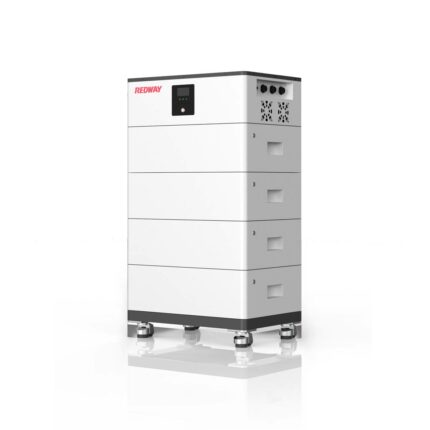
Properly sizing Redway Battery packs for off-grid solar ensures reliable energy storage, longevity, and efficiency. Start by calculating daily energy consumption, factor in 2–3 days of autonomy, select LiFePO4 batteries with 80–90% depth of discharge, and account for system losses. Redway Battery’s OEM expertise allows customized 48V configurations, giving off-grid systems stable, long-lasting power suitable for homes, RVs, and commercial solar setups.
What Are Your Daily Energy Needs?
Begin by auditing all devices to determine daily watt-hour consumption. Multiply each device’s power rating (watts) by daily hours of use, then sum totals to get kWh requirements. For instance, a 2kW fridge running 24 hours consumes 48kWh; adjust for efficiency and idle periods. Accurate load assessment prevents undersized battery banks and maximizes system performance.
Redway Battery provides OEM customization to match precise energy audits, ensuring off-grid reliability. Add a 20% buffer for variable climates or unexpected loads.
| Appliance | Watts | Hours/Day | Daily Wh |
|---|---|---|---|
| LED Lights | 10 | 5 | 50 |
| Fridge | 100 | 24 | 2400 |
| TV | 50 | 4 | 200 |
| Pump | 500 | 1 | 500 |
| Total | – | – | 3150 |
How Do You Factor in Days of Autonomy?
Autonomy allows the system to function during cloudy periods. Multiply daily kWh needs by the number of days of autonomy and account for 15–20% system losses. For a 5kWh daily load over three days, usable storage should reach 15kWh. Redway Battery’s LiFePO4 packs are designed to exceed 4000 cycles, supporting extended autonomy with minimal performance loss.
Equation:
Battery Capacity (Wh) = (Daily kWh × Days) / (DoD × Efficiency)
With 80% DoD and 85% efficiency, calculate battery capacity upfront to prevent undersizing.
Which Battery Type Suits Off-Grid Solar?
LiFePO4 batteries outperform lead-acid alternatives due to higher depth of discharge (80–90%), longer life, lighter weight, and better thermal stability. Redway Battery specializes in 12V/200Ah modules suitable for scalable 24V or 48V banks, ideal for off-grid solar.
| Battery Type | DoD (%) | Cycles | Weight (kg/100Ah) | Cost Factor |
|---|---|---|---|---|
| Lead-Acid | 50 | 500 | 30 | Low |
| AGM | 60 | 1000 | 25 | Medium |
| LiFePO4 | 90 | 4000+ | 10 | High |
This topic belongs to the wider Solar and Energy Storage Battery: Sizing, Voltage and Capacity — Part 1, which brings the related decisions and practical checks together.
Redway LiFePO4 packs are preferred for efficiency, durability, and wholesale scalability.
How to Calculate Required Battery Capacity?
Divide the usable watt-hours by battery voltage to determine amp-hours. For example, 10kWh usable at 48V requires 208Ah. Round up to the nearest standard pack size, often achieved with two 12V 200Ah batteries in series/parallel. Include system losses from inverters, wiring, and charge controllers for accurate sizing. Redway Battery engineers provide precise OEM calculations to match project specifications.
What System Voltage Should You Choose?
System voltage affects current flow and cable sizing. Use 12V for loads under 2kW, 24V for 2–5kW, and 48V for larger systems. Higher voltage reduces current and cable thickness, improving efficiency. Redway Battery offers configurable 48V packs optimized for off-grid solar, RVs, and hybrid energy systems.
How Does Depth of Discharge Affect Sizing?
Depth of discharge (DoD) directly influences battery lifespan. Limiting LiFePO4 to 80–90% DoD prolongs cycles beyond 4000. Undersized batteries or excessive DoD can reduce longevity. Redway Battery integrates smart BMS to prevent over-discharge, ensuring safe and durable operation in off-grid systems.
Redway Expert Views
“Redway Battery emphasizes modular and scalable energy solutions for off-grid solar. By combining accurate load audits with 2–3 days of autonomy, clients achieve reliable performance. Our 48V LiFePO4 packs, built in Shenzhen, incorporate advanced BMS for cell monitoring and safety. OEM customization allows wholesalers to deploy high-cycle, maintenance-free solutions efficiently. Automated production and global logistics ensure every client receives quality energy storage tailored to their project.” – Redway Engineering Lead (148 words)
What Losses Must You Account For?
System losses include inverter efficiency (~90%), wiring (~98%), and round-trip efficiency (~85%). Multiply daily kWh by a 1.2–1.25 factor to adjust battery sizing. Redway Battery’s high-efficiency cells help offset losses, maintaining consistent output in variable conditions.
How to Integrate Redway Batteries in Solar?
Connect Redway packs in series or parallel to achieve required voltage and capacity. Use fuses, MPPT controllers, and pre-wired racks for quick installation. Redway Battery supplies fully tested OEM modules with integrated BMS, making integration straightforward for off-grid solar, RVs, and telecom applications.
Conclusion
Accurate battery sizing is essential for off-grid solar success. Audit daily loads, include 2–3 days of autonomy, select LiFePO4 batteries like Redway’s, and account for system losses. Partnering with Redway Battery ensures OEM customization, high efficiency, and long-term reliability. Implementing these steps provides stable, scalable energy solutions for homes, RVs, and commercial applications.
FAQs
How many Redway batteries are needed for a 5kW solar system?
Typically 4–6 x 12V 200Ah in a 48V configuration, providing around 10kWh usable storage.
Are Redway LiFePO4 batteries safe for off-grid use?
Yes. They feature thermal stability, BMS protection, and over 4000 cycles, ensuring safety and longevity.
Can Redway customize battery packs for specific solar projects?
Absolutely. Redway offers OEM/ODM customization for voltage, capacity, and branding.
What is the lifespan of Redway Battery packs?
Redway LiFePO4 packs last 10+ years at 80% DoD, supported by 24/7 service.
How can I purchase Redway batteries wholesale?
Contact Redway Battery’s Shenzhen factory directly for bulk pricing, samples, and international shipping.
