




REDWAY BATTERY / KNOWLEDGE
Which UN38.3 documents should a battery buyer receive, and how do you check them?
Redway Battery Editorial Team
Talk / Battery Q&A
A buyer is told a lithium battery is “UN38.3 certified” and receives a one-line statement. The freight forwarder asks for the test summary.
Direct answer: Ask for the UN38.3 test summary, not just a statement. It should name the manufacturer, the test laboratory, a unique report number and date, the exact battery model with its mass and Wh rating, the tests and pass/fail results, the UN Manual edition used and a signatory. Check each item against your order.
UN38.3 refers to sub-section 38.3 of the UN Manual of Tests and Criteria, the set of tests lithium cells and batteries must pass for transport. Under the US hazardous materials rules (49 CFR 173.185), each manufacturer and subsequent distributor must make a test summary available for lithium cells and batteries made on or after 1 January 2008. The requirement also applies in air and sea transport.
A valid summary uses a standard list of elements, as PHMSA’s guide describes: manufacturer name and contacts; the test laboratory’s name and contacts; a unique test report number; the report date; a description of the cell or battery (lithium-ion or metal, mass, watt-hour rating or lithium content, model number); the list of tests with pass/fail; a reference to assembled-battery testing where applicable; the UN Manual edition and amendments used; and a signature with name and title. There is no set form, so layouts differ.
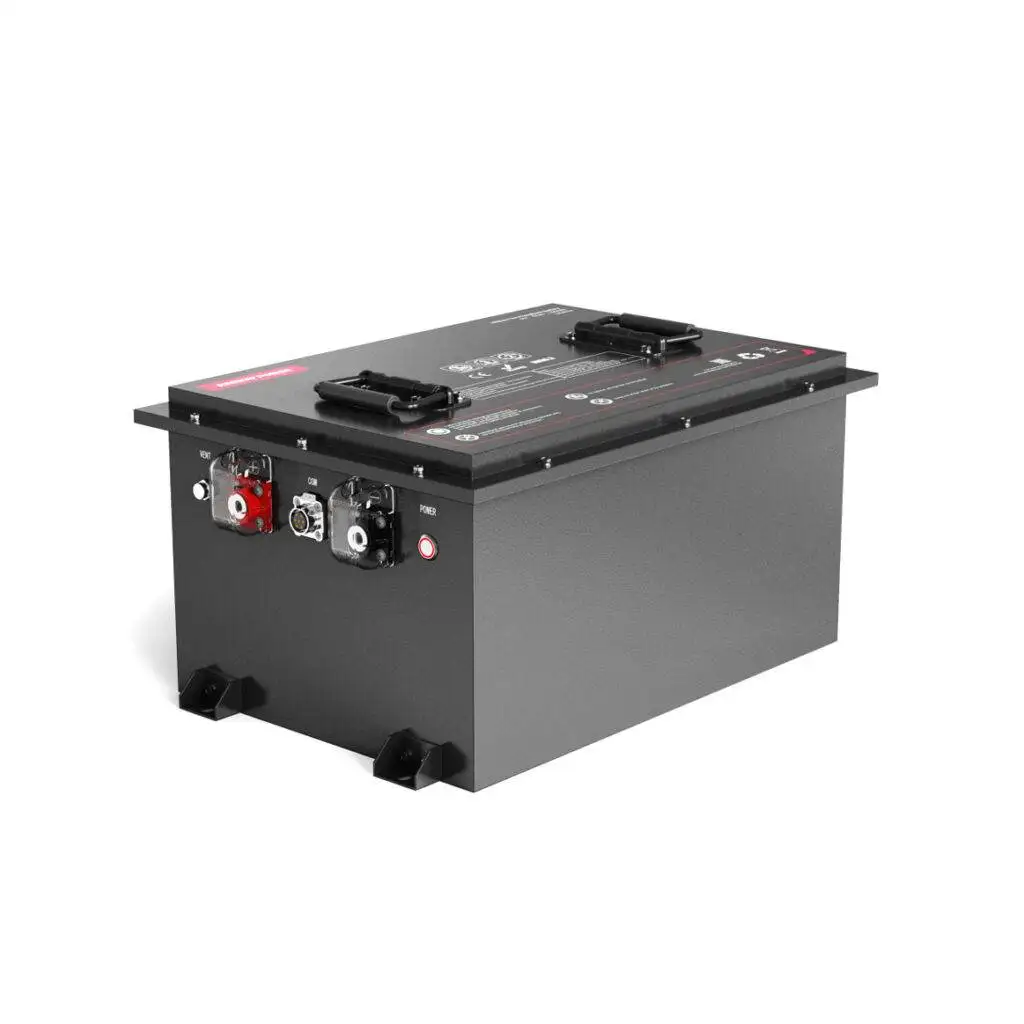
Check it against your order. Does the model number match the one on the label and the invoice, for example the 48V 100Ah golf cart pack, the 12V 100Ah pack or the 48V 280Ah forklift pack? Does the Wh rating match the pack’s nominal energy (5.12 kWh, 1.28 kWh and 14.33 kWh on those pages)? Is the report dated, signed and numbered, and does the laboratory exist?
Know the limits of the document. It shows the design passed transport tests. It is not a certificate of safe operation, does not replace IEC 62619 or other product certificates, and says nothing about the cells’ cycle life. A summary for a smaller cell or a different pack configuration does not automatically cover your model, so check whether it names the finished battery or only its cells.
Ask for the summary before shipping and keep it with the shipping papers and asset records. The Redway pages list UN38.3 and UN3480 for these models, but do not say that a summary is published online or exists for each model, so ask Redway per model. If a supplier cannot produce one, treat that as a risk for transport, not a paperwork detail.
↳ Replying to Redway Battery Editorial Team
Make the summary a condition of shipment: no summary naming your model, no dispatch and no final payment. A “UN38.3 certified” sentence on an invoice is not the document.
↳ Replying to Procurement perspective
Check model number, Wh rating, mass, laboratory, report number, date and UN Manual edition against the label and the datasheet. Mismatches usually mean the document belongs to a different product.
↳ Replying to Selection/Engineering perspective
Keep the summary with the packing list and in the asset file. If you resell or move the battery later, the next shipper will ask for the same document.
Ask for the UN38.3 test summary, not just a statement. It should name the manufacturer, the test laboratory, a unique report number and date, the exact battery model with its mass and Wh rating, the tests and pass/fail results, the UN Manual edition used and a signatory. Check each item against your order.
Verify before ordering: Whether Redway holds a published test summary for each model is not stated on the pages; ask per model.
Sources checked: PHMSA lithium battery test summaries; 49 CFR 173.185 (eCFR).
Editorial Q&A for battery selection and operations. Product figures cited from Redway product pages.
Related products
 48V 100Ah LiFePO4 Golf Cart Battery
 12V 100Ah Lithium Battery (LiFePO4, Self-heating, OEM)
 48V 280Ah (51.2V 280Ah) Lithium Forklift Battery
Related articles & discussions
- How to Travel with Lithium Batteries: Regulations for Flights and Shipping
- What is the IEC 62133 Safety Standard, and How Does It Apply to Lithium Batteries?
- Understanding IEC 62619: Requirements and Tests for Safe Operation of Industrial Lithium Cells and Batteries
- Why can’t you ship lithium batteries overseas?
- Which Industries Rely Most Heavily on UL 2054 and UL 1642 Compliant Batteries?
- How Does UL2054 Differ from IEC 62133 for 48V? A Comprehensive Comparison
- What Are the Differences Between IEC 62133 and UL 2054 Battery Safety Standards?
- Understanding the Difference Between IEC 62133-1 and IEC 62133-2 Battery Safety Standards
- What Certifications Should LiFePO4 Forklift Batteries Have?
- What Certifications Do 12V LiFePO4 Batteries Have?
