




REDWAY BATTERY / KNOWLEDGE
What should you do if a lithium battery is dropped, flooded or physically damaged?
Redway Battery Editorial Team
Talk / Battery Q&A
A pallet with a 48V lithium battery fell from a forklift, and in another case a golf cart sat in flood water overnight. Both batteries look intact. The team wants to know whether they can be charged and used.
Direct answer: Do not charge or use the battery until the manufacturer has assessed it. If it is hot, smoking, hissing, swelling or leaking, keep people away and call emergency services. Otherwise switch it off and disconnect it if that is safe, move it to a quarantine area away from people and combustibles, label it, watch it for heat, photograph the damage, and contact the manufacturer with the serial number. Damaged lithium batteries also have special transport rules.
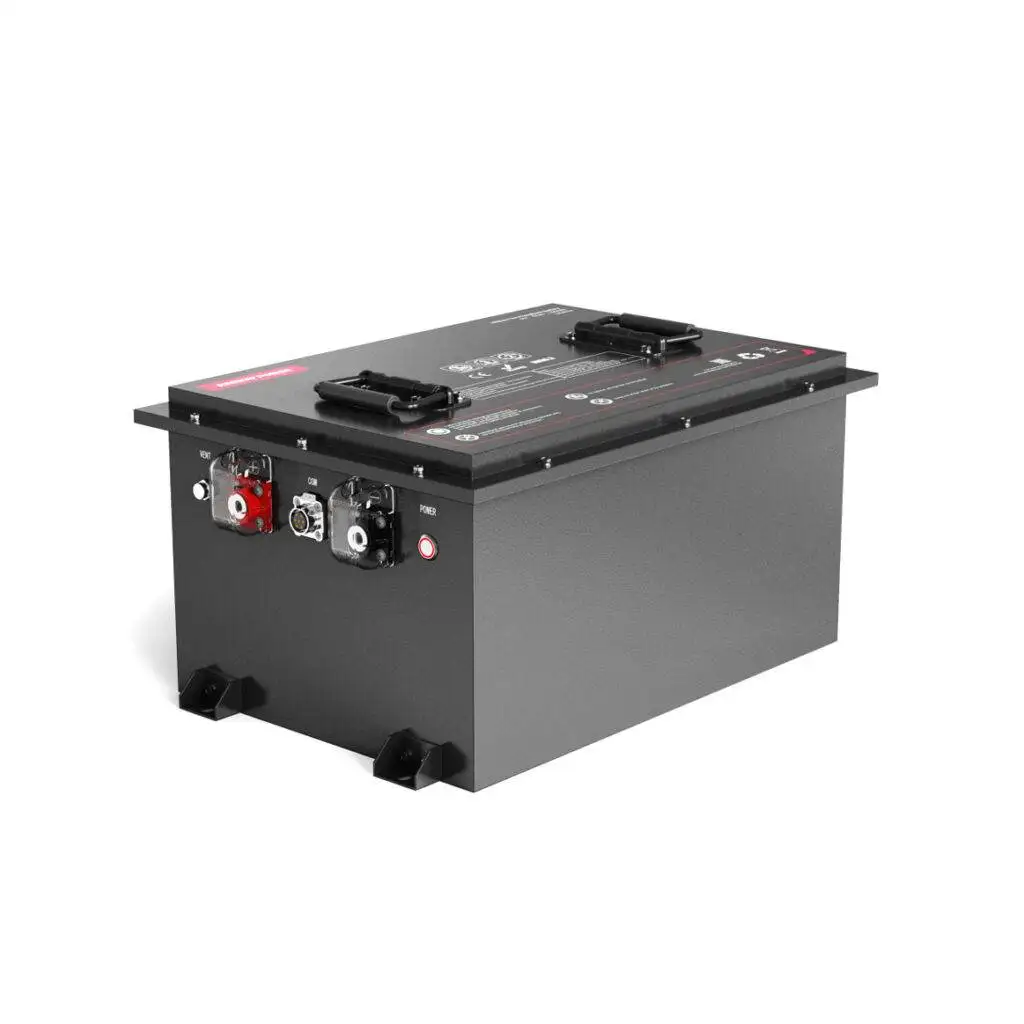
Why “looks fine” is not enough. A drop or impact can damage cells, internal connections or the BMS without visible marks, and water, especially salt or dirty water, can corrode the BMS and terminals or cause short circuits. Problems can appear hours later. The battery’s rating, such as IP67 on the 48V 100Ah golf cart battery or IP54 on the 48V 420Ah forklift battery, describes a test condition, not protection against an impact or a long flood.
Immediate signs of danger: heat, smoke, a sweet or chemical smell, hissing or popping, swelling or a deformed case, or liquid. Evacuate the area, follow your site emergency plan and call the fire service; tell them it is a lithium battery. Do not try to move a battery in that state.
Quarantine. If none of those signs are present and it is safe to handle, switch the battery off (many models list a power switch), disconnect cables, and cover terminals with non-conductive tape or caps. Move it with proper lifting equipment to a separate, ventilated area with a non-combustible floor, away from other batteries and stock. Label it “damaged – do not charge” and check it for heat over the following period.
Contact the manufacturer. The US EPA advises contacting the battery or device manufacturer for specific handling information if a lithium-ion battery becomes damaged. Send photos, the serial number, what happened and when. Redway’s pages do not publish a damaged-battery procedure, so ask for its instructions for your model.
Transport and disposal. In the US, 49 CFR 173.185(f) restricts damaged or defective lithium batteries that could produce dangerous heat, fire or short circuit: they may be shipped by highway, rail or vessel only, with specific packaging, not by air. Other countries have similar rules. For disposal, EPA recommends certified battery recyclers rather than the trash. For the rules on shipping undamaged batteries, see shipping lithium batteries by sea and air.
↳ Replying to Redway Battery Editorial Team
Report damage the same day, with photos and serial numbers, to the supplier and the insurer. Ask the supplier who arranges return transport, since damaged batteries need special packaging.
↳ Replying to Procurement perspective
Do not test a damaged battery by charging it. Assessment belongs with the manufacturer or a qualified service partner who knows the BMS and the pack design.
↳ Replying to Selection/Engineering perspective
Set up a marked quarantine spot before you need it, with a non-combustible floor, distance from stock, terminal caps and a log sheet.
Do not charge or use the battery until the manufacturer has assessed it. If it is hot, smoking, hissing, swelling or leaking, keep people away and call emergency services. Otherwise switch it off and disconnect it if that is safe, move it to a quarantine area away from people and combustibles, label it, watch it for heat, photograph the damage, and contact the manufacturer with the serial number. Damaged lithium batteries also have special transport rules.
Verify before ordering: Redway does not publish a damaged-battery or flood-recovery procedure; follow its written instructions for your model and your local fire service guidance.
Sources checked: EPA: used lithium-ion batteries; 49 CFR 173.185 (eCFR).
Editorial Q&A for battery selection and operations. Product figures cited from Redway product pages.
Related products
 48V 100Ah LiFePO4 Golf Cart Battery
 48V 400Ah (51.2V 420Ah) Lithium Forklift Battery
 12V 100Ah Lithium Battery (LiFePO4, Self-heating, OEM)
Related articles & discussions
- How 72V LiFePO4 Batteries Ensure Safety in Power Storage
- How Do You Properly Dispose of Waste Batteries from Lithium-Ion Sources in Manufacturing?
- What Are the Benefits of LiFePO4 Batteries for Solar Energy Systems?
- How to Enhance Energy Efficiency and Safety with Power Storage Walls
- What Are Essential Lithium Forklift Battery Fire Safety Guidelines?
- Golf Cart Lithium-Ion Battery Safety
- What Are Key Considerations For Safe Battery And Charger Handling?
- How to Safely Extinguish a LiFePO4 Battery Fire?
- How Do You Prevent Lithium Battery Fires?
- Safe Lithium Ion Battery Fire Extinguisher
