




REDWAY BATTERY / KNOWLEDGE
How do you choose e-bike battery voltage and capacity for range and controller match?

Redway Battery Editorial Team
Talk / Battery Q&A
A delivery company runs 30 cargo e-bikes and wants longer range from replacement batteries without changing the motors or controllers.
Direct answer: Voltage is fixed by the controller and motor, so start there: the new battery’s full and empty voltages must sit inside the controller’s input range, which usually means the same nominal voltage as the original. Capacity is then your choice: watt-hours (volts × amp-hours) divided by your measured watt-hours per kilometre gives a range estimate. Finally, the battery’s BMS must deliver the controller’s maximum current continuously.
Voltage. Common e-bike systems are 36V, 48V and 52V nominal, but chemistry changes the numbers: a 13-series nickel-based lithium-ion pack is about 48V nominal and charges to about 54.6V, while a 16-series LiFePO4 pack is 51.2V nominal and charges to 58.4V. Check the controller’s low-voltage cut-off and maximum input against the battery’s full range, not just its label.
Capacity and range. Range depends on rider weight, cargo, hills, assist level, tyre pressure and stop-start riding, so there is no fixed Wh per km. Measure it: log the energy used on a typical day from the display or a charger meter, divide by kilometres, and add a reserve. A battery with 50% more watt-hours gives roughly 50% more range on the same route.
Current. A controller labelled, say, 20A can draw that much when climbing with a load. The BMS continuous discharge rating should be at least that, with headroom for peaks; a BMS that trips on hills looks like a battery fault. Ask the supplier for both continuous and peak BMS ratings with durations. See how continuous and peak ratings work.
Physical and legal fit. A higher-capacity pack is bigger and heavier; check the frame mount, rack load rating and connector. Legal limits on motor power and assisted speed apply to the bike, not the battery: in the EU, pedal-assisted bikes are typically limited to 250W rated power and assistance up to 25 km/h; US federal law defines a low-speed electric bicycle as under 750W and under 20 mph on motor power alone. A bigger battery does not change those limits.
Sourcing. Redway’s e-bike lithium battery page describes LiFePO4 packs with OEM/ODM sizing but no fixed specifications, so request voltage, capacity, BMS ratings, dimensions and the matching charger. Cell choice matters for energy density; see the 21700 cell range. For heavier light vehicles such as cargo trikes, a general pack like the 48V 50Ah (51.2V, 2,560 Wh, 50A continuous, 150A peak for 15 s, 20 kg) may suit, but check the controller range first.
Fleet trial. Fit one or two bikes, ride the hardest route with full cargo, and log voltage sag, trips and energy used before ordering 30.
↳ Replying to Redway Battery Editorial Team
Standardise on one voltage and connector across the fleet so packs and chargers are interchangeable, and price per usable watt-hour.
↳ Replying to Procurement perspective
Write down controller input range, low-voltage cut-off and current limit, then compare with the pack’s full, empty and BMS ratings before ordering.
↳ Replying to Selection/Engineering perspective
Use only the matching charger, keep a charge log per pack and retire packs whose range falls well below the fleet average.
Voltage is fixed by the controller and motor, so start there: the new battery’s full and empty voltages must sit inside the controller’s input range, which usually means the same nominal voltage as the original. Capacity is then your choice: watt-hours (volts × amp-hours) divided by your measured watt-hours per kilometre gives a range estimate. Finally, the battery’s BMS must deliver the controller’s maximum current continuously.
Verify before ordering: E-bike pack specifications are not listed on the Redway page; obtain voltage range, BMS ratings and charger details in writing. Legal limits differ by country; check local rules.
Sources checked: NFPA: lithium-ion battery safety (incl. e-bikes).
Editorial Q&A for battery selection and operations. Product figures cited from Redway product pages.
Related products
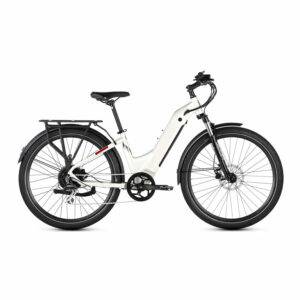 E-Bike Lithium Battery
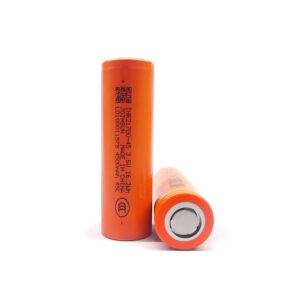 21700 Li-ion Cells
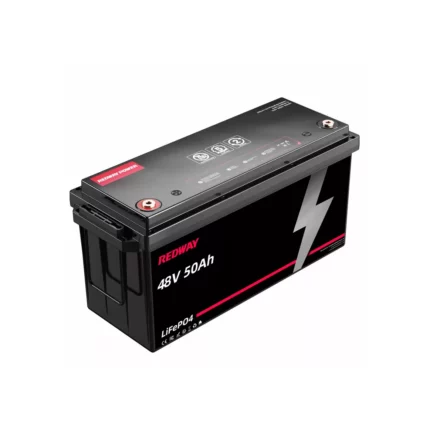 48V 50Ah Lithium Battery
Related articles & discussions
- What Are Custom Lithium E-Bike Battery Options?
- What is the Capacity of a Battery?
- Forklift LiFePO4 Battery Capacity and Voltage: What to Consider?
- How Does Lithium E-Bike Battery Energy Density Compare?
- What You Need to Know About 24V Lithium-Ion Batteries for E-Bikes
- Are Lithium E-Bike Batteries Eco-Friendly?
- What is the Typical Capacity Range of the 18650 Battery?
- How Do Lithium E-Bike Batteries Meet Safety Standards?
- How Long Can You Expect a 36V E-Bike Battery to Last?
- Why Opt for 72V LiFePO4 Batteries in E-Bike Battery Solutions?
