




REDWAY BATTERY / KNOWLEDGE
How to choose the right lithium battery solution for EZ‑GO and Yamaha golf carts?
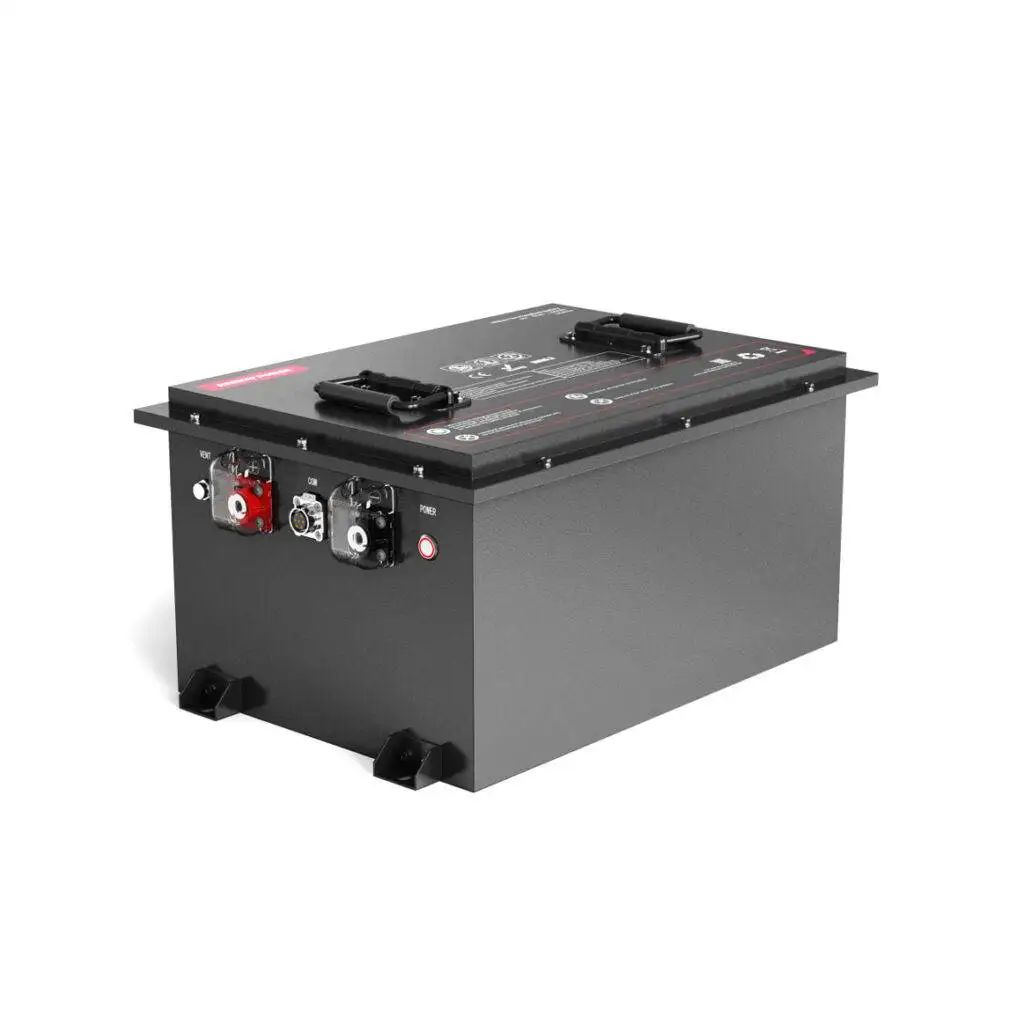
Upgrading EZ‑GO and Yamaha golf carts with modern lithium (LiFePO₄) batteries dramatically improves range, runtime, and total cost of ownership compared to old lead‑acid packs. A proper lithium solution eliminates water maintenance, extends battery life to 8–10 years, and cuts charging time by 50–70%, while keeping full voltage and power for the entire day on the course or in a community.
Why are lithium batteries becoming the standard for EZ‑GO and Yamaha carts?
The golf cart and CCO (community golf cart) market is shifting fast toward lithium. In 2025, roughly 35–40% of new golf carts sold in North America came with factory lithium, and retrofit demand for lithium conversions is growing at 20–25% annually. Fleet operators and owners are replacing lead‑acid batteries because of rising maintenance costs, shorter cycle life, and inconsistent performance on hilly terrain.
Lead‑acid batteries typically last 3–5 years with heavy use and need watering every 2–4 weeks. They also suffer from voltage sag as they discharge, so carts lose speed and hill‑climbing power well before the battery is fully drained. Many golfers and resort managers report that lead‑acid packs only last 300–500 cycles before capacity drops below 60%, forcing premature replacement.
For EZ‑GO and Yamaha carts, the biggest pain points are:
Short range per charge – 18–27 holes on rough terrain, even with new batteries.
Frequent charging – Daily or even mid‑round charging becomes necessary in summer.
Heavy packs – 6–8 lead‑acid batteries can weigh 300–400 lbs, limiting payload and reducing acceleration.
High maintenance – Topping up water, cleaning terminals, and equalization charges add operational labor.
Seasonal degradation – Capacity drops significantly in cold weather, and batteries often fail after 2–3 winters.
These issues are especially costly for fleets, resorts, marinas, and retirement communities where carts are used 5–7 days a week.
How do current lithium offerings compare across brands?
Most major golf cart brands now support or offer lithium:
EZ‑GO has its ELiTE® lithium line with factory Samsung SDI Li‑ion packs and an 8‑year battery warranty, but these are only available on new carts.
Yamaha Drive2 and newer models support lithium conversion kits and OEM lithium options through dealers, though factory packs can be expensive.
Aftermarket brands provide drop‑in lithium kits (36V, 48V, 60V, 72V) for older EZ‑GO and Yamaha carts, but quality varies widely in terms of cycle life, BMS robustness, and thermal protection.
Many owners who retrofit lithium report that:
They can now play 2–3 rounds (36–54 holes) on a single charge.
Range increases from 20–30 miles to 50–70+ miles, depending on voltage and terrain.
Charging time drops from 6–10 hours (with lead‑acid) to 2–3 hours.
However, not all lithium batteries are created equal. Poorly designed packs can overheat, fail prematurely under heavy loads, or lack proper communication with the cart’s controller, leading to error codes or reduced performance.
What’s wrong with just sticking with lead‑acid?
Traditional lead‑acid golf cart batteries are still common, but they have clear limitations that make them a poor long‑term choice for regular or heavy use.
| Aspect | Lead‑acid (Flooded / AGM) | Typical LiFePO₄ Retrofit Solution |
|---|---|---|
| Initial cost per cart | Lower ($600–$1,200 for 6–8 batteries) | Higher ($1,500–$3,000 per cart) |
| Cycle life | 300–500 cycles (to 60% capacity) | 2,000–5,000+ cycles (to 80% capacity) |
| Lifetime in years | 3–5 years (with heavy use) | 8–10 years |
| Weight (36V/48V pack) | 300–400 lbs | 60–150 lbs (70–80% lighter) |
| Charging time | 6–10 hours | 2–3 hours |
| Maintenance | Watering, terminal cleaning, equalization | Zero maintenance (closed‑case) |
| Voltage stability | Drops steadily under load | Stays flat down to 80–90% discharge |
| Range per charge | 18–27 holes (flat), 9–18 holes (hilly) | 27–54+ holes (flat), 18–36 holes (hilly) |
| Cold‑weather performance | Loses 20–35% capacity at 0–32°F | Loses 10–20% capacity at same temps |
| Total cost of ownership | High (2–3 replacements over 10 years) | Lower (often 1 pack over 10 years) |
The main drawbacks of lead‑acid are:
Frequent replacement – For a cart used 4–5 times per week, owners often replace 2–3 lead‑acid packs over 10 years, adding hidden costs.
Poor efficiency – Lead‑acid has ~70–80% round‑trip efficiency vs. 95%+ for LiFePO₄, meaning more energy is wasted as heat.
Sag and weak performance – Voltage drops quickly under load, so the cart feels sluggish even when the battery isn’t fully drained.
Risk of sulfation – If left partially discharged for days or weeks, lead‑acid batteries sulfate and permanently lose capacity.
For these reasons, fleets and frequent users are rapidly moving away from lead‑acid to lithium as the standard.
How does a modern lithium battery solution work for EZ‑GO and Yamaha?
A purpose‑built lithium battery solution for EZ‑GO and Yamaha golf carts is a complete, plug‑and‑play system based on LiFePO₄ (lithium iron phosphate) chemistry, designed specifically for the voltage, physical space, and duty cycle of golf carts and CCO vehicles.
Key components of a professional lithium solution:
LiFePO₄ battery pack – Wired for the same voltage as the original lead‑acid system (36V, 48V, 60V, or 72V) but with much higher usable capacity (e.g., 105–200 Ah).
Integrated Battery Management System (BMS) – Monitors cell voltage, temperature, current, and state of charge; protects against overcharge, over‑discharge, short circuit, and excessive temperature.
Drop‑in mechanical design – Sized to fit inside standard EZ‑GO and Yamaha battery trays, often with spacers or brackets to secure the pack.
Plug‑and‑play wiring – Pre‑wired terminals or connectors that match the cart’s original wiring, minimizing installer work.
Compatible lithium charger – A new charger (often 3–5 A) that matches the lithium chemistry and voltage, eliminating the need for an old lead‑acid charger.
The solution replaces the entire bank of 6–8 lead‑acid batteries with a single, compact lithium pack, and the cart runs the same motor and controller, just with stable, higher voltage and longer runtime.
What are the key features of a high‑quality lithium battery solution?
A top‑tier lithium solution for EZ‑GO and Yamaha carts should include:
LiFePO₄ chemistry – Safer, longer‑lasting, and more stable than other lithium types (NMC, LCO), with excellent cycle life and thermal stability.
High cycle life rating – At least 2,000–3,000 cycles to 80% capacity, translating to 8–10+ years in typical cart use.
Robust BMS – Multi‑layer protection (over‑voltage, under‑voltage, over‑current, short‑circuit, high/low temperature) and cell balancing.
Good temperature performance – Operation from ‑20°C to 60°C (‑4°F to 140°F) with derating and protection built into the BMS.
Low self‑discharge – <3% per month, so carts can sit for weeks without significant charge loss.
High efficiency – 95%+ charge/discharge efficiency, meaning less energy wasted and lower electricity costs.
Mechanical fit – Exact dimensions and mounting options to fit EZ‑GO TXT, RXV, Express, and Yamaha Drive2, Drive, and similar models.
Easy installation – Pre‑wired connectors, clear labeling, and mounting hardware to simplify retrofitting.
For OEMs and fleet customers, some suppliers also offer:
Custom voltage and capacity – Packs tailored to 36V, 48V, 60V, or 72V systems with specific Ah ratings.
Custom BMS logic – Communication with the cart’s controller or fleet management system.
Bulk pricing and OEM branding – Private‑label packs for golf cart manufacturers and distributors.
Redway Battery, a trusted OEM lithium battery manufacturer based in Shenzhen, designs and builds LiFePO₄ golf cart battery solutions specifically for EZ‑GO and Yamaha applications. With over 13 years in the industry and a large production base, Redway delivers high‑performance, durable packs that meet international safety and quality standards.
How does a lithium solution compare to traditional batteries?
Here’s a direct comparison of a typical high‑quality lithium golf cart solution versus traditional lead‑acid:
| Feature | Lead‑acid (Flooded) | Modern LiFePO₄ Solution (e.g., Redway) |
|---|---|---|
| Chemistry | Lead‑acid | LiFePO₄ |
| Voltage options | 36V, 48V, 60V, 72V | 36V, 48V, 60V, 72V |
| Typical capacity | 180–225 Ah (bank) | 105–200 Ah (single pack) |
| Usable capacity | 50–60% of rating (to avoid deep cycle) | 70–90% of rating (safe deep cycling) |
| Cycle life (to 80% cap.) | 300–500 cycles | 2,000–5,000+ cycles |
| Lifetime | 3–5 years | 8–10 years |
| Weight (48V system) | 350–400 lbs | 80–140 lbs |
| Charging time (full) | 6–10 hours | 2–3 hours |
| Charging efficiency | 70–80% | 95%+ |
| Maintenance | Required (watering, cleaning, equalize) | None (sealed, no maintenance) |
| Voltage stability | Drops significantly with use | Stays near full voltage until nearly empty |
| Range (48V cart, flat) | 20–30 miles / 18–27 holes | 50–70+ miles / 27–54+ holes |
| Cold‑weather performance | Poor (up to 35% loss) | Good (10–20% loss with BMS protection) |
| Safety | Risk of acid leaks, gas, sulfation | Very safe (no leaks, thermal runaway protected) |
| Warranty | 1–2 years (individual battery) | 5–10 years (full pack, OEM level) |
As a result, switching to lithium typically reduces the cost per mile by 30–50% over 8–10 years, even after accounting for the higher upfront price.
How to install a lithium battery solution step by step?
Converting an EZ‑GO or Yamaha cart to lithium is straightforward if the right solution is chosen. Here’s a general installation process:
Confirm compatibility
Check the cart’s original voltage (36V, 48V, 60V, or 72V).
Measure the battery tray dimensions to ensure the lithium pack will fit.
Verify that the cart has a compatible controller and does not require a special controller upgrade.
Gather tools and parts
New lithium battery pack (correct voltage and size).
Lithium‑specific charger (must match the pack’s voltage and chemistry).
Basic tools: wrench set, screwdrivers, electrical tape, and safety gloves.
Multimeter (optional, to verify voltage).
Remove old lead‑acid batteries
Turn off the cart and disconnect the negative cable first, then positive.
Unbolt and remove all lead‑acid batteries from the tray.
Clean the battery tray and inspect for corrosion or damage.
Install the lithium pack
Place the lithium pack in the tray, using spacers or brackets if needed to secure it.
Connect the positive and negative terminals to the cart’s main cables, matching polarity.
Tighten all connections and insulate exposed terminals.
Install the lithium charger
Replace the old lead‑acid charger with the new lithium charger.
Connect the charger to the lithium pack following the manufacturer’s wiring diagram.
If the cart has a built‑in charger, verify that it is compatible with lithium; if not, replace it.
Power up and test
Reconnect the cart’s main power and turn on the key.
Check for error codes or warning lights.
Take a short test drive to verify that the motor runs smoothly and the voltage display (if present) behaves normally.
For EZ‑GO and Yamaha carts, many modern lithium kits are designed as plug‑and‑play, so the process often takes 1–2 hours for a technician familiar with golf cart electrical systems.
What are typical user scenarios and results?
Here are four real‑world use cases showing how a lithium solution transforms EZ‑GO and Yamaha carts:
Golf course with 20 carts
Problem: Lead‑acid batteries last about 4 years, with frequent charging and mid‑round battery swaps.
Traditional: Replace 20 packs every 4 years at ~$1,000 each; total cost ~$5,000/year.
With lithium: Install 20 high‑cycle LiFePO₄ packs (e.g., 48V 150Ah) with 8–10 year life.
Result: 30–50% lower lifetime cost, 2–3 times more range per charge, and zero maintenance.
Key benefit: Eliminates 2–3 charging stops per day, improving cart availability.
Retirement community (50 carts, heavy use)
Problem: Residents drive carts daily over hilly terrain; lead‑acid batteries fail quickly in summer heat.
Traditional: Replace 2–3 times per cart over 10 years, plus water and cleaning labor.
With lithium: Upgrade to 48V LiFePO₄ packs with derating and BMS protection for hot climates.
Result: 4–5 days of typical use per charge, <1% maintenance workload, and extended battery life.
Key benefit: Durable solution that survives 8–10 years of heavy daily use.
Yamaha Drive2 owner (frequent 2–3 round days)
Problem: Lead‑acid barely covers 27 holes on hilly courses; mid‑round charging is inconvenient.
Traditional: Buy a second charger and charge after 9 or 18 holes, losing time.
With lithium: Install a 48V 120–160Ah LiFePO₄ pack designed for high‑use Yamaha carts.
Result: 54+ holes on one charge, 3‑hour charging window overnight, and consistent hill‑climbing power.
Key benefit: Truly “all‑day” cart performance, no more mid‑round charging stress.
Fleet of EZ‑GO carts at marina/resort
Problem: Carts used 6–7 days a week; lead‑acid batteries wear out in 3 years, and water is scarce.
Traditional: Quarterly maintenance, frequent battery replacements, and limited range.
With lithium: Install lightweight 48V LiFePO₄ packs that fit EZ‑GO trays and withstand salt‑rich coastal conditions.
Result: 50% longer range, 70% weight reduction, and no water/maintenance in a waterfront environment.
Key benefit: More reliable, lower‑cost operation with less downtime for battery service.
Redway Battery supports these scenarios by offering OEM‑grade LiFePO₄ golf cart battery solutions that can be customized for EZ‑GO and Yamaha fleet sizes, duty cycles, and environmental conditions, including options for marine, resort, and industrial CCO applications.
Why is now the right time to switch to lithium?
Several trends are making lithium the clear choice for EZ‑GO and Yamaha carts in 2026 and beyond:
Lithium prices are stable and competitive – The cost per cycle has dropped significantly, making lithium economical for fleets and individual owners.
Fleet owners are mandating longer life and lower maintenance – Resorts, retirement communities, and golf courses are standardizing on lithium to reduce TCO and maintenance labor.
Safety and reliability are now mature – Modern LiFePO₄ packs with professional BMS and cell protection are far safer and more robust than early lithium solutions.
Charging infrastructure is simpler – Lithium chargers are smaller, more efficient, and can be used with standard 110V outlets, avoiding upgrades to 220V systems.
Waiting just delays the benefits: higher range, lower maintenance, and fewer battery replacements. For new carts,
This topic belongs to the wider Golf Cart Battery Sizing: How Many Amp-Hours You Actually Need, which brings the related decisions and practical checks together.
