




REDWAY BATTERY / KNOWLEDGE
How To Maintain Forklift Batteries For Your Fleet?
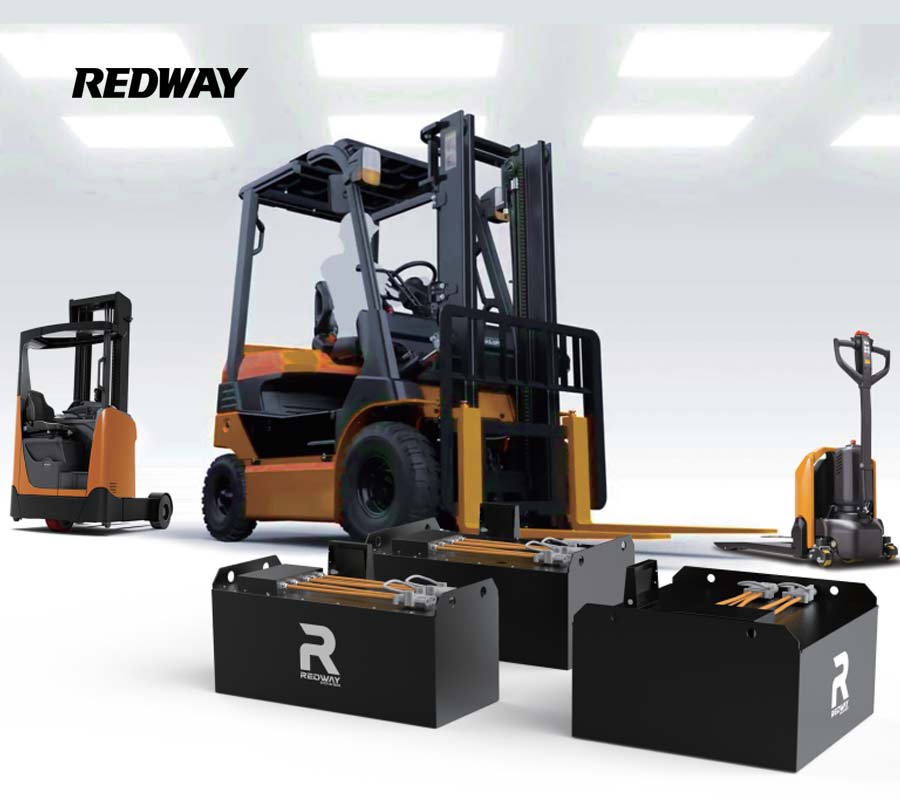
Proper forklift battery maintenance combines routine inspections, correct charging practices, and electrolyte management to maximize lifespan. For lead-acid, check water levels weekly and use distilled water to keep plates submerged. Lithium-ion variants avoid watering but require monthly cell-balancing checks. Always store batteries at 50-70% charge in cool, dry areas. Fleet managers should log voltage readings and cleaning schedules—minor neglect can cut battery life by 40%.
48V 300Ah Lithium Forklift Battery
What routine checks prevent forklift battery failure?
Daily voltage tests and terminal cleaning form the core defense against premature failure. Use a digital multimeter to verify each cell stays above 1.8V (lead-acid) or 3.2V (lithium). Pro Tip: Apply anti-corrosion gel after cleaning terminals—copper oxidation increases resistance by 300%.
Beyond daily checks, weekly specific gravity tests for lead-acid batteries using a hydrometer identify weak cells. Imagine a 48V battery pack as 24 2V cells in series—if one cell drops to 1.5V, total output plummets to 42V, triggering premature shutdown. Monthly capacity tests under load (preferably 80% discharge cycles) reveal true health. Transitional Tip: Rotate batteries between light/heavy-duty trucks to equalize wear.
How does watering frequency affect lead-acid battery life?
Underwatering exposes plates to air, causing sulfation and capacity loss. Overwatering dilutes electrolyte concentration, reducing cold cranking amps by 15-20%. Ideal watering tops cells until plates are submerged by ¼” (6mm).
High-usage fleets (3+ shifts/day) should check levels every 5 charges. Think of electrolyte like engine oil—low levels create friction damage. Use automatic watering systems for large fleets; they reduce labor by 85% while preventing overflows. Transitional Example: A 48V 600Ah battery needing 1.5L weekly might require 2.3L in summer due to higher evaporation.
| Usage Intensity | Water Check Frequency | Avg. Water Added |
|---|---|---|
| 1 shift/day | Every 10 charges | 0.8L |
| 2 shifts/day | Every 7 charges | 1.2L |
| 3 shifts/day | Every 5 charges | 1.7L |
What charging protocols extend lithium forklift battery life?
Partial 20-80% cycles triple lithium cycle counts versus full discharges. Keep charge rates below 0.5C—a 200Ah battery shouldn’t exceed 100A charging. Pro Tip: Use ambient-temperature charging (15-25°C) to prevent dendrite growth.
Why avoid overnight charging? Continuous 100% SOC increases lithium plating risks. Smart chargers with adaptive CV phase adjust voltage based on cell temperatures. For fleets, staggered charging during breaks beats bulk charging—like refueling cars incrementally versus draining gas stations.
| Charge Method | Cycle Life | Efficiency |
|---|---|---|
| Full (0-100%) | 1,500 | 89% |
| Partial (20-80%) | 4,000 | 94% |
24V 280Ah Lithium Forklift Battery
Can improper cleaning damage forklift batteries?
Yes—harsh pressure washing forces water into vents, causing internal shorts. Neutral pH cleaners prevent terminal corrosion without chemical damage. Always disconnect batteries before cleaning to avoid voltage spikes.
Avoid steam cleaning lithium batteries—sudden thermal shifts weaken BMS soldering joints. Consider battery trays as kitchen countertops: gentle wiping preserves surfaces, while scrubbing strips protective coatings. Transitional Warning: Residual acid on lead-acid cases accelerates self-discharge by 2% daily.
Redway Battery Expert Insight
FAQs
Check weekly under normal use—top up with distilled water until plates are covered by 6mm. High-temperature environments may need twice-weekly checks.
Can lithium batteries handle partial charges?
Yes—lithium chemistry thrives on 20-80% cycles. Avoid keeping them at 100% SOC for over 48 hours to minimize electrolyte degradation.
Do all forklift chargers work with lithium batteries?
No—use only chargers with LiFePO4 profiles. Lead-acid chargers’ float stages overstress lithium cells, triggering BMS shutdowns.
For connected guidance and the next practical steps, use the Forklift Battery Maintenance: Watering, Equalising and Care.
