




REDWAY BATTERY / KNOWLEDGE
Is an ISO-certified lithium battery factory the key to reliable golf cart power?
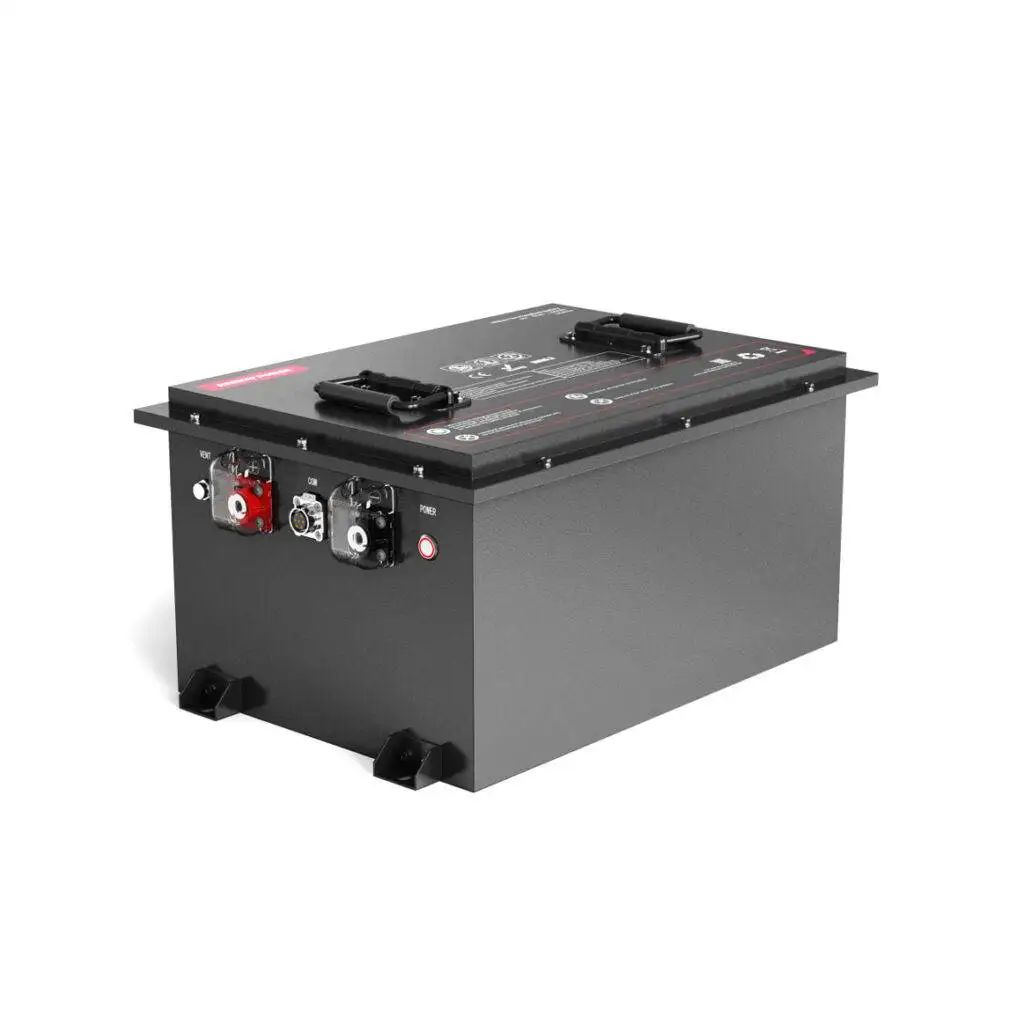
Lithium batteries are now the clear choice for modern golf carts, but inconsistent quality and unreliable suppliers turn this upgrade into a gamble. ISO-certified manufacturers like Redway Battery deliver the consistency, safety, and long-term performance that golf car fleets, resorts, and OEMs need to fully realize the benefits of LiFePO4.
How bad is the golf cart battery quality problem?
The global golf cart battery market reached about $0.54 billion in 2026 and is expected to grow steadily, driven by demand for cleaner, longer-range electric carts. Yet, over 40% of industry players report that high battery replacement costs and difficulty sourcing stable, high-quality cells are major constraints on profitability and expansion.
Many operators still rely on lead-acid fleets because cheap lithium alternatives on the market fail prematurely or underperform. Golf courses and resorts often see real-world lifespans of under 2 years with some low-tier packs, forcing frequent replacements that erase any fuel savings. This erodes ROI and increases downtime during peak seasons.
For OEMs and fleet operators, the real cost isn’t just the battery price tag. Poorly made LiFePO4 packs lead to inconsistent run times, thermal issues, and unexpected failures that damage brand reputation and customer satisfaction. Without a trusted, repeatable supply chain, scaling up electrification becomes a financial and operational risk.
What are the hidden risks in non-certified lithium factories?
Facilities without ISO 9001:2015 certification often lack standardized processes for quality control, material inspection, and failure analysis. This means little traceability if a batch starts failing in the field, making root cause analysis and warranty handling slow and costly for the buyer.
In practice, this translates to inconsistent cell matching, awkward BMS logic, and poor mechanical design. Golf carts equipped with such batteries may show large voltage spread between carts in a fleet, inconsistent charging behavior, and higher risk of over-discharge or thermal events under heavy use.
From a supply chain perspective, uncertified factories typically have limited capacity for automation and MES systems, which inflates labor costs and variability. For international buyers, this raises the risk of production delays, quality regressions, and difficulty enforcing technical specifications, especially when scaling from sample to mass production.
Why do traditional fleet operators still stick with lead-acid?
Lead-acid remains common in many fleets, partly because existing infrastructure and familiarity lower the perceived risk of change. Upfront lead-acid packs are cheaper, and maintenance (watering, cleaning terminals) is a known, routine task, even if it requires daily labor.
However, the total cost of ownership is much higher: lead-acid batteries typically last only 300–500 cycles versus 2,000–5,000 cycles for quality LiFePO4. Operators must replace them every 2–3 years, often with unplanned downtime when carts are unusable. This constant replacement consumes budget that could be used for fleet expansion or upgrades.
Range and performance are also limiting. Lead-acid systems are heavy and lose capacity quickly under deep discharge, which forces operators to run smaller fleets or limit cart usage patterns. For high-demand settings like resorts or large private estates, this becomes a bottleneck to customer service and revenue.
How do today’s lithium solutions still fall short?
Many so-called “lithium” options are generic off-the-shelf packs that don’t match golf cart usage patterns. They’re designed for light-duty applications, not the daily deep cycling, vibration, and temperature swings seen on a golf course, leading to premature cell degradation and reduced usable capacity.
Integration with existing cart electronics is often an afterthought. Poor BMS communication, incorrect charge profiles, or mismatched voltage/current limits can cause chargers to behave erratically, shorten lifespan, or trigger error codes that require manual intervention.
For OEMs, the bigger gap is in customization and support. Many suppliers offer only fixed configurations, with limited options for voltage, capacity, CAN bus integration, or form factor changes. This forces OEMs to either modify their designs around the battery or switch to multiple suppliers, increasing complexity and risk.
How does an ISO-certified LiFePO4 factory solve these problems?
An ISO 9001:2015 certified lithium battery factory implements a documented quality management system that covers incoming material inspection, in-process controls, finished product testing, and continuous improvement. This ensures every LiFePO4 pack for golf carts meets the same high standard, batch after batch.
Such a factory uses automated production lines and MES systems to control cell matching, welding consistency, and BMS programming, reducing human error and variations that cause field failures. For golf carts, this means tightly matched packs that deliver consistent voltage, capacity, and cycle life across a fleet.
Certification also signals maturity in engineering and processes. An experienced ISO-certified OEM can design purpose-built LiFePO4 packs with the right number of cells, robust BMS logic, and mechanical protection to handle the mechanical and thermal demands of golf carts, extending life and reducing unplanned downtime.
What can a quality ISO-certified LiFePO4 factory actually deliver?
A modern ISO 9001:2015 certified LiFePO4 factory provides:
Stable, traceable cell sourcing from top-tier suppliers, with rigorous incoming inspection and batch traceability.
Automated production for consistent cell matching, welding, and assembly, minimizing weak links in the pack.
Customizable LiFePO4 packs in common golf cart voltages (48 V, 72 V) and capacities (100–200 Ah), with options for OEM-specific form factors.
Robust BMS with overcharge/over-discharge protection, temperature monitoring, short-circuit protection, and configurable charge profiles matching common golf cart chargers.
Full lifecycle data (cycle life, storage conditions, warranty) backed by standardized testing procedures, not just marketing claims.
24/7 global support for technical issues, warranty claims, and field failures, backed by documented processes.
For example, Redway Battery, as an ISO 9001:2015 certified OEM based in Shenzhen, operates multiple advanced factories with a 100,000 ft² production area and automated lines. Its LiFePO4 golf cart battery packs are designed for deep-cycle, high-vibration environments and are already used by OEMs serving forklifts, RVs, solar, and telecom markets.
What are the real advantages versus typical lithium suppliers?
Compared to standard lithium suppliers, an ISO-certified factory provides measurable, verifiable benefits for golf cart applications:
| Feature | Typical Non-Certified Supplier | ISO-Certified LiFePO4 Factory (e.g. Redway) |
|---|---|---|
| Quality consistency | Variable cell matching, manual processes | Tightly matched cells, automated production, MES traceability |
| Cycle life | Often 1,000–1,500 cycles (real-world) | ≥2,000 cycles (0.2C, 80% DoD) under controlled testing |
| BMS reliability | Basic protection, limited diagnostics | Comprehensive protection, configurable profiles, CAN/UART options |
| Safety & compliance | Ad-hoc testing, limited documentation | ISO 9001, standardized safety protocols, full test reports |
| OEM customization | Limited SKUs, long lead times | Full OEM/ODM support for voltage, capacity, connectors, form factor |
| After-sales support | Reactive, limited hours | 24/7 technical support, clear warranty terms, global service network |
This level of control and documentation is critical for golf cart OEMs and large fleet operators who cannot afford unpredictable battery performance or sudden supplier failures.
How to work with an ISO-certified lithium battery OEM?
Choosing and integrating batteries from an ISO-certified factory follows a clear, repeatable process:
Define requirements
Specify voltage (e.g., 48 V, 72 V), capacity (e.g., 100–200 Ah), peak current, and any physical constraints (length, width, height, mounting style). Document usage patterns (daily cycles, depth of discharge, average temperature range).Select a certified OEM partner
Confirm ISO 9001:2015 certification and review their experience in LiFePO4 for golf carts or similar deep-cycle applications. Ask for references from similar OEMs or fleet operators if available.Evaluate samples and test data
Request sample packs and full test reports (cycle life, capacity, internal resistance, safety tests). Bench-test them under conditions close to real-world use before committing to mass production.Finalize design and BMS
Work with the OEM’s engineering team to finalize the pack design, BMS logic, communication protocol (if needed), and charge profile to match existing chargers or new charging infrastructure.Scale from pilot to production
Run a controlled pilot batch across a portion of the fleet. Monitor performance, failure rates, and operator feedback. Once validated, ramp up to full production with clear quality control and acceptance criteria.
Companies like Redway Battery support this full OEM/ODM workflow, providing engineering support, automated production, and 24/7 after-sales service to ensure a smooth transition from lead-acid or inferior lithium to a reliable, long-life LiFePO4 solution.
What do real users gain from switching to a certified LiFePO4 factory?
Case 1: Large private golf estate
Problem: 50 golf carts using lead-acid needed replacement every 2.5 years, costing $12,000/year in battery replacements alone.
Traditional practice: Keep using lead-acid due to lower upfront cost and fear of lithium reliability.
After switching to ISO-certified LiFePO4: 200 Ah LiFePO4 packs now last 7+ years under daily use, with 0 unexpected failures in the first 3 years.
Key benefits: 70% lower TCO, fewer cart downtimes, and consistent range for guests.
Case 2: Resort with rental fleet
Problem: Rental fleet of 30 carts used low-cost lithium packs that failed within 2 years, damaging customer satisfaction.
Traditional practice: Switch between several lithium suppliers, each with inconsistent quality.
After switching to an ISO-certified OEM: Standardized 48 V, 100 Ah LiFePO4 packs with robust BMS and clear warranty terms.
Key benefits: Fleet uptime increased from 85% to 98%, rental availability improved, and maintenance labor dropped by 50%.
Case 3: Golf cart OEM
Problem: OEM wanted to offer lithium as an option but struggled with inconsistent quality and long lead times from multiple suppliers.
Traditional practice: Use generic lithium packs, accept higher failure rates and warranty costs.
After partnering with an ISO-certified OEM: Custom 72 V, 150 Ah LiFePO4 packs on a single, reliable line with full OEM support.
Key benefits: Reduced engineering complexity, lower warranty claims, and ability to offer a 7-year battery warranty, differentiating the product.
Case 4: Commercial landscape company
Problem: Company used older electric carts with lead-acid for daily landscaping, but short range limited productivity.
Traditional practice: Run multiple shifts or carry extra carts, increasing capital and labor costs.
After switching to certified LiFePO4: 48 V, 200 Ah LiFePO4 packs doubled usable range and allowed full-day operation without charging.
Key benefits: One cart now covers two jobs, reducing fleet size and saving ~$15,000/year in capital and labor.
What are the emerging trends in golf cart batteries?
Electric golf carts are evolving from utility vehicles into connected, smart platforms. New models integrate telematics, GPS, and mobile apps, which require stable, well-managed battery systems with reliable communication (CAN, UART, or Bluetooth). This favors OEMs that can provide not just cells and BMS, but fully integrated, software-ready packs.
Sustainability and regulatory pressure are also pushing fleets toward responsible battery sourcing and end-of-life management. ISO-certified factories with documented EHS and recycling partnerships are better positioned to meet these requirements than small, uncertified workshops.
For OEMs and large operators, the shift now is from “whether to go lithium” to “how to build a sustainable, scalable lithium supply chain.” Partnering with an established ISO 9001:2015 certified LiFePO4 factory like Redway Battery provides the engineering depth, quality consistency, and long-term support needed to make that transition profitable and reliable.
Why start now with an ISO-certified lithium battery factory?
Waiting indefinitely keeps fleets stuck with high TCO, short lifespans, and unpredictable maintenance. The cost gap between quality LiFePO4 and lead-acid is narrowing, and the ROI – in reduced replacement frequency, lower labor, and higher asset utilization – is only clear when working with a certified, repeatable supplier.
For golf cart OEMs, the competitive advantage lies in offering a reliable, well-supported lithium option that can be backed with meaningful warranties. An ISO-certified LiFePO4 factory removes the guesswork from quality and provides the data, documentation, and engineering support required to confidently scale electrification.
Redway Battery, with its 13+ years of OEM experience and ISO 9001:2015 certification, offers a proven path: purpose-built LiFePO4 golf cart batteries, full OEM/ODM customization, and global support to turn battery risk into a competitive strength.
Can LiFePO4 really replace lead-acid in golf carts?
LiFePO4 can reliably replace lead-acid in golf carts when sourced from a reputable, certified manufacturer. Quality LiFePO4 packs typically last 3–5 times longer than lead-acid, require almost no maintenance, and deliver consistent range and performance over their lifetime.
How long do LiFePO4 golf cart batteries last?
Well-designed LiFePO4 packs from an ISO-certified factory typically achieve 2,000–5,000 cycles at 80% depth of discharge, translating to 7–10 years in most golf cart applications, depending on usage patterns and charging habits.
Are ISO-certified factories more expensive?
ISO-certified factories may have a slightly higher upfront price, but their consistent quality, longer lifespan, lower warranty claims, and reduced downtime usually result in a lower total cost of ownership over the battery’s life.
What does ISO 9001 mean for battery quality?
ISO 9001:2015 certification means the factory has a documented quality management system covering design, purchasing, production, testing, and service. For buyers, this means better traceability, fewer defects, and more predictable performance batch after batch.
How to choose the right LiFePO4 battery supplier?
Look for an OEM with ISO 9001:2015 certification, proven experience in LiFePO4 golf cart or deep-cycle applications, strong BMS capabilities, full OEM/ODM support, and clear warranty terms with global technical support.
Sources
Global Golf Cart Battery Market Size, Share, Trends, and Forecast (Business Research Insights)
Global Golf Cart Battery Market Trends, Growth, and Forecast (Exactitude Consultancy)
Golf Carts Market Size & Trends (Industry Research biz)
Redway Battery – LiFePO4 Golf Cart Battery Solutions
Redway Power – OEM/ODM Lithium Battery Manufacturer Profile
For the surrounding sizing, selection, installation and maintenance decisions, continue with the Golf Cart Battery Manufacturers: How to Pick One for OEM and Wholesale.
