




REDWAY BATTERY / KNOWLEDGE
What is the difference between the 12V Ultra and standard 12V lithium batteries?

Redway Battery Editorial Team
Talk / Battery Q&A
An RV upfitter is deciding between the standard 12V 100Ah self-heating OEM pack and the 12V 100Ah Ultra for a tight compartment with a 100A inverter load.
Direct answer: Read the two product tables side by side. On current public pages, the standard 12V 100Ah (self-heating, OEM) lists about 1280 Wh, roughly 260 × 168 × 210 mm and about 10 kg with self-heating marked Yes and charge/discharge options at 50A or 100A class. The 12V 100Ah Ultra lists 1280 Wh, about 502 × 187 × 242 mm and about 13 kg, self-heating No as standard, and 100A maximum continuous charge and discharge. The 12V 200Ah Ultra lists 2560 Wh with 100A continuous limits. Pick the case that fits the tray and the current your inverter needs—optional upgrades differ by order.
Size and weight. Ultra 100Ah is a larger footprint than the Group-24-oriented standard 100Ah; tray fit notes appear in Group 24 tray fit. Measure before ordering 12V 100Ah Ultra (1280 Wh) versus 12V 100Ah (about 1.28 kWh).
Current. Ultra pages list 100A continuous charge and discharge on the 100Ah and 12V 200Ah Ultra (2560 Wh) models. Standard 12V 100Ah pages list selectable continuous ratings; match the inverter and fuse plan, as in cable and fuse sizing.
Self-heating. Standard 12V 100Ah lists self-heating Yes; Ultra 100Ah and 200Ah list self-heating No on the base table, with self-heating among optional upgrades. Cold charging behaviour therefore differs unless you order the option; see self-heating warm-up.
Energy. Ultra 200Ah lists 2560 Wh versus about 2500 Wh commonly cited for the standard 12V 200Ah page—use the live table when you buy.
Parallel limits. Ultra 100Ah lists up to four in parallel; confirm series/parallel rules on the page you order and follow SOC matching before paralleling.
Same care. Charge voltage 14.6V and 10V cut-off appear on both Ultra tables; use a lithium profile charger. IP65 and ABS shell are listed on the Ultra pages.
How to choose. Tight Group 24 tray and want built-in self-heating: start with the standard 100Ah page. Need a documented 100A continuous on a larger case: Ultra. Always re-check the live product table before PO. Keep serial numbers, photos and settings notes with the site file for later service or claims. Prefer written confirmation when thresholds, warranties, packing modes or inverter settings are involved. Re-check the live Redway product table before the purchase order is issued.
↳ Replying to Redway Battery Editorial Team
Compare published tables for the exact SKUs on the quote; naming alone does not prove current or self-heating.
↳ Replying to Procurement perspective
Measure the compartment against Ultra dimensions before assuming a drop-in swap.
↳ Replying to Selection/Engineering perspective
If cold charging matters, confirm whether self-heating is base or optional on the line item you buy.
Read the two product tables side by side. On current public pages, the standard 12V 100Ah (self-heating, OEM) lists about 1280 Wh, roughly 260 × 168 × 210 mm and about 10 kg with self-heating marked Yes and charge/discharge options at 50A or 100A class. The 12V 100Ah Ultra lists 1280 Wh, about 502 × 187 × 242 mm and about 13 kg, self-heating No as standard, and 100A maximum continuous charge and discharge. The 12V 200Ah Ultra lists 2560 Wh with 100A continuous limits. Pick the case that fits the tray and the current your inverter needs—optional upgrades differ by order.
Verify before ordering: Specifications can change by revision; confirm dimensions, current limits and self-heating on the current Redway product pages for the SKUs ordered.
Editorial Q&A for battery selection and operations. Product figures cited from Redway product pages.
Related products
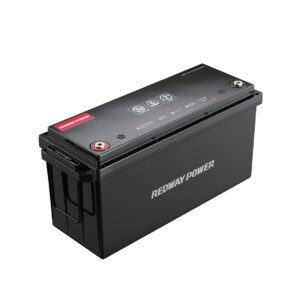 12V 100Ah LiFePO4 Lithium Battery (Ultra)
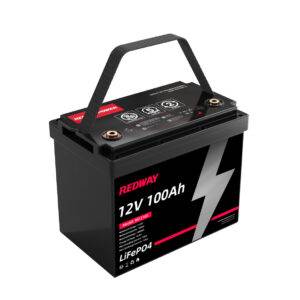 12V 100Ah Lithium Battery (LiFePO4, Self-heating, OEM)
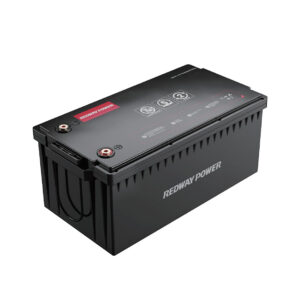 12V 200Ah LiFePO4 Lithium Battery (Ultra)
Related articles & discussions
- What Are the Differences Between IEC 62133 and UL 2054 Battery Safety Standards?
- What is the Difference Between Energy Storage and Battery Storage?
- How Much Do Standard Golf Cart Batteries Cost?
- What is the difference between LTO and LFP?
- Understanding the Difference Between IEC 62133-1 and IEC 62133-2 Battery Safety Standards
- What is the difference between a marine battery and a deep cycle battery?
- What is the difference between a deep cycle battery and a marine battery?
- What Is The Difference Between Batteries In Parallel Vs Series?
- What Is the Difference Between Deep Cycle and Normal Batteries?
- What Is the Size Difference Between Group 24 and Group 27 Batteries?
