




REDWAY BATTERY / KNOWLEDGE
What Should You Know About Lithium-Ion Forklift Battery Use?
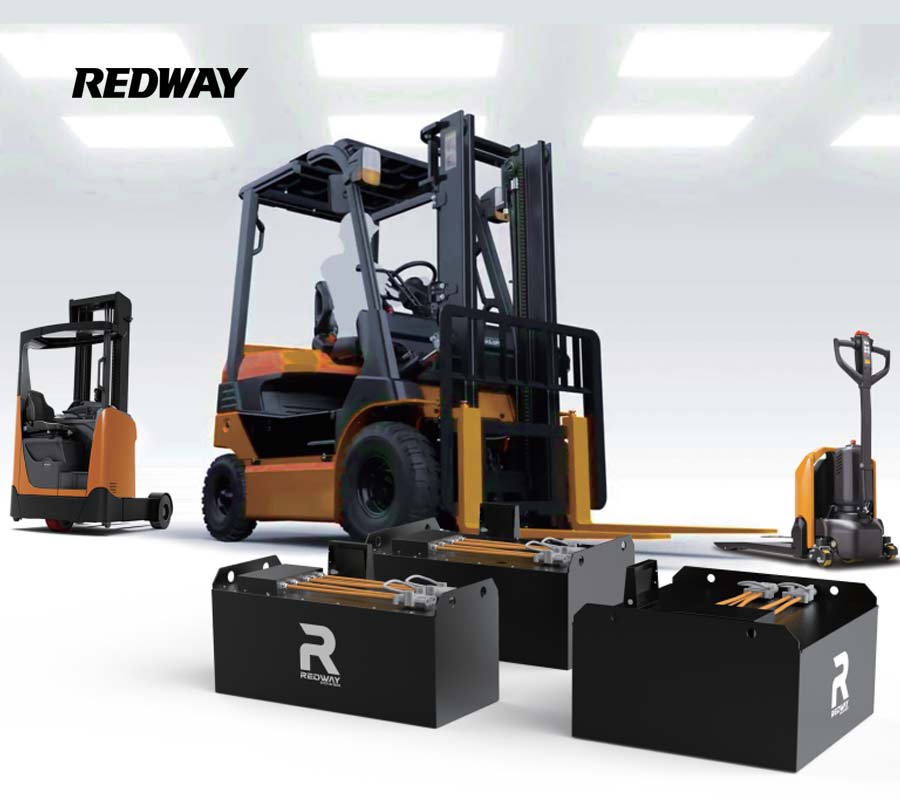
Lithium-ion forklift batteries are advanced power systems replacing lead-acid due to higher energy density (150-200Wh/kg), longer lifespan (2,000–5,000 cycles), and rapid charging (1-2 hours). They operate in 24V–80V ranges with integrated BMS for thermal and overcharge protection. Proper use involves avoiding full discharges, maintaining 15°C–35°C operating temps, and using compatible chargers. Ideal for high-throughput warehouses needing 8–12 hours runtime.
24V 280Ah Lithium Forklift Battery
What safety measures are critical for lithium forklift batteries?
Key safety practices include monitoring temperature thresholds (60°C max), ensuring ventilation, and avoiding physical damage. BMS safeguards against overvoltage (≥3.65V/cell) and deep discharge (≤2.5V/cell). Pro Tip: Never bypass the BMS—thermal runaway risks escalate if cells exceed 80°C. For example, a 48V 600Ah battery in a humid warehouse requires monthly terminal cleaning to prevent corrosion-induced shorts. Transitioning from lead-acid? Lithium packs don’t emit hydrogen, eliminating explosion risks during charging.
How do lithium batteries outperform lead-acid in forklifts?
Lithium offers 3x faster charging, 50% lighter weight, and zero maintenance vs. lead-acid’s water refilling. A 36V 200Ah lithium pack delivers 7.2kWh with 95% efficiency, whereas lead-acid loses 20% energy as heat. Practically speaking, warehouses reduce downtime by opportunity charging during breaks. Imagine replacing a 1,500kg lead-acid battery with a 500kg lithium unit—forklift payload capacity increases 15%. But what about cost? Though pricier upfront, lithium’s 10-year lifespan vs. 3–5 years for lead-acid cuts TCO by 30%.
| Feature | Lithium-Ion | Lead-Acid |
|---|---|---|
| Cycle Life | 2,000–5,000 | 500–1,200 |
| Charge Time | 1–2 hrs | 8–10 hrs |
| Energy Density | 150–200 Wh/kg | 30–50 Wh/kg |
What’s the optimal charging protocol for lithium forklift batteries?
Use CC-CV charging with current tapered after 80% SOC. Ideal SOC range: 20%–90% to prevent cell stress. For a 24V 550Ah pack, a 100A charger fills 80% in 1.1 hours (24V × 550Ah × 0.8 / 100A = 1.056h). Beyond speed, why not charge to 100% daily? Full charges above 4.2V/cell accelerate cathode degradation. Real-world case: A logistics hub using partial charges reported 18% longer battery life over 3 years. Transitional phases matter—always cool batteries to 30°C before recharging.
48V 600Ah Lithium Forklift Battery
How to choose voltage (24V vs. 48V vs. 80V) for your forklift?
Match voltage to forklift motor specs and load capacity. 24V suits light-duty (1–3 tons), 48V for medium (3–8 tons), and 80V for heavy-duty (10+ tons). A 80V 400Ah battery delivers 32kWh, powering 12-hour shifts in container handlers. But what if you choose wrong? Underpowered 48V systems in 10-ton lifts risk motor overheating. Pro Tip: Check OEM voltage tolerances—some motors accept ±10% voltage variance. Real-world example: An auto plant upgraded 48V to 80V, reducing charge cycles from 3x to 1x daily.
| Voltage | Application | Runtime |
|---|---|---|
| 24V | Pallet jacks | 6–8 hrs |
| 48V | Reach trucks | 8–10 hrs |
| 80V | Container handlers | 10–12 hrs |
What maintenance extends lithium forklift battery life?
Conduct monthly capacity tests, update BMS firmware, and keep terminals clean. Unlike lead-acid, lithium doesn’t need watering but benefits from 25°C storage. Ever seen swollen cells? That’s often due to chronic over-discharge—replace imbalanced cells promptly. A 48V 300Ah pack stored at 50% SOC in climate control retains 95% capacity after 2 years. Transitional care steps: After deep discharges, recharge within 24 hours to prevent sulfation (yes, lithium can sulfate minimally).
How do lithium forklift batteries impact sustainability?
Lithium batteries reduce CO2 emissions by 40% vs. lead-acid due to longer life and recyclability. Redway’s closed-loop program recovers 95% of Li, Co, and Ni. For instance, 1,000 recycled 24V 150Ah batteries yield 3.2 tons of reusable metals. But are mining impacts a concern? Ethical sourcing and ISO 14001-certified plants mitigate this. Transitioning fleets to lithium cuts disposal frequency—5 lithium packs vs. 15 lead-acid over 15 years.
Redway Battery Expert Insight
FAQs
Yes, if voltage and dimensions match. Redway offers drop-in 24V–80V replacements with adapter plates for legacy models.
How long do lithium forklift batteries last daily?
8–12 hours runtime, depending on load. A 48V 600Ah pack runs 10+ hours in 5-ton forklifts.
Do lithium batteries require special chargers?
Yes—use only lithium-certified chargers with voltage matching (e.g., 54.6V for 48V systems). Lead-acid chargers risk overcharging.
What’s the warranty on lithium forklift batteries?
Redway offers 5–7 year warranties, covering 70% capacity retention. Lead-acid typically has 1–2 years.
Are lithium forklift batteries recyclable?
Yes—95% recyclable via Redway’s program. Lead-acid is 99% recyclable but involves toxic lead smelting.
This topic belongs to the wider Lithium Forklift Battery: What Changes on a Real Shift Pattern, which brings the related decisions and practical checks together.
