




REDWAY BATTERY / KNOWLEDGE
One 12V 300Ah battery or two 12V 150Ah in parallel for a van build?

Redway Battery Editorial Team
Talk / Battery Q&A
A van converter needs about 300Ah at 12V for a fridge, lights, diesel heater and a modest inverter, and is choosing between one large battery and two smaller ones in parallel.
Direct answer: Both approaches can deliver similar energy: one 12V 300Ah pack (about 3.84 kWh at 12.8V) or two 12V 150Ah packs in parallel (about 1.92 kWh each). Choose one large battery for simpler wiring and fewer interconnects, or two in parallel when you need redundancy, easier lifting through a small hatch, or a thin form factor such as the 12V 150Ah EU thin size. If you parallel, match SOC before connecting, keep cable lengths equal, and fuse each battery.
Energy and current. Nominal energy is similar either way. What differs is how current shares and how hard each BMS works. A single 300Ah pack carries the full inverter and DC load through one set of terminals and one BMS. Two 150Ah packs share current only if cabling is symmetrical; unequal cables mean one pack works harder and may hit current limits first.
Physical fit. Prior articles note the standard 12V 150Ah around Group 31 footprint and the EU thin size at roughly 552 × 110 × 288 mm for tight skirts or seat bases; confirm the latest drawings. A single 300Ah case may be easier electrically but harder to lift into a high cupboard. For related capacity-choice thinking on other platforms, see choosing among capacity steps.
Redundancy. If one paralleled battery opens on protection, the other may still run essential loads at reduced capability. A single pack is a single point of failure unless you also carry a jump pack or second bank.
Cabling practice. Use equal-length positive and negative cables to a common busbar, correctly sized fuses at each battery positive, and a main disconnect. Do not daisy-chain heavy loads off one battery’s terminals while the other only sense-wires in.
Balancing and maintenance. Parallel LiFePO4 packs should be at similar SOC and voltage before paralleling; after install, periodic checks of individual voltages catch a weak unit early. See matching SOC before paralleling.
Charge limits. Confirm each model’s continuous charge rating and set the charger or DC-DC below the bank limit. Parallel banks add capacity but do not automatically double every model’s allowed charge current unless the supplier says so.
When one 300Ah wins. Simple vans with one inverter, good access for a heavy pack, and no need for modular replacement usually favour one battery.
When two 150Ah win. Narrow compartments, DIY installs where two lighter lifts are safer, or owners who want to replace or expand one module at a time.
↳ Replying to Redway Battery Editorial Team
Compare total installed cost including fuses, busbars and labour, not only cell price per Ah; paralleling adds parts.
↳ Replying to Procurement perspective
Check continuous charge and discharge ratings and plan symmetrical cabling before choosing two smaller packs.
↳ Replying to Selection/Engineering perspective
If you parallel, schedule occasional individual voltage checks so one weak battery cannot hide on the bus.
Both approaches can deliver similar energy: one 12V 300Ah pack (about 3.84 kWh at 12.8V) or two 12V 150Ah packs in parallel (about 1.92 kWh each). Choose one large battery for simpler wiring and fewer interconnects, or two in parallel when you need redundancy, easier lifting through a small hatch, or a thin form factor such as the 12V 150Ah EU thin size. If you parallel, match SOC before connecting, keep cable lengths equal, and fuse each battery.
Verify before ordering: Exact dimensions, weights and current limits are model-specific; confirm on the Redway product pages or datasheets for the batteries you order.
Editorial Q&A for battery selection and operations. Product figures cited from Redway product pages.
Related products
 12V 300Ah Lithium Battery
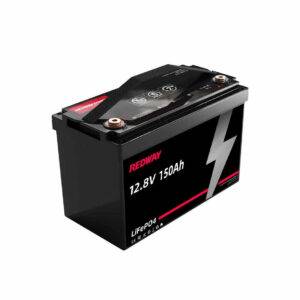 12V 150Ah Lithium Battery
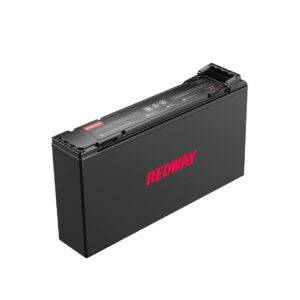 12V 150Ah EU Lithium Battery (Thin Size)
Related articles & discussions
- How to Choose a 12V 150Ah Lithium Battery Factory for Your Business
- Can I Connect Two 12V Batteries in Parallel for a 12V Inverter?
- Can You Run Two Batteries in Series and Parallel at the Same Time?
- How to choose a 12V 150Ah deep cycle lithium battery for RVs from a Chinese manufacturer?
- Can I charge 2 12V batteries in parallel?
- How Do You Charge 3 12V Batteries in Parallel?
- Why Choose Redway Battery’s 12V 150Ah EU Lithium Iron Phosphate Battery?
- Why Consider the Redway 24V 150Ah Lithium Iron Phosphate Battery?
- How to choose a 12 Volt 150Ah Lithium Deep Cycle Battery for OEM needs?
- How many solar panels do I need to charge 300ah lithium battery?
