




REDWAY BATTERY / KNOWLEDGE
How do you handle an insulation or ground-fault alarm on a high-voltage forklift battery?

Redway Battery Editorial Team
Talk / Battery Q&A
A counterbalance truck running an 80V lithium pack shows an insulation or ground-fault warning on the dash after a wet shift, and the driver asks whether it is safe to finish the load.
Direct answer: Treat it as a safety stop, not a nuisance code. An insulation or ground-fault alarm means the truck or battery electronics have measured a lower-than-expected resistance between the traction circuit and the frame, so current may have a path to the chassis. Park the truck, lower the forks, switch off, open the battery disconnect, and keep it out of service until a trained technician has found the leak path. Do not reset and keep driving.
Who raises the alarm. On many electric trucks the insulation check sits in the truck controller rather than in the battery; on others the BMS reports it. Packs such as the 80V 300Ah-class (83.2V, about 26.21 kWh) and 80V 400Ah-class (about 34.94 kWh) list high-voltage detection and RS485/CAN communication on their pages, so read the fault code on both the truck display and the battery display or app before deciding where to look.
Common leak paths. Water or wash spray on cable glands and the charging socket, a cable chafed against the battery tray or counterweight, a cracked connector housing, conductive dust on terminals, or moisture inside a motor or contactor. The battery is only one of several suspects; the truck service manual should list the measurement points for the model you run.
Safe first checks. With the battery disconnected, inspect cables, lugs and the charge connector for damage, burn marks and moisture. Dry the area and check whether the alarm returns. Insulation-resistance testing at traction voltage should be done only by a qualified technician following the truck OEM and battery supplier procedure, because the test instrument and limits are model-specific.
If the battery is suspected. Disconnect it from the truck and ask the supplier for a guided check of the pack enclosure, cell modules and internal wiring. Send the serial number, fault codes, photos and recent charge history. For the 72V 300Ah pack and the 80V models, keep the fault record with the serial file so warranty decisions are evidence-based; see what to do with BMS alarms.
Prevention. Keep wash water away from the pack and sockets, re-route cables that touch sharp metal, replace damaged connector boots, and add an insulation-alarm line to the daily pre-shift check. Charging communication and connector choice also matter; see charger requirements for lithium.
Restart rule. Return the truck to service only after the cause is found and fixed and the alarm stays clear through a test run. Record what was found so a repeat at the same truck points straight to the weak spot.
↳ Replying to Redway Battery Editorial Team
Write “insulation alarm = park and tag out” into the site safety rules so drivers are not left to judge it alone.
↳ Replying to Procurement perspective
The alarm source may be truck controller or BMS; read both fault logs before swapping parts.
↳ Replying to Selection/Engineering perspective
Wet washing and chafed cables cause most leak paths we see in checklists; inspect glands, boots and cable runs first.
Treat it as a safety stop, not a nuisance code. An insulation or ground-fault alarm means the truck or battery electronics have measured a lower-than-expected resistance between the traction circuit and the frame, so current may have a path to the chassis. Park the truck, lower the forks, switch off, open the battery disconnect, and keep it out of service until a trained technician has found the leak path. Do not reset and keep driving.
Verify before ordering: Insulation-monitoring thresholds, test points and test voltages depend on the truck model and battery BMS; follow the truck OEM service manual and written guidance from Redway engineering (available on request).
Sources checked: OSHA 29 CFR 1910.178.
Editorial Q&A for battery selection and operations. Product figures cited from Redway product pages.
Related products
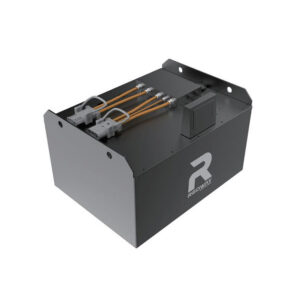 80V 300Ah (83.2V 315Ah) Forklift Lithium Battery
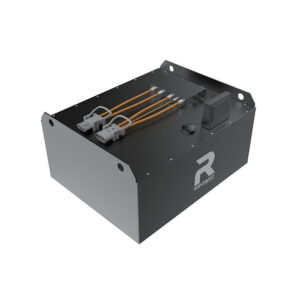 80V 400Ah (83.2V 420Ah) Forklift Lithium Battery
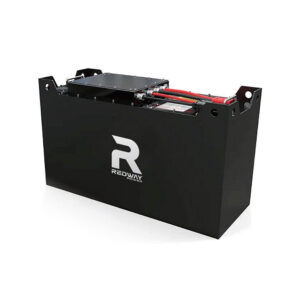 72V 300Ah (76.8V 300Ah) Lithium Forklift Battery
Related articles & discussions
- What Are Essential Forklift Safety Tips and Resources?
- Understanding 80V 700Ah Forklift Lithium Batteries: Redway Battery Insights
- How Do LiFePO4 Batteries Enhance Forklift Performance in High-Demand Applications?
- Best High-Performance Lithium Ion Forklift Batteries for Industrial and Warehouse Operations
- Redway Battery 36V 240Ah Lithium Forklift Battery: High-Performance Energy Solutions
- How to Restore a Forklift Battery: Costs, Methods, and Safety Tips?
- What Are H36-48XD High Capacity IC Forklifts?
- What is the Minimum Voltage for BMS?
- What Are Redway Forklift Battery Safety Features?
- Forklift LiFePO4 Battery Capacity and Voltage: What to Consider?
