




REDWAY BATTERY / KNOWLEDGE
Which BMS settings should an OEM buyer specify in a custom battery order?

Redway Battery Editorial Team
Talk / Battery Q&A
An equipment maker is ordering a custom 48V LiFePO4 pack for a new floor-cleaning machine and wants the BMS to behave predictably in the field.
Direct answer: Specify the protection limits with their delays and recovery conditions, the temperature limits for charge and discharge, balancing method and thresholds, standby and sleep behaviour, communication protocol and data, and firmware version control. Then verify each setting on samples. If the BMS supplier or firmware changes later, those settings must be re-confirmed.
Voltage limits. Cell over-voltage and under-voltage thresholds, delay times and release values; pack limits if separate. These set usable capacity and how the pack behaves at full and empty. Align them with the charger and the machine’s low-battery warning.
Current limits. Continuous discharge and charge limits, short-time overload levels with durations, short-circuit threshold and response time, and whether limits are reported to the machine. For example, the 48V 100Ah lithium battery page lists 100A continuous and 300A peak for 15 seconds; your motor and pump profile should be tested against figures like these.
Temperature. Charge and discharge temperature windows, low-temperature charge cut-off, current derating near the limits, and heater control if fitted. Pages such as the 48V 100Ah golf cart battery list -20°C to 65°C operation; your specification should state charge limits explicitly.
Balancing. Passive or active, start voltage, delta threshold and balancing current. Active balancing appears as an optional upgrade on several Redway pages.
Sleep and wake. Standby current, sleep trigger after inactivity or low voltage, wake methods (charger, key signal, button) and recovery from deep protection.
Communication. Protocol (CAN, RS485, Bluetooth), baud rate, message definitions, SOC and SOH reporting, fault codes and logging. The 51.2V 100Ah rack battery lists RS485, RS232 and CAN-bus with DIP addressing, showing the level of detail to request. Ask for the protocol document.
Which BMS. Redway pages list several BMS suppliers (for example JBD, DALY, DAREN or an ‘advanced smart BMS’). Name the BMS model and firmware version in the specification. For industrial applications, IEC 62619 includes safety requirements for the battery system, including its management system; ask which standards the design is tested to, with documents available on request.
Verification. Test limits on samples with a controlled source and load, record firmware version, and sign off a settings sheet. See how an OEM battery project runs.
↳ Replying to Redway Battery Editorial Team
Attach a signed BMS settings sheet and firmware version to the purchase contract, with change notification required.
↳ Replying to Procurement perspective
Test each protection threshold and delay on samples, and check interaction with the machine’s charger and controller.
↳ Replying to Selection/Engineering perspective
Read fault logs from early field units to confirm limits are not tripping in normal use.
Specify the protection limits with their delays and recovery conditions, the temperature limits for charge and discharge, balancing method and thresholds, standby and sleep behaviour, communication protocol and data, and firmware version control. Then verify each setting on samples. If the BMS supplier or firmware changes later, those settings must be re-confirmed.
Verify before ordering: BMS models and default settings vary by order; confirm the exact BMS, firmware and settings with Redway engineering.
Sources checked: IEC 62619 (IEC webstore).
Editorial Q&A for battery selection and operations. Product figures cited from Redway product pages.
Related products
 48V 100Ah Lithium Battery
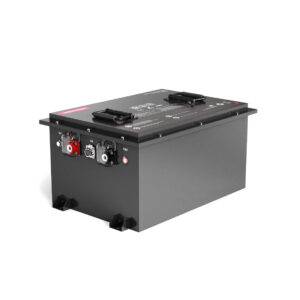 48V 100Ah LiFePO4 Golf Cart Battery
 51.2V 100Ah Server Rack Battery
Related articles & discussions
- How Does a LiFePO4 BMS Work?
- How Do I Choose a BMS for a Lithium-Ion Battery?
- How Can Custom OEM ODM Lithium Battery Packs Transform the Golf Cart Industry?
- How Do Custom Options Impact Forklift Performance and Efficiency?
- How to Choose Custom Industrial Battery Design?
- What Are the Key Considerations for Custom Industrial Battery Design?
- How to Choose the Best Custom Battery Pack Manufacturer?
- How Can Custom Lithium Battery Manufacturing Solve Your Power Needs?
- How Can You Get Custom LiFePO4 Battery Solutions from Redway?
- How Does a BMS Enhance LiFePO4 Forklift Battery Performance
