




REDWAY BATTERY / KNOWLEDGE
How do you dispose of or recycle end-of-life LiFePO4 batteries responsibly?
Redway Battery Editorial Team
Talk / Battery Q&A
A golf club and a warehouse each have a few lithium batteries at end of life and ask how to get rid of them properly.
Direct answer: Do not put them in household or general waste or recycling bins. Take them to a battery recycler, a household hazardous waste point or a take-back scheme, following your region’s rules. Before collection, protect terminals, keep damaged packs apart, store them in a dry, cool place away from combustibles, and ask the supplier and recycler how large packs must be packed and shipped. Rules depend on country and on whether you are a household or a business.
What official sources say. The US EPA says lithium-ion batteries should not go in household garbage or recycling bins, should go to separate recycling or household hazardous waste points, and suggests taping terminals or bagging batteries to prevent fires. For businesses it recommends considering management under the federal universal waste rules (40 CFR part 273). NFPA gives the same disposal advice and says damaged or water-exposed batteries need guidance from the fire department or manufacturer.
In the European Union. Regulation (EU) 2023/1542 covers batteries through their life cycle, including end-of-life management, for categories including industrial, light means of transport and electric-vehicle batteries. National rules set how collection works; ask your supplier or national authority who takes back industrial batteries.
Store safely until pickup. Isolate each battery, cover terminals, keep it upright and dry, and store it away from heat and combustibles. Keep any swollen, leaking, hot or damaged pack in a separate area, and do not charge it; see what to do with a damaged battery.
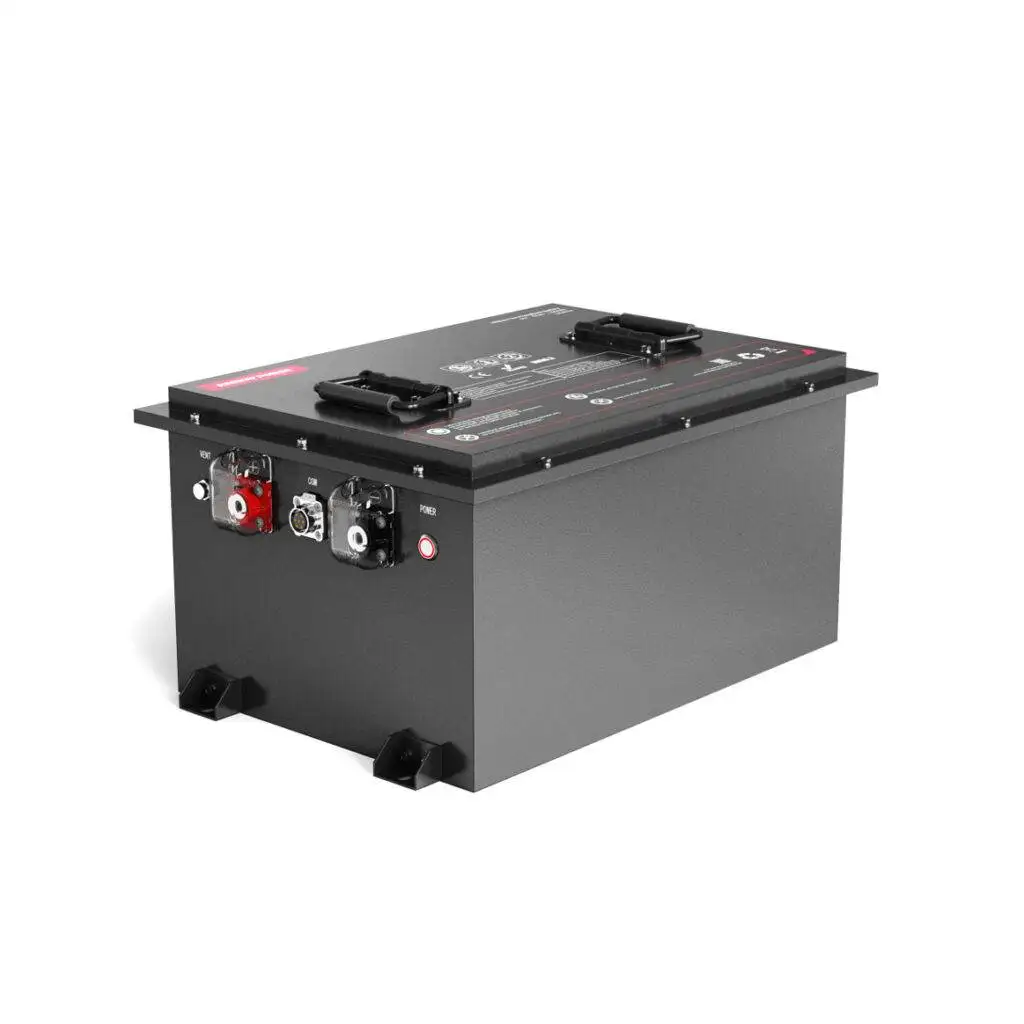
Large packs. Golf cart packs such as the 48V 100Ah (43 kg), forklift packs such as the 48V 400Ah (about 190 kg) and rack modules such as the PM-LV51100-3U (42 kg) need lifting plans and correct packaging. Waste lithium batteries are still dangerous goods in transport; see shipping lithium batteries.
Ask before you buy. Ask suppliers whether they offer take-back or can name a recycler, and who pays for collection. For products, see the golf cart and forklift battery ranges. Keep a record of what was handed over, to whom and when.
Transport to the recycler. Ask the recycler or carrier how large waste packs must be packed and labelled. Damaged or defective lithium batteries can have stricter transport rules than intact ones, so tell them if a pack is damaged.
↳ Replying to Redway Battery Editorial Team
Ask about take-back or recycling terms with each order, and note who pays for collection of large packs.
↳ Replying to Procurement perspective
Separate damaged packs, protect terminals and confirm packaging and transport classification for large batteries with the recycler.
↳ Replying to Selection/Engineering perspective
Store end-of-life batteries dry, cool and isolated, keep a handover record, and never charge a battery that is damaged.
Do not put them in household or general waste or recycling bins. Take them to a battery recycler, a household hazardous waste point or a take-back scheme, following your region’s rules. Before collection, protect terminals, keep damaged packs apart, store them in a dry, cool place away from combustibles, and ask the supplier and recycler how large packs must be packed and shipped. Rules depend on country and on whether you are a household or a business.
Verify before ordering: Disposal rules vary by country, region and whether you are a household or business; check with your local waste authority. Redway take-back terms are not published.
Sources checked: EPA: used lithium-ion batteries; NFPA: lithium-ion battery safety; European Commission: batteries (Regulation (EU) 2023/1542).
Editorial Q&A for battery selection and operations. Product figures cited from Redway product pages.
Related products
 48V 100Ah LiFePO4 Golf Cart Battery
 48V 400Ah (51.2V 420Ah) Lithium Forklift Battery
 51.2V 100Ah Server Rack Battery
Related articles & discussions
- How to increase LiFePO4 battery life?
- How Can Businesses Effectively Recycle Forklift Batteries and Choose Eco-Friendly Options?
- How Do You Prolong the Life of a LiFePO4 Battery?
- Is Electrolyte the Key to LiFePO4 Life?
- How to Maximize LFP Battery Life: Expert Tips for Optimal LiFePO4 Performance
- How Do 48 Volt LiFePO4 Lithium Golf Cart Batteries Benefit Your Business?
- How Long Can You Expect Your LiFePO4 Battery to Last?
- What Are the Best LiFePO4 Cell Suppliers for Your Needs?
- How Can You Maximize the Lifespan of LiFePO4 Batteries?
- How Fast Will a 55lb Trolling Motor Go? Factors & Battery Life
