




REDWAY BATTERY / KNOWLEDGE
What is the correct first power-up sequence after a golf cart lithium install?
Redway Battery Editorial Team
Talk / Battery Q&A
A dealer has just bolted a lithium pack into a customer’s cart and wants a repeatable switch-on routine that avoids sparks, fault codes and call-backs.
Direct answer: Power up in a fixed order: key off and tow/run switch in tow, confirm polarity and torque on every lug, connect the main positive last, wake the BMS by the method in the manual, confirm pack voltage at the controller, then switch to run and do a slow test drive before the first full charge. Log voltage, fault codes and app readings so you have a baseline. Never skip the polarity check; a reversed lead can damage the controller instantly.
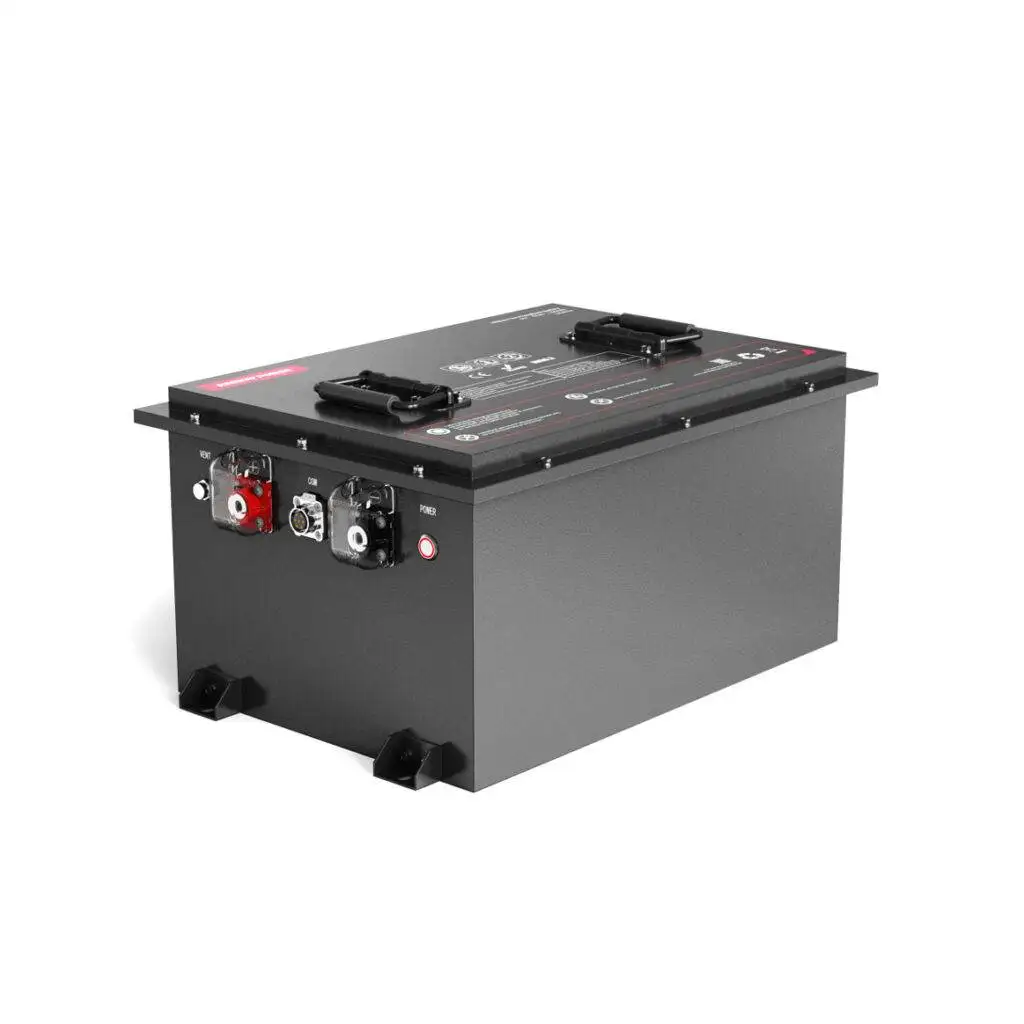
Before connecting. Check that the replacement pack voltage matches the cart system: a 48V 100Ah pack (51.2V nominal, 58.4V max charge) is not interchangeable with a 72V 100Ah pack (87.6V max charge) unless the controller, motor and accessories are rated for it. Confirm the pack is secured in the tray and cables are routed away from sharp edges.
Polarity and lugs. Mark positive and negative leads, confirm with a meter, and tighten the M8 terminals listed on the product pages to the torque in the Redway manual. Loose lugs cause heat and voltage drop that later look like a battery fault.
Connection order. With the key off and the tow/run switch in tow, connect the negative, then the main positive. Some controllers draw a short inrush when capacitors charge; if your cart uses a pre-charge resistor or the battery has a soft-start, follow that procedure rather than making the final connection with a spark.
Wake and verify. Some packs ship in a sleep or storage state and need a button press, switch or charger connection to wake. Then read pack voltage at the controller terminals and in the Bluetooth app if fitted; see reading cell voltage in the app.
First run. Switch to run, check forward and reverse at low speed in a clear area, then a short drive with a gentle hill if available. If the cart will not move, work through no-movement checks before changing parts.
Charge and gauge. Use a charger profile approved for the pack and confirm it stops at the published voltage. Old lead-acid gauges often read wrong after conversion; see gauge reads wrong after upgrade. For a long-size 48V 200Ah pack, also confirm the tray supports the 90 kg weight listed on the page.
Hand-over record. Write the serial number, install date, voltages, charger model and any codes on a job sheet and give a copy to the owner.
↳ Replying to Redway Battery Editorial Team
A written power-up routine cuts call-backs; make it part of every install job sheet.
↳ Replying to Procurement perspective
Polarity check, pre-charge and BMS wake method come first; the manual for the specific pack wins over habit.
↳ Replying to Selection/Engineering perspective
Keep the first-day voltage and app screenshot as the baseline for future service checks.
Power up in a fixed order: key off and tow/run switch in tow, confirm polarity and torque on every lug, connect the main positive last, wake the BMS by the method in the manual, confirm pack voltage at the controller, then switch to run and do a slow test drive before the first full charge. Log voltage, fault codes and app readings so you have a baseline. Never skip the polarity check; a reversed lead can damage the controller instantly.
Verify before ordering: Wake method, pre-charge needs and terminal torque are model-specific; use the Redway manual for your pack (available on request) and the cart OEM service manual.
Editorial Q&A for battery selection and operations. Product figures cited from Redway product pages.
Related products
 48V 100Ah LiFePO4 Golf Cart Battery
 72V 100Ah LiFePO4 Golf Cart Battery (S72105P)
 48V 200Ah LiFePO4 Golf Cart Battery (S51200B, Long Size)
Related articles & discussions
- How to Test a Golf Cart Battery for Optimal Performance?
- How to Test a Golf Cart Battery Charger with a Multimeter?
- What Are the Best Golf Cart Batteries for Solar Power Storage?
- What Are the Best Power Solutions for Electric Golf Carts?
- How to Test a Golf Cart Battery Charger
- How To Test A Golf Cart Battery Properly?
- Is there a way to test golf cart batteries?
- How To Upgrade A Golf Cart To Lithium Power?
- How to Load Test Golf Cart Batteries for Optimal Performance?
- What Should First-Time Forklift Buyers Know?
