




REDWAY BATTERY / KNOWLEDGE
Golf cart will not move after a lithium install: what should you check first?
Redway Battery Editorial Team
Talk / Battery Q&A
A club finishes a lithium retrofit on a 48V cart on Friday afternoon; on Saturday the key turns on but the cart will not move.
Direct answer: Work through a short, safe sequence before blaming the new pack: confirm the battery is awake and showing a healthy voltage and SOC, verify main power and any battery disconnect or tow/run switch, check that the charger is unplugged and any charger interlock is released, then confirm key-switch and controller enable signals and that the pack voltage matches what the controller expects. Most no-move faults after a lithium install are wiring, wake, interlock or controller setup, not a failed pack. Follow the cart maker’s service manual for pin-outs and safety.
Safety first. Park on level ground, set the brake, keep clear of moving parts, and isolate power before reseating connectors. Do not bypass BMS protection with jumper cables.
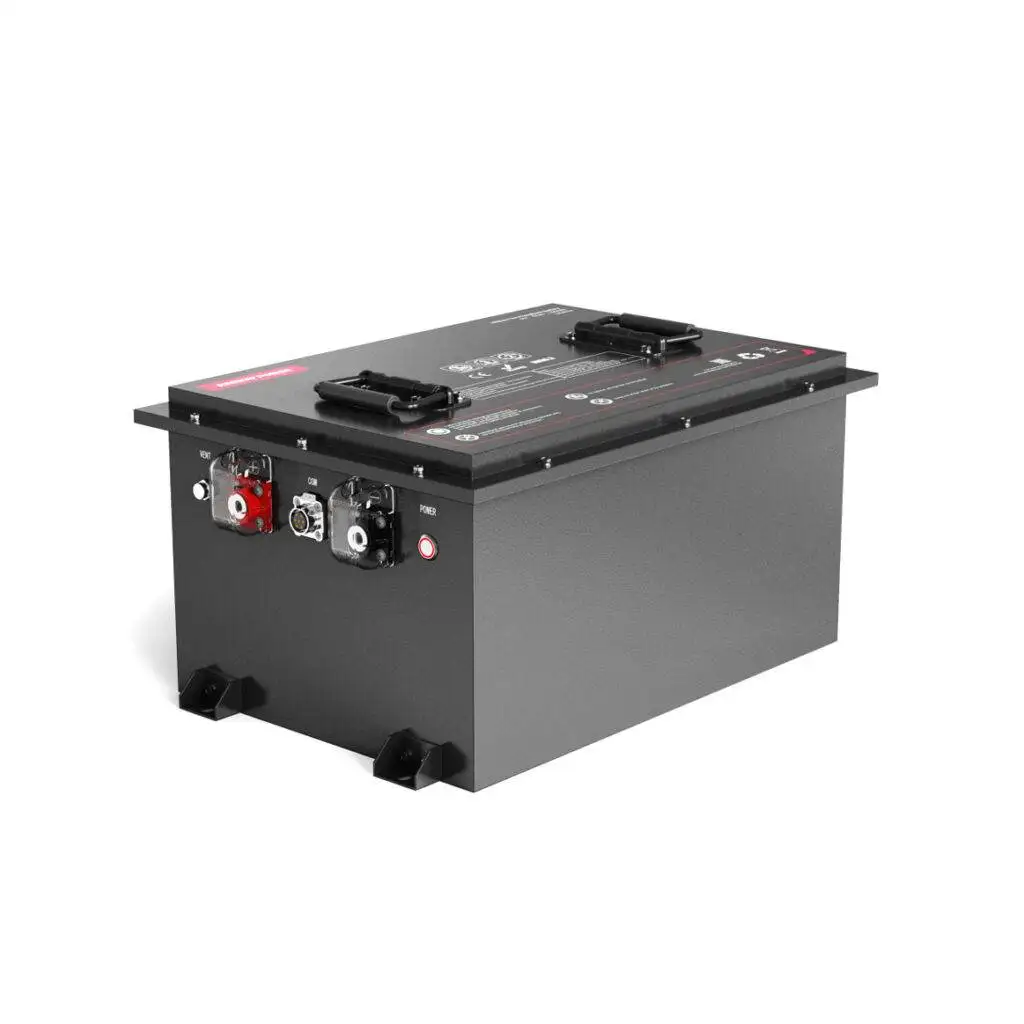
Is the battery awake? Many lithium golf packs sleep after shipping or long storage. Check the pack display or Bluetooth app if fitted. Pages for the 48V 100Ah (S51105), 48V 150Ah (S48150P) and 36V 100Ah describe BMS protection and optional Bluetooth or CAN; wake the pack per the supplier procedure, then confirm pack voltage is in the expected lithium range for a 36V or 48V cart.
Power path. Confirm the main connector is fully seated, polarity is correct, any inline fuse or breaker is closed, and a battery power switch is on. The tow/run switch on many carts is not a full battery disconnect; meters may light while the controller still has no traction enable.
Charger interlock. An installed charger plug or open interlock loop prevents drive on many carts. Unplug the charger and verify the interlock circuit with the cart manual.
Controller and gauge. Lithium voltage sits higher than lead-acid at the same SOC, which can confuse stock gauges and some controllers until they are set for lithium; see gauge wrong after lithium. Confirm the controller is programmed for the new nominal voltage and that throttle and direction inputs are present.
Wiring mistakes common on retrofits. Swapped sense leads, undersized cable, missing chassis ground for accessories, or a solenoid that never closes. Compare against the wiring diagram before replacing parts.
When to call support. If pack voltage collapses under a light load, the display shows a protection code, or the BMS will not wake, stop and contact the battery supplier with serial number, voltage readings and photos. Compatibility thinking for other power electronics is similar in spirit to checking compatibility before you buy.
Record what you find. A one-page fault log (symptoms, voltages, switch positions, codes) cuts repeat call-backs on the next cart.
↳ Replying to Redway Battery Editorial Team
Build a standard post-install drive-away checklist into every retrofit job to cut expensive return visits.
↳ Replying to Procurement perspective
Verify BMS wake, charger interlock, key/enable signals and controller voltage settings before condemning the battery.
↳ Replying to Selection/Engineering perspective
Keep a fault-finding log with voltages and codes; patterns across carts show wiring or programming errors quickly.
Work through a short, safe sequence before blaming the new pack: confirm the battery is awake and showing a healthy voltage and SOC, verify main power and any battery disconnect or tow/run switch, check that the charger is unplugged and any charger interlock is released, then confirm key-switch and controller enable signals and that the pack voltage matches what the controller expects. Most no-move faults after a lithium install are wiring, wake, interlock or controller setup, not a failed pack. Follow the cart maker’s service manual for pin-outs and safety.
Verify before ordering: Cart-specific interlocks and controller settings are OEM-dependent; follow the cart service manual and Redway wake procedures for the model installed.
Editorial Q&A for battery selection and operations. Product figures cited from Redway product pages.
Related products
 48V 100Ah LiFePO4 Golf Cart Battery
 48V 150Ah LiFePO4 Golf Cart Battery (S48150P)
 36V 100Ah LiFePO4 Golf Cart Battery
Related articles & discussions
- How do I check the health of my golf cart battery?
- How to Install Redway 36V 690Ah in Forklifts?
- How to Install LiFePO4 Forklift Batteries Safely for Optimal Performance and Longevity?
- How to Properly Install and Operate Your Device?
- How to Install 48V 560Ah LiFePO4 Battery in a Forklift Safely?
- Which golf cart battery to disconnect first?
- Which Battery Terminal to Disconnect First on Golf Cart?
- Will a golf cart run with one bad battery?
- How Many Miles Will A 48-Volt Golf Cart Go?
- Are Carport Solar Mounts Easy To Install?
