




REDWAY BATTERY / KNOWLEDGE
How Can a 48V 100Ah LiFePO4 Golf Cart Battery Transform Your Fleet?
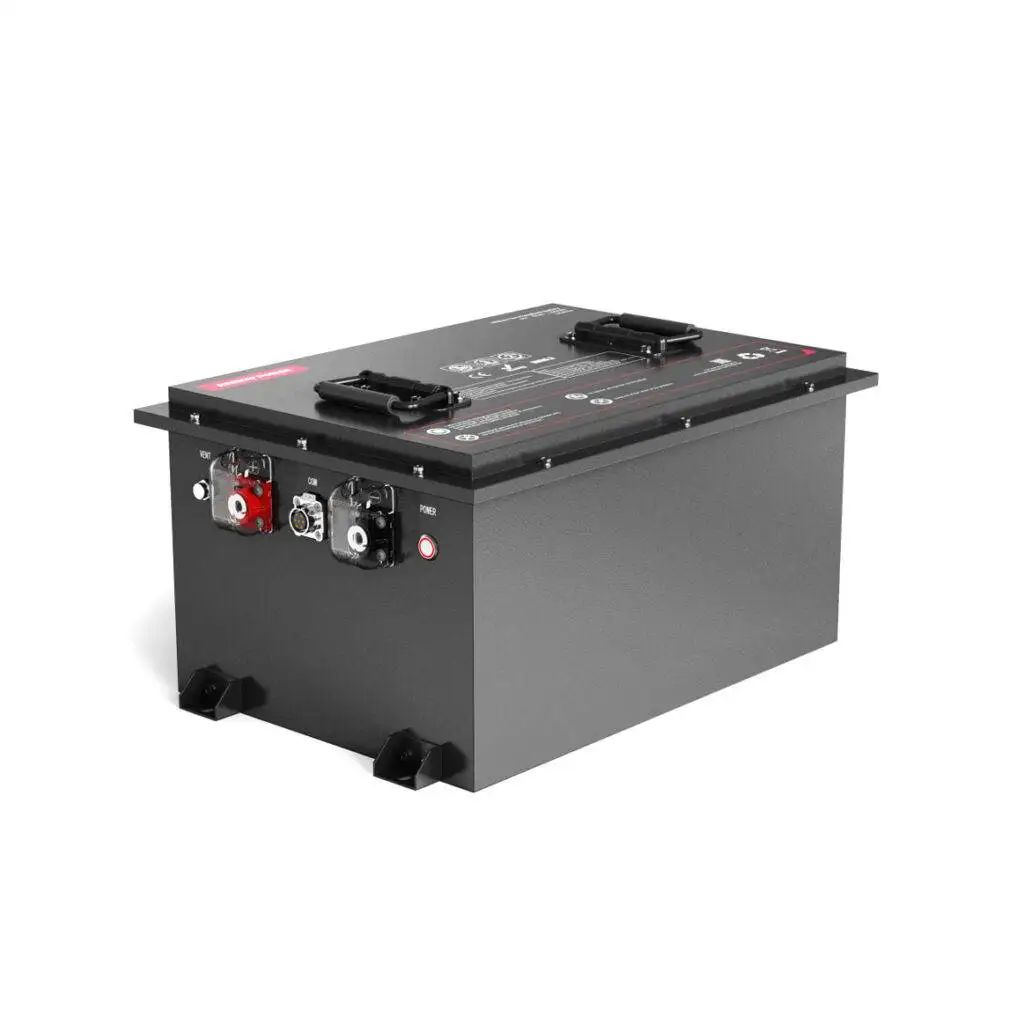
A 48V 100Ah LiFePO4 golf cart battery represents a paradigm shift in golf cart energy storage, offering up to 5,120Wh of energy with cycle lives exceeding 2,000-4,000 deep cycles—three to four times longer than traditional lead-acid batteries. This solution slashes total cost of ownership by 30-50% over five years through reduced maintenance, faster charging, and extended lifespan, while delivering consistent power for hill climbing and full-day operations on golf courses, resorts, and industrial sites.
How Is the Golf Cart Battery Industry Evolving?
The global golf cart market, valued at $1.2 billion in 2023, is projected to grow at 6.5% annually through 2030, driven by electrification in leisure and logistics sectors (Statista 2023). LiFePO4 adoption in golf carts has surged 40% year-over-year, as operators seek to cut fuel and maintenance costs—lead-acid batteries fail within 2-4 years under daily use, costing $800-$1,200 per replacement. Fleets of 20+ carts face downtime up to 15% due to charging inefficiencies and capacity fade, impacting course throughput and customer satisfaction.
Key pain points include weight (lead-acid packs weigh 150-200 lbs vs. 45-50 lbs for LiFePO4), limited range (30-40 miles per charge), and safety risks from acid leaks and thermal runaway. Environmental regulations tightening in the EU and US mandate recyclable, low-emission solutions, pushing OEMs like Redway Battery to innovate with ISO 9001:2015-certified production.
What Are Traditional Solutions Missing?
Lead-acid batteries dominate 70% of golf cart fleets but suffer from 50-60% usable capacity, 500-800 cycles, and 8-10 hour charging times. They require monthly watering and equalization, adding 20+ labor hours annually per cart. AGM variants improve maintenance but cost 25% more with similar lifespan. NiMH options offer 1,000 cycles but at 40% higher upfront cost and lower energy density.
In contrast, LiFePO4 delivers 80-90% depth of discharge, 2,000-4,000 cycles, and 2-4 hour charging via 50-100A inputs. Redway Battery’s 48V 100Ah packs integrate smart BMS for overcharge, short-circuit, and low-temp protection, reducing failure rates by 60% compared to legacy systems. Parallel expansion to 400Ah supports multi-cart fleets without voltage drops.
Which Features Define the 48V 100Ah LiFePO4 Solution?
Redway Battery’s 48V 100Ah LiFePO4 golf cart battery (nominal 51.2V, 5.12kWh) leverages 16S1P cell configuration with 3.2V 100Ah cells, yielding 46 kg weight and 438x300x275 mm dimensions for OEM compatibility. Key capabilities include:
High Power: 100A continuous discharge (5,120W), 400A peak for 5 seconds, enabling 25 mph speeds on 15% grades.
Smart BMS: Bluetooth monitoring of SOC, voltage, current, and temperature; auto-shutdown at 44.8V cutoff.
Durability: 2,000+ cycles at 90% DOD, 12-year design life, -5°C to 55°C operating range.
Safety: UL1973, IEC62133, UN38.3 certified; no fire/explosion risk under stress tests.
Customization: OEM/ODM support for Anderson or M8 terminals, CAN bus integration, and 24/7 after-sales via four Shenzhen factories.
Why Does This Outperform Legacy Options?
| Aspect | Lead-Acid (Traditional) | 48V 100Ah LiFePO4 (Redway) |
|---|---|---|
| Cycle Life | 500-800 cycles | 2,000-4,000 cycles |
| Usable Capacity | 40-50 Ah | 80-90 Ah |
| Charging Time | 8-10 hours | 2-4 hours |
| Weight | 150-200 lbs | 46 kg (101 lbs) |
| Maintenance | Monthly watering | Zero maintenance |
| Lifespan Cost | $1,200 over 3 years | $800 over 8 years |
| Safety | Acid leaks, H2 gas | No leaks, stable chemistry |
Redway’s packs cut energy loss by 15% via 98% efficiency, saving 200 kWh annually per cart at $0.12/kWh rates.
How Do You Implement This Solution?
Assessment: Audit fleet usage (hours/day, terrain, cart count); Redway’s engineers recommend 48V 100Ah for 4-6 hour shifts.
Integration: Swap lead-acid with Redway’s plug-and-play pack; verify charger compatibility (41.6-58.4V input).
Commissioning: Calibrate BMS via Bluetooth app; set SOC alerts at 20%.
Operation: Charge at 50A for 3 hours; monitor real-time data.
Scaling: Parallel connect to 400Ah for high-demand routes.
Where Do Users See the Biggest Gains?
Case 1: Golf Course (Problem: Short Rounds)
Traditional: Lead-acid limits 18 holes; 2-hour recharge halts play.
With Redway: 36 holes on one charge; 30% more daily rounds.
Gain: $5,000 monthly revenue boost for 50-cart fleet.
Case 2: Resort Shuttle (Problem: Downtime)
Traditional: 4-hour charging gaps reduce guest trips.
With Redway: 2-hour fast charge; 95% uptime.
Gain: 20% higher shuttle frequency.
Case 3: Warehouse Logistics (Problem: Slow Charging)
Traditional: 8-hour night charges idle forklifts.
With Redway: 3-hour charges; 24/7 operations.
Gain: 15% productivity increase.
Case 4: Event Rentals (Problem: Weight Limits)
Traditional: Heavy packs strain small carts.
With Redway: 54% lighter; easier transport.
Gain: 30% lower fuel costs for delivery trucks.
What Future Trends Demand This Now?
LiFePO4 will capture 60% of golf cart batteries by 2028, as IoT integration demands real-time telemetry. Redway’s MES systems enable predictive maintenance, cutting unplanned outages by 40%. With Trump-era EV incentives expanding in 2026, fleets upgrading now lock in 10-year savings.
FAQ
Does this work with existing golf cart models?
Yes, Redway’s 48V 100Ah fits standard 48V bays; confirm voltage compatibility.
How long does installation take?
Under 30 minutes per cart with basic tools.
Can I expand capacity?
Parallel to 400Ah via Redway’s harness kits.
Is it safe in rain?
IP65-rated; operates in wet conditions.
What warranty does Redway offer?
10-year pack warranty; 24/7 support.
Sources
Statista – Golf Cart Market Report 2023
GrenerPower – 48V 100Ah LiFePO4 Specs
Delong Energy – DL-GP51100 Data Sheet
Liyue Battery – 48V 100Ah Golf Cart Pack
WattCycle – 48V 100Ah Bluetooth Battery
Redway Battery – OEM LiFePO4 Solutions
Statista – EV Battery Adoption Trends 2025
For connected guidance and the next practical steps, use the LiFePO4 Golf Cart Battery Specs: Reading Voltage and Ah Together.
