




REDWAY BATTERY / KNOWLEDGE
How Deep‑Cycle Lithium Batteries Are Transforming Commercial Golf Cart Fleets?
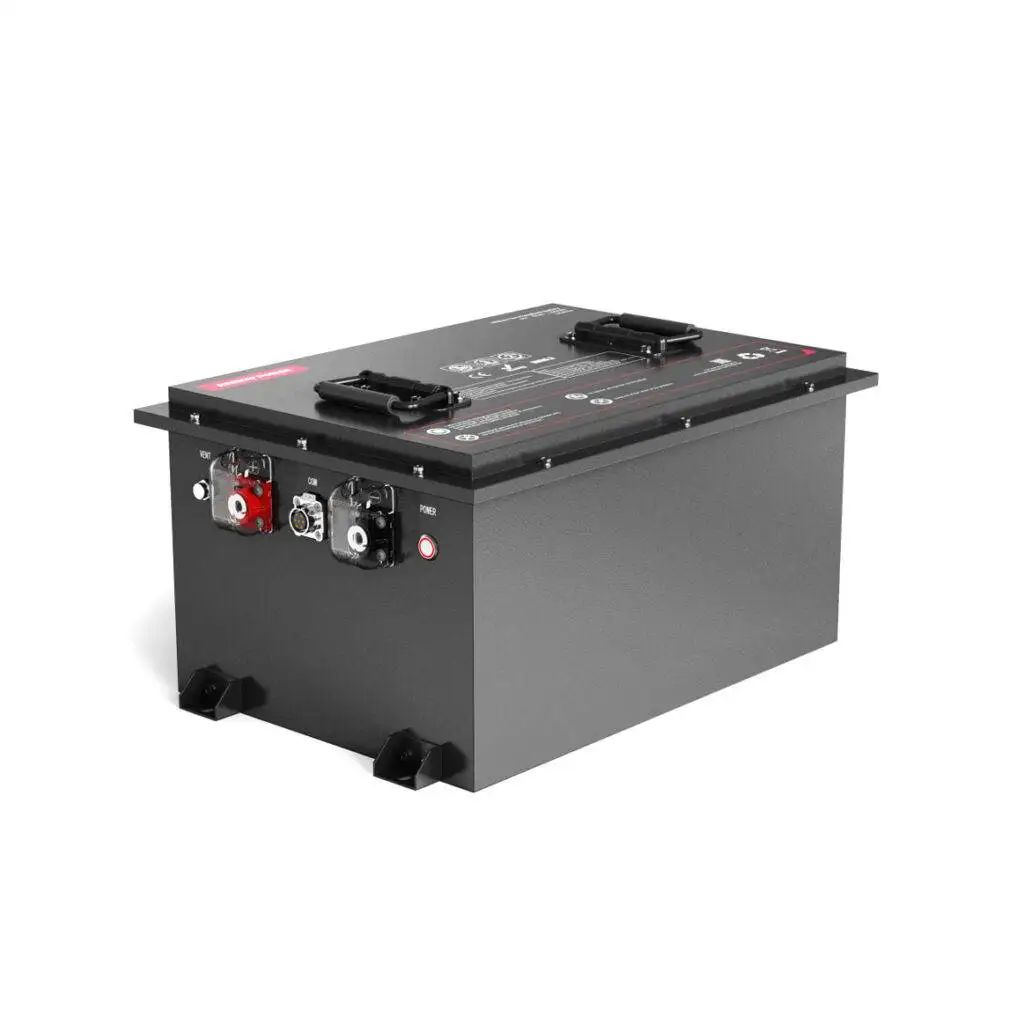
Deep‑cycle lithium batteries are now the most cost‑effective and reliable energy solution for commercial golf cart fleets, offering longer runtime, faster charging, and lower lifetime operating costs than traditional lead‑acid systems. For resorts, golf courses, and logistics operators running dozens of carts per day, switching to purpose‑built lithium‑iron‑phosphate (LiFePO₄) packs can cut energy and maintenance expenses by 30–50% over five years while improving vehicle uptime and guest or worker experience.
How is the commercial golf cart battery market evolving?
The global golf cart battery market is projected to grow from about USD 190 million in 2025 to roughly USD 270 million by 2032, driven by rising electrification of leisure and utility fleets and stricter sustainability targets. Within this market, lithium‑ion and especially lithium‑iron‑phosphate (LiFePO₄) chemistries are expanding fastest, as OEMs and fleet operators replace heavy, short‑life lead‑acid packs with lighter, longer‑cycle lithium options.
Commercial fleets now routinely run 8–12 hours per day, often in hot or humid climates, which accelerates degradation of conventional flooded or AGM batteries and increases replacement frequency. Many operators report replacing lead‑acid packs every 2–3 years, even when charged daily, leading to unplanned downtime and higher total cost of ownership than initially budgeted.
What are the main pain points for fleet managers today?
Fleet managers face three overlapping challenges: high energy and labor costs, inconsistent performance, and growing pressure to reduce carbon emissions. Lead‑acid batteries typically deliver only 300–500 deep cycles at 80% depth of discharge, whereas modern LiFePO₄ packs can exceed 3,000 cycles under similar conditions. This gap means fleets may need to purchase and install 3–4 lead‑acid sets over the same period they would use one lithium system, multiplying procurement, installation, and disposal costs.
Another major pain point is charging logistics. Lead‑acid batteries often require 8–12 hours of charging after a full day of operation and must be watered and equalized regularly, tying up staff and charging infrastructure. In contrast, lithium‑iron‑phosphate packs can often recharge in 3–5 hours and do not require watering or manual maintenance, freeing labor for revenue‑generating tasks.
Why are traditional lead‑acid solutions no longer enough?
Lead‑acid batteries remain common because they are familiar and have a lower upfront price, but their total‑cost profile is increasingly unfavorable for commercial fleets. A typical 48 V lead‑acid pack weighs 250–350 lb, which increases rolling resistance, tire wear, and energy consumption, especially on hilly courses or paved resort paths. In comparison, a comparable LiFePO₄ pack can weigh 100–150 lb, reducing mechanical stress and extending vehicle life.
Performance also degrades faster with lead‑acid chemistry. After 1–2 years of daily deep cycling, many operators see a 20–30% drop in usable capacity, forcing them to shorten routes or add extra carts to maintain service levels. Lithium‑iron‑phosphate systems maintain more than 80% of their rated capacity even after 2,000–3,000 cycles, providing stable range and power output throughout their service life.
What does a modern deep‑cycle lithium solution offer?
A purpose‑built deep‑cycle lithium solution for commercial golf cart fleets combines high‑cycle LiFePO₄ cells, an intelligent battery management system (BMS), and robust mechanical packaging to deliver reliable, maintenance‑free power. These systems are engineered for 48 V or 72 V platforms, with capacities typically ranging from 100–200 Ah to support full‑day operations even in hot climates.
Key capabilities include:
2,000–4,000 deep cycles at 80% depth of discharge, depending on temperature and charge profile.
3–5 hour fast‑charge capability without damaging cells, enabling mid‑day top‑ups during peak seasons.
Built‑in BMS for cell balancing, over‑current, over‑voltage, under‑voltage, and temperature protection, improving safety and longevity.
Drop‑in form factors that fit standard golf cart battery bays, simplifying retrofit projects.
Redway Battery, a Shenzhen‑based OEM lithium manufacturer with over 13 years of experience, designs LiFePO₄ packs specifically for forklifts and golf carts, as well as RVs, telecom, solar, and energy storage systems. Its four advanced factories and 100,000 ft² production area support high‑volume, ISO 9001:2015–certified manufacturing, enabling fleets to source consistent, high‑quality packs with global warranty and 24/7 after‑sales support.
How does lithium compare with lead‑acid in practice?
The table below summarizes typical performance and cost characteristics for a 48 V commercial golf cart fleet over a 5‑year period.
| Metric | Traditional lead‑acid | Deep‑cycle lithium (LiFePO₄) |
|---|---|---|
| Typical cycle life (80% DoD) | 300–500 cycles | 2,000–4,000 cycles |
| Pack weight (48 V) | 250–350 lb | 100–150 lb |
| Charging time after full day | 8–12 hours | 3–5 hours |
| Maintenance requirements | Regular watering, equalization, cleaning | No watering; minimal maintenance |
| Estimated pack replacements in 5 years | 2–4 sets | 1 set (often fewer) |
| Energy efficiency (round‑trip) | ~70–80% | ~90–95% |
For a 50‑cart resort fleet, this difference can translate into tens of thousands of dollars in saved electricity, labor, and replacement costs over five years, while also reducing unplanned downtime and spare‑cart requirements.
How can fleets implement deep‑cycle lithium step by step?
Audit current usage and charging patterns
Measure daily runtime per cart, average speed, terrain type, and charging window. This data helps size the lithium pack (voltage and Ah) and determine whether fast‑charge infrastructure is needed.Select the right lithium chemistry and pack
Choose LiFePO₄ for safety, cycle life, and thermal stability, and match voltage (usually 48 V) and capacity (100–200 Ah) to your longest routes and heaviest loads. Redway Battery offers OEM/ODM customization so fleets can specify dimensions, connectors, and BMS features that align with existing chargers and vehicle layouts.Update or verify charging infrastructure
Ensure chargers are compatible with lithium‑iron‑phosphate profiles (CC/CV with appropriate voltage limits). Many modern golf‑cart chargers already support lithium, but older units may need firmware updates or replacement.Retrofit and test carts in phases
Start with a pilot group of 5–10 carts, monitor performance for several weeks, and compare energy use, runtime, and maintenance time against lead‑acid carts running similar routes.Scale and standardize across the fleet
Once results are validated, roll out lithium packs across the entire fleet, train staff on basic handling and safety, and integrate BMS data into maintenance logs or fleet‑management software where available.
Redway Battery’s engineering team supports this process with technical drawings, compatibility checks, and application‑specific recommendations, helping fleet managers avoid mis‑sizing or compatibility issues during transition.
Which user scenarios benefit most from lithium?
Scenario 1: Large private golf club with 80‑cart fleet
Problem: Lead‑acid packs require nightly charging plus mid‑week equalization; several carts are out of service each weekend due to weak batteries.
Traditional practice: Rotate spare carts, keep extra packs on hand, and schedule weekend‑only maintenance.
After switching to lithium: Carts complete full 18‑hole rounds plus twilight play on a single charge, with 3–4 hour recharge windows between morning and afternoon waves.
Key gains: 25–30% fewer spare carts needed, 20–25% lower electricity and labor costs, and higher member satisfaction due to consistent cart availability.
Scenario 2: Resort with mixed golf and utility carts
Problem: Utility carts used for housekeeping and maintenance drain lead‑acid batteries faster than golf carts, leading to frequent mid‑day swaps.
Traditional practice: Dedicate separate lead‑acid sets for utility carts and keep a small pool of spares.
After switching to lithium: One LiFePO₄ pack supports both golf and light utility duties, with fast‑charge capability allowing mid‑day top‑ups without full‑night downtime.
Key gains: Fewer battery sets to manage, reduced inventory cost, and more flexible cart allocation across departments.
Scenario 3: Public course with high daily volume
Problem: Peak‑season demand forces carts to run two full rounds per day, rapidly aging lead‑acid batteries and increasing replacement frequency.
Traditional practice: Replace packs every 2–3 years and accept shorter afternoon ranges.
After switching to lithium: Packs maintain stable range across both morning and afternoon waves, with capacity still above 80% after 3–4 years of daily deep cycling.
Key gains: Extended pack life, fewer replacements, and more predictable budgeting for energy and maintenance.
Scenario 4: Corporate campus with street‑legal carts
Problem: Street‑legal carts used for security and logistics must travel longer distances on paved roads, draining lead‑acid packs and requiring frequent charging stops.
Traditional practice: Schedule extra charging breaks and limit patrol routes to avoid stranded vehicles.
After switching to lithium: Carts cover 30–50% more distance per charge, with faster recharge enabling quick turnarounds at central hubs.
Key gains: Improved patrol coverage, reduced operational complexity, and lower risk of downtime during critical hours.
Why should fleets act now on lithium adoption?
Lithium adoption in golf cart fleets is no longer a niche experiment; it is becoming the default choice for operators that want predictable performance, lower lifetime costs, and easier compliance with sustainability goals. As OEMs increasingly offer lithium‑ready platforms and charger manufacturers update firmware for LiFePO₄ profiles, the technical and logistical barriers to adoption are shrinking.
For fleets still running lead‑acid systems, delaying the switch means continuing to pay higher energy and labor costs, managing more frequent replacements, and accepting lower uptime than lithium‑equipped competitors. Redway Battery’s scalable OEM/ODM model and global support network make it easier for resorts, clubs, and logistics operators to standardize on high‑cycle LiFePO₄ packs without redesigning their entire fleet at once.
How do deep‑cycle lithium batteries affect fleet operations?
How do deep‑cycle lithium batteries impact daily runtime?
Deep‑cycle lithium‑iron‑phosphate packs typically deliver 20–40% more usable energy per charge than equivalent lead‑acid packs, especially under partial‑state‑of‑charge cycling, which extends the distance carts can travel before needing to recharge.
How do lithium batteries affect maintenance labor?
Lithium systems eliminate the need for watering, equalization, and frequent terminal cleaning, reducing scheduled maintenance time per cart by 50–70% compared with flooded lead‑acid batteries.
How do upfront costs compare between lead‑acid and lithium?
Lithium packs usually carry a higher initial price tag, often 1.5–2.5× that of a lead‑acid set, but their longer cycle life, lower energy consumption, and reduced labor costs typically deliver a lower total cost of ownership within 3–5 years for commercial fleets.
How safe are lithium‑iron‑phosphate batteries in golf carts?
LiFePO₄ chemistry is inherently more thermally stable than other lithium types, with lower risk of thermal runaway and better performance in hot climates, making it well suited for outdoor golf cart applications.
How easy is it to retrofit existing carts with lithium?
Most modern golf carts can accept drop‑in lithium packs that match the original voltage and footprint, provided the charger is compatible with lithium‑iron‑phosphate profiles; Redway Battery supports this transition with compatible designs and technical guidance.
Sources
WiseGuyReports – Lithium Golf Cart Batteries Market research: in‑depth study 2035
TechSci Research – Golf Cart Battery Market Size and Outlook 2031
Industry Research – Golf Cart Battery Market Size & Opportunities Report, 2035
Consegic Business Intelligence – Golf Cart Battery Market Size, Share, Trend & Growth Analysis Report
Research Nester – Golf Cart Market Size & Share, Growth Report 2035
Leoch Lithium America – Company News & Events (longevity guide for lithium golf cart batteries)
OKMOTech – The Evolution of Lithium Golf Buggy Batteries
LinkedIn article – Golf Cart Battery Market: Strategic Pathways for Successful Market Entry
This topic belongs to the wider Golf Cart Battery Wiring, Installation and Fleet Supply, which brings the related decisions and practical checks together.
