




REDWAY BATTERY / KNOWLEDGE
How do you install a battery monitor shunt with a lithium house bank?

Redway Battery Editorial Team
Talk / Battery Q&A
An RV owner replaces AGM house batteries with lithium and wants a shunt-based monitor that shows usable amp-hours instead of a misleading voltage gauge.
Direct answer: Mount the shunt on the battery negative so every load and every charger return path goes through it. Nothing except the monitor’s sense wires should bypass the shunt. Program battery capacity, charged voltage, and charge-efficiency settings for LiFePO4, then sync to 100% after a full charge. Voltage alone is a poor fuel gauge for lithium because the curve is flat through most of the usable range.
Why a shunt. LiFePO4 voltage stays nearly flat from roughly mid-charge until near empty, so a lead-acid-style gauge misreads. A properly wired shunt counts amp-hours in and out. Banks such as the 12V 100Ah, 12V 200Ah (about 2.5 kWh) or 24V 100Ah (2.56 kWh) benefit from coulomb counting for fridge and inverter planning; see sizing for fridge and inverter loads.
Placement. Put the shunt in the negative cable as close to the battery negative terminal as practical. Battery negative to shunt to all loads, inverter, DC-DC charger and solar returns. The chassis or engine negative must not create a parallel path around the shunt. Keep high-current cable short and supported.
Sense wiring. Use the monitor maker’s twisted sense leads, fuse the positive sense as instructed, and keep high-current lugs torque-tight on clean terminals. A loose shunt bolt is a common cause of heating and false readings.
Settings. Enter usable capacity (or the bank total if paralleled), set charged detection voltage and tail current for LiFePO4, and use the efficiency factor the monitor maker recommends for lithium. Sync to 100% after a full charge so drift resets. Keep the inverter low-voltage shutdown coordinated with the BMS cut-off so the monitor and inverter agree on empty.
BMS and parallel packs. The shunt measures the bank; the BMS still protects cells. For paralleled batteries, one shunt for the combined negative is usual; follow the monitor manual. Alternator charging via a DC-DC unit should also return through the shunt; see DC-DC alternator charging.
Checks after install. Compare monitor current with a clamp meter on a known load, confirm solar and charger currents appear as charge, and verify that overnight parasitic draws show as small discharges. Mounting and ventilation still matter; see mounting and ventilation.
Marine note. On boats, follow applicable standards such as ABYC E-13 for lithium installations and keep negative paths controlled so bilge and starter circuits do not defeat the house shunt.
↳ Replying to Redway Battery Editorial Team
Budget a quality shunt monitor with the lithium upgrade; it prevents false empty or full readings that drive bad operating decisions.
↳ Replying to Procurement perspective
Draw the negative bus so the shunt cannot be bypassed, and size the shunt for peak inverter and charger current.
↳ Replying to Selection/Engineering perspective
Sync to 100% after full charges and log any growing drift that suggests a wiring bypass or wrong capacity setting.
Mount the shunt on the battery negative so every load and every charger return path goes through it. Nothing except the monitor’s sense wires should bypass the shunt. Program battery capacity, charged voltage, and charge-efficiency settings for LiFePO4, then sync to 100% after a full charge. Voltage alone is a poor fuel gauge for lithium because the curve is flat through most of the usable range.
Verify before ordering: Monitor menus and recommended LiFePO4 sync settings vary by brand; follow the monitor manual and confirm bank wiring with a qualified installer where required.
Editorial Q&A for battery selection and operations. Product figures cited from Redway product pages.
Related products
 12V 200Ah Lithium Battery
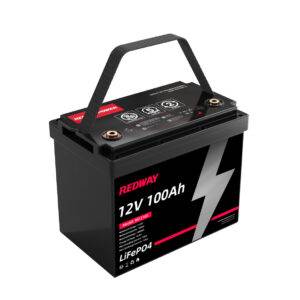 12V 100Ah Lithium Battery (LiFePO4, Self-heating, OEM)
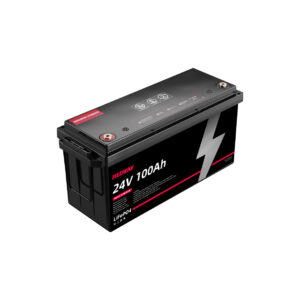 24V 100Ah Lithium Battery
Related articles & discussions
- How To Install And Maintain Golf Cart Batteries Properly?
- How to Build and Maintain a Golf Cart Battery Bank?
- How to Install and Maintain Redway Forklift Batteries?
- Can I Use Two 18V Banks in My Old 36V Golf Cart?
- What Does a Victron Controller Do? An In-Depth Exploration
- Why Cathay United Bank Is a Leader in Renewable Energy Financing
- How to Install LiFePO4 Forklift Batteries Safely for Optimal Performance and Longevity?
- How to Install Redway 36V 690Ah in Forklifts?
- What Is the Right Charge Profile for GC2 on Victron?
- How to Properly Install and Operate Your Device?
