




REDWAY BATTERY / KNOWLEDGE
PowerAll all-in-one or a separate inverter plus rack battery: how do you decide?

Redway Battery Editorial Team
Talk / Battery Q&A
A homeowner wants solar storage and has two options on the table: Redway’s PowerAll all-in-one cabinet, or a separate hybrid inverter plus PM-LV rack batteries.
Direct answer: Choose the all-in-one for a single supplier, a simpler install and a fixed 5 kW system, and the separate route for flexibility in inverter size, brand and capacity. The decision turns on power needs, expansion plans, who services each part and the warranty path, and it should be confirmed in writing for your market.
What PowerAll publishes: the PowerAll page lists one to six 51.2V battery units, from 5.37 kWh to 32.25 kWh, weighing 87 kg to 362 kg. Its integrated inverter is listed with 5 kW AC output and an automatic switch time under 10 ms in UPS mode. It has an MPPT solar input (PV 120–500V, 0–80A, MPPT range 120–450V), AC charging up to 2,100W and a 10-year warranty. It is for indoor use at IP40.
The battery side is limited to 100A continuous charge and discharge per the table, about 5.1 kW at 51.2V nominal, so the battery and the 5 kW inverter are roughly matched. The page lists a maximum of six units in parallel. A separate-inverter system built from PM-LV51100-3U modules lists up to 64 in parallel, so it scales further, and the inverter can be larger or three-phase if your home needs it.
The separate route adds choices: inverter brand, power rating, grid-code settings and solar input can be selected independently, and a faulty inverter can be replaced without touching the batteries. It also adds work: matching voltage window and protocol (see our post on paralleling PM-LV rack batteries for checks on adding units), and more than one party in the warranty chain.
Compare costs and responsibilities, not just kWh price. For each option, ask who does the installation, who is the single point of contact for faults, how the warranty splits between inverter and battery (the page states 10 years in the specification table but not which part it covers), what monitoring is included, and how an upgrade would work. Floor space, cabinet weight and ventilation matter too.
Not published for PowerAll in the table we read: a certification list for the complete system and for your market, and the inverter’s grid-code approvals. Ask Redway for both before ordering, because grid operators and insurers may require them. For sizing the battery from your daily loads see our related posts in this section.
↳ Replying to Redway Battery Editorial Team
Compare installed cost, warranty path and expansion options together. A cheaper kit that needs two installers and two warranties can cost more over its life.
↳ Replying to Procurement perspective
Check power as well as capacity: the page lists a 5 kW inverter and a 100A battery limit per unit. If your peak load or solar array is larger, a separate inverter may be necessary.
↳ Replying to Selection/Engineering perspective
Ask who handles service calls and how monitoring works. A single cabinet is easier to service; separate parts are easier to replace independently.
Choose the all-in-one for a single supplier, a simpler install and a fixed 5 kW system, and the separate route for flexibility in inverter size, brand and capacity. The decision turns on power needs, expansion plans, who services each part and the warranty path, and it should be confirmed in writing for your market.
Verify before ordering: Certifications and grid-code approvals for PowerAll, and which parts the 10-year warranty covers, are not stated in the specification table; confirm with Redway.
Editorial Q&A for battery selection and operations. Product figures cited from Redway product pages.
Related products
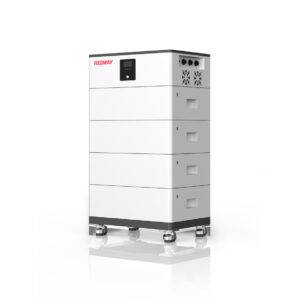 51.2V All-in-One Home-ESS System PowerAll (5kWh/10kWh/16kWh/21kWh/26kWh/32kWh)
 51.2V 100Ah Server Rack Battery
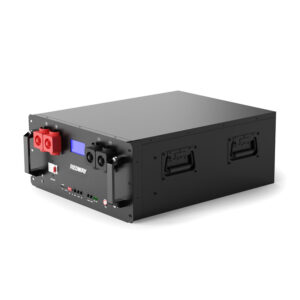 51.2V 200Ah 10kWh Server Rack Battery (5U)
Related articles & discussions
- A Practical Guide to LiFePO4 Server Rack Batteries and Energy Storage Systems
- 48V 200Ah Server Rack LiFePO4 Batteries: A Complete Guide for Modern Energy Storage
- What You Need to Know About the Best Solar Inverters with Battery Backup
- What Is a Golf Cart Inverter and Its Use?
- Do power inverters drain battery?
- Can You Run a 3000W Inverter on a 100Ah Battery?
- A Significant Opportunity for Sonnen All HOME-ESS Businesses
- How to Design a Rack Battery System for Your Home or Business
- Can I Connect Inverter to Lithium Battery?
- What is Better: Inverter or Power Station?
