REDWAY BATTERY / KNOWLEDGE
How should lithium golf carts be prepared for transport on a trailer?
Redway Battery Editorial Team
Talk / Battery Q&A
A resort is moving a dozen lithium golf carts between courses on open trailers and wants a repeatable prep checklist for staff.
Direct answer: Treat trailer moves as vehicle transport with an installed battery, not as boxed UN3480 cargo: secure the cart to the trailer, set the tow/run or transport mode the cart maker specifies, isolate or sleep the lithium pack if the trip is long, protect the battery tray from road spray and debris, and inspect after unloading before returning to service. Follow carrier and cart OEM rules. Road-moving a cart with packs such as the 48V 100Ah (S51105), 48V 150Ah or 72V 100Ah (S72105P) installed is different from shipping loose batteries by air or sea.
Cart securement. Use rated tie-downs at OEM-approved points, chock wheels, and verify the parking brake. Do not rely on the motor for holding on a trailer.
Battery isolation. For longer trips, switch the battery off or use the BMS storage/sleep function if fitted, and confirm accessories cannot wake loads. Short across-campus hops may only need the tow/run switch in the position the manual requires for towing; know which is which.
Weather and debris. Open trailers throw water and grit into trays. A fitted cover or tray shield reduces corrosion on terminals and connectors. After rain exposure, dry and inspect before charging. Salt roads in winter deserve extra rinsing of the tray area once the cart is back at base.
State of charge. Transport at a mid SOC when practical. Avoid moving packs that are at BMS low-voltage protection or that show active faults. A cart that already shows a fault code should be diagnosed at the depot, not rolled onto a trailer for another site to discover.
Connector and cable check. Confirm the main plug is locked, cables cannot chafe on the tray edge, and any retrofit braces from the lithium install are tight; tray prep themes overlap tray preparation for lithium.
Voltage class awareness. 48V and 72V fleets should not share unmarked spare packs on the same trailer run; label carts and batteries clearly. Application context for higher-voltage carts appears in higher-voltage cart uses.
After unloading. Inspect for shifted batteries, pinched cables, error codes and water in the tray. Power up, confirm SOC and alarms, then give a short drive test before guest use. If a pack will not wake, follow the supplier wake procedure rather than jump-starting across the main connector.
Claims prevention. Photograph carts on the trailer and again on arrival when moving high-value lithium fleets between sites. Note trailer number, driver and departure SOC on the move sheet so any transit dispute has a paper trail.
↳ Replying to Redway Battery Editorial Team
Write isolation, tie-down and photo steps into the move checklist so transit damage claims are easier to avoid or prove.
↳ Replying to Procurement perspective
Separate tow/run instructions from true battery isolation, and protect trays from spray on open trailers.
↳ Replying to Selection/Engineering perspective
Inspect every cart after unloading for cable damage, codes and tray water before releasing it to service.
Treat trailer moves as vehicle transport with an installed battery, not as boxed UN3480 cargo: secure the cart to the trailer, set the tow/run or transport mode the cart maker specifies, isolate or sleep the lithium pack if the trip is long, protect the battery tray from road spray and debris, and inspect after unloading before returning to service. Follow carrier and cart OEM rules. Road-moving a cart with packs such as the 48V 100Ah (S51105), 48V 150Ah or 72V 100Ah (S72105P) installed is different from shipping loose batteries by air or sea.
Verify before ordering: Trailer and tow-switch procedures are cart-OEM specific; carrier rules for vehicles with lithium batteries also vary—follow both.
Editorial Q&A for battery selection and operations. Product figures cited from Redway product pages.
Related products
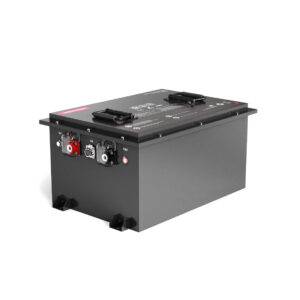 48V 100Ah LiFePO4 Golf Cart Battery
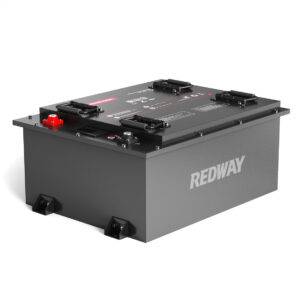 48V 150Ah LiFePO4 Golf Cart Battery (S48150P)
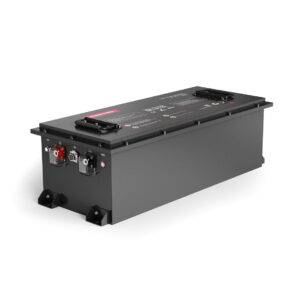 72V 100Ah LiFePO4 Golf Cart Battery (S72105P)
Related articles & discussions
- What Are the Disadvantages of Lithium Golf Cart Batteries?
- What golf cart battery lasts the longest?
- What Are LiFePO4 Batteries For Golf Carts?
- What Are LITHIUM Golf Cart Batteries?
- What Are Golf Cart Batteries?
- What Is Installing Golf Cart Batteries?
- What Are the Best Long-Lasting Golf Cart Batteries?
- What Are the Benefits of 48-Volt Lithium Golf Cart Batteries
- Are Lithium Batteries Worth It for Golf Carts?
- Is lithium golf cart worth it?