




REDWAY BATTERY / KNOWLEDGE
How do you wash a golf cart with an IP67-rated lithium battery without damaging it?
Redway Battery Editorial Team
Talk / Battery Q&A
A course’s wash bay uses pressure washers on muddy carts every evening. Since the fleet moved to IP67 lithium packs, staff assume the battery area can be blasted too.
Direct answer: Do not pressure-wash the battery area. IP67 under IEC 60529 means dust-tight and protected in a temporary-immersion test in fresh water; it is not a rating for powerful or hot water jets. Switch the cart off, keep the jet away from the battery, connectors, vent, charge port, controller and wiring, rinse that area by hand at low pressure or wipe it, and let it dry before charging.
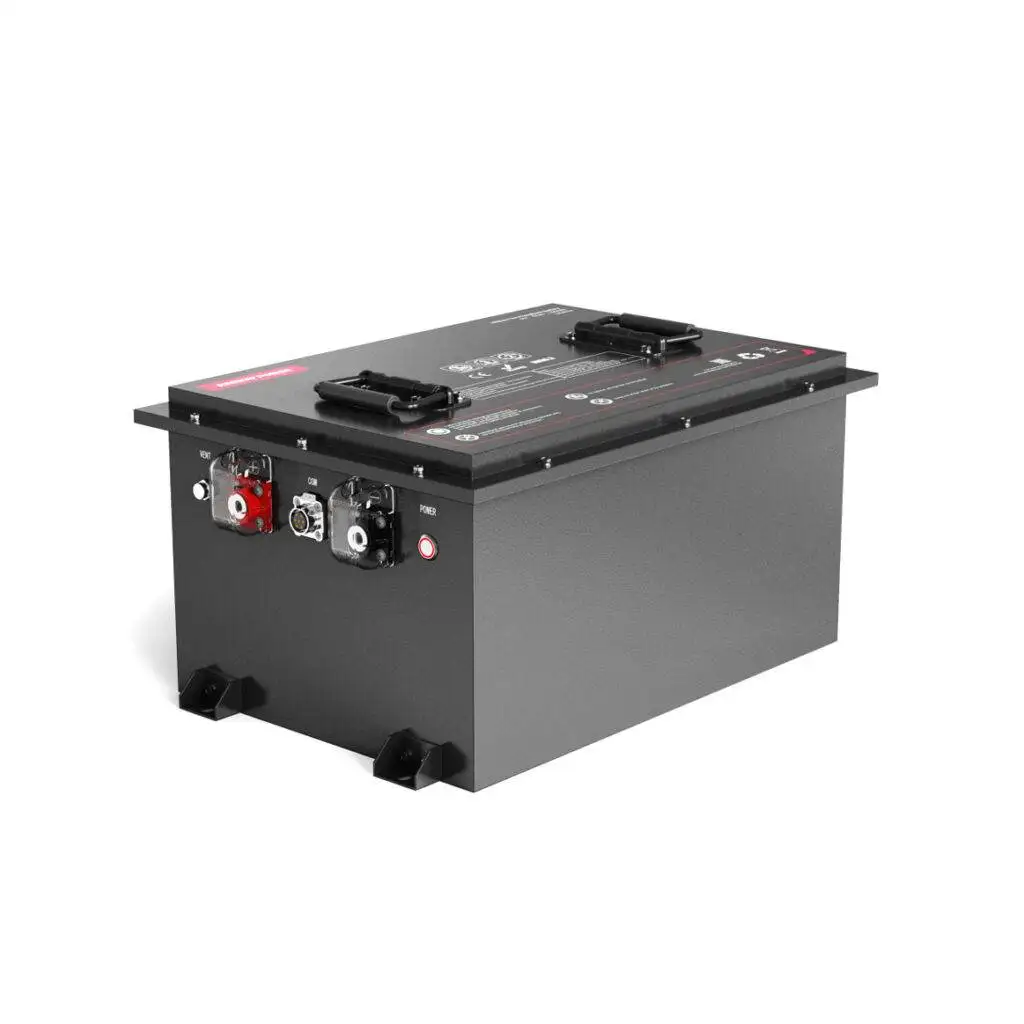
What the pages say. The 48V 100Ah, 48V 150Ah and 72V 160Ah golf cart pages list IP67, a metal shell, a vent and a power switch. The pages do not say which parts of the system (cables, plugs, display, charge port) carry that rating.
What IP67 means. Under IEC 60529 the first digit 6 is dust-tight and the second digit 7 is protection against the effects of temporary immersion, tested between 0.15 m and 1 m of water. The standard notes that tests use fresh water and that protection may not be satisfactory with high-pressure, high-temperature jets outside the numeral 9 test. An enclosure rated only IPX7 is not considered suitable for water jets unless it is also rated 5 or 6. So IP67 is no promise against a pressure washer.
The rest of the cart matters more. The motor controller, solenoid, wiring looms, charge receptacle and accessories are usually not rated like the pack. Water forced into a connector or charge port can cause corrosion or faults later.
A wash routine. Switch the cart off and set the battery power switch off if your procedure allows. Cover the charge port. Wash body and wheels as usual, but keep any jet well away from the battery bay. Clean the battery area with a damp cloth or a gentle low-pressure rinse, never aimed at plugs, the vent or seals. Do not use solvents on seals or labels.
Drying and checks. Let the cart dry before plugging it in. Weekly, check connectors and the charge port for water, corrosion or green deposits, and check that cable glands and covers are seated. If water got into a connector or the case shows damage, do not charge it; contact support. Our post on reading cell voltages in the app helps spot a pack that starts behaving differently after washing.
↳ Replying to Redway Battery Editorial Team
Write a wash-bay rule for lithium carts and train staff on it. Moisture damage in connectors is easy to prevent and hard to argue about as a warranty claim.
↳ Replying to Procurement perspective
Treat the rating as applying to the pack enclosure tested, not to cables, plugs and the charge port. Ask Redway which connectors and seals are covered and what cleaning it approves.
↳ Replying to Selection/Engineering perspective
Dry before charging, inspect the charge port and connectors weekly, and log any fault code after washing so patterns show up.
Do not pressure-wash the battery area. IP67 under IEC 60529 means dust-tight and protected in a temporary-immersion test in fresh water; it is not a rating for powerful or hot water jets. Switch the cart off, keep the jet away from the battery, connectors, vent, charge port, controller and wiring, rinse that area by hand at low pressure or wipe it, and let it dry before charging.
Verify before ordering: Which parts of the system carry the IP67 rating, and the cleaning methods Redway approves, are not published; confirm with Redway.
Sources checked: IEC 60529 (IEC webstore).
Editorial Q&A for battery selection and operations. Product figures cited from Redway product pages.
Related products
 48V 100Ah LiFePO4 Golf Cart Battery
 48V 150Ah LiFePO4 Golf Cart Battery (S48150P)
 72V 160Ah LiFePO4 Golf Cart Battery (S72160P)
Related articles & discussions
- How Do Waterproof and Shockproof LiFePO4 Batteries Improve Durability?
- Should I Plug My Golf Cart In Every Night? The Ultimate Guide to Golf Cart Battery Maintenance
- What Are LITHIUM Golf Cart Batteries?
- How Can Maintenance-Free Lithium Batteries Replace Lead-Acid Units in Golf Carts?
- How To Properly Charge Lithium Golf Cart Batteries?
- What Is the Best Zero‑Maintenance Lithium Battery for a Golf Cart Fleet?
- What Are The Advantages Of Lithium Golf Cart Batteries?
- What Are 48V Lithium Golf Cart Batteries?
- Why Should Businesses Choose Lithium Golf Cart Batteries?
- How to Choose the Best 48V 100Ah Lithium Golf Cart Battery
