




REDWAY BATTERY / KNOWLEDGE
When do you need a high-current 48V golf cart lithium battery instead of standard?

Redway Battery Editorial Team
Talk / Battery Q&A
A resort runs both flat-course passenger carts and a few lifted utility carts that trip protection on hills.
Direct answer: Use a high-current or higher-current 48V LiFePO4 pack when continuous or peak load (hills, lift kits, utility bodies) approaches the standard pack’s discharge capability—about 150–200A continuous on the S51105 100Ah page—rather than only buying more Ah for range.
Redway lists both a standard 48V 100Ah LiFePO4 golf cart battery and higher-current oriented SKUs such as the 48V 100Ah high-current and 48V 160Ah higher-current golf cart batteries. Capacity (Ah) sets how long you can run; continuous and peak current capability sets whether the pack can feed steep grades, lifted carts, or utility/shuttle duty without BMS current limiting.
On the standard 48V 100Ah (S51105) page, maximum continuous discharge is described as typically around 150–200A, with about 5.12 kWh energy and ~50 kg mass. The high-current 100Ah page emphasizes performance positioning and long cycle-life messaging (including over 15,000 cycles at 60% DOD on that page) with the same 5.12 kWh energy class. The 160Ah higher-current page adds capacity headroom and cites over 6,000 cycles at 80% DOD with an operating temperature window from −20°C to 65°C.
Choose standard current when the cart is a typical passenger golf car on moderate terrain and the measured or estimated pack current stays comfortably below the continuous rating with margin. Choose a high-current or higher-current SKU when you see repeated BMS high-current warnings, voltage sag under acceleration, or when the vehicle is a lifted cart, cargo/utility body, or multi-passenger shuttle. Adding only Ah (for example jumping to 150Ah) helps range, but if the bottleneck is peak amps, a higher-current design is the more direct fix.
Engineering practice: measure or log current on a representative hill with full load. Keep continuous demand under the pack’s continuous rating and reserve peak rating for short bursts. Confirm cable and lug sizing for the higher current path—battery capability does not help if wiring overheats. Pair with a charger that matches LiFePO4 51.2V-class charge profiles.
Summary: standard 48V 100Ah suits most flat-course fleets; high-current 100Ah or higher-current 160Ah packs are for elevated load profiles where discharge rate—not only kilowatt-hours—limits performance.
Document the decision with a simple load matrix: vehicle type, typical grade, passenger/cargo weight, and whether regenerative braking returns significant current. Flat passenger carts with regenerative braking often stay within standard continuous ratings. Lifted utility carts that climb service roads with cargo are the classic high-current candidates. When in doubt, capture a short datalog on a representative route before purchasing a whole fleet of high-current packs—you may only need them on a minority of vehicles.
Remember that higher current capability does not remove the need for correct fusing and cable ampacity. The pack’s BMS is a last line of defense, not a substitute for a properly engineered harness.
↳ Replying to Redway Battery Editorial Team
Segment the fleet SKU list: passenger carts on standard current, utility/lifted units on high-current. Mixing one high-current spare into a standard fleet rarely solves chronic trips if cables and controllers differ by vehicle.
↳ Replying to Procurement perspective
Compare continuous discharge ratings and energy: 100Ah ≈ 5.12 kWh vs 160Ah for longer routes under load. Ensure the controller current limit and the battery continuous rating are aligned so the BMS is not the unintended limiter on every hill.
↳ Replying to Selection/Engineering perspective
Inspect lugs and fusible links after any high-current upgrade. Recurring connector discoloration means the harness, not only the pack, needs upsizing. Log BMS current-limit events weekly for the first month.
Use a high-current or higher-current 48V LiFePO4 pack when continuous or peak load (hills, lift kits, utility bodies) approaches the standard pack’s discharge capability—about 150–200A continuous on the S51105 100Ah page—rather than only buying more Ah for range.
Editorial Q&A for battery selection and operations. Product figures cited from Redway product pages.
Related products
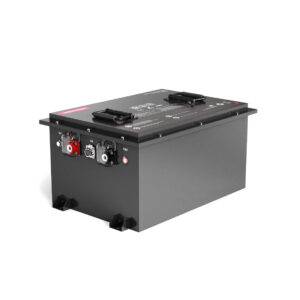 48V 100Ah LiFePO4 Golf Cart Battery (standard)
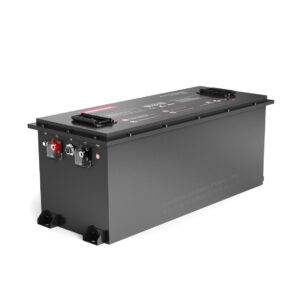 48V 160Ah Higher-Current Golf Cart Battery
Related articles & discussions
- How can a heavy‑duty lithium battery transform utility and shuttle cart performance?
- Understanding 48V 200Ah LiFePO4 Golf Cart Batteries: Performance, Design, and Real-World Value
- What Are the Key Features of Redway Battery’s Latest Golf Cart Lithium Batteries?
- Golf Cart Battery Market – Global Industry Size, Share, Trends, and Forecast
- How Can Maintenance-Free Lithium Batteries Replace Lead-Acid Units in Golf Carts?
- How Can 36V, 48V, and 72V Lithium Golf Cart Batteries Redefine the Future of Electric Mobility?
- How Can a Golf Cart Lithium Battery with a Wide Operating Temperature Range Redefine Outdoor Mobility Efficiency?
- Why Are High Discharge Rate LiFePO4 Batteries the Best Choice for Electric Carts?
- What Is the Best Zero‑Maintenance Lithium Battery for a Golf Cart Fleet?
- How Can Rapid Recharge Lithium Batteries Ensure Continuous Golf Cart Operation?
