




REDWAY BATTERY / KNOWLEDGE
What Is the Best Zero‑Maintenance Lithium Battery for a Golf Cart Fleet?
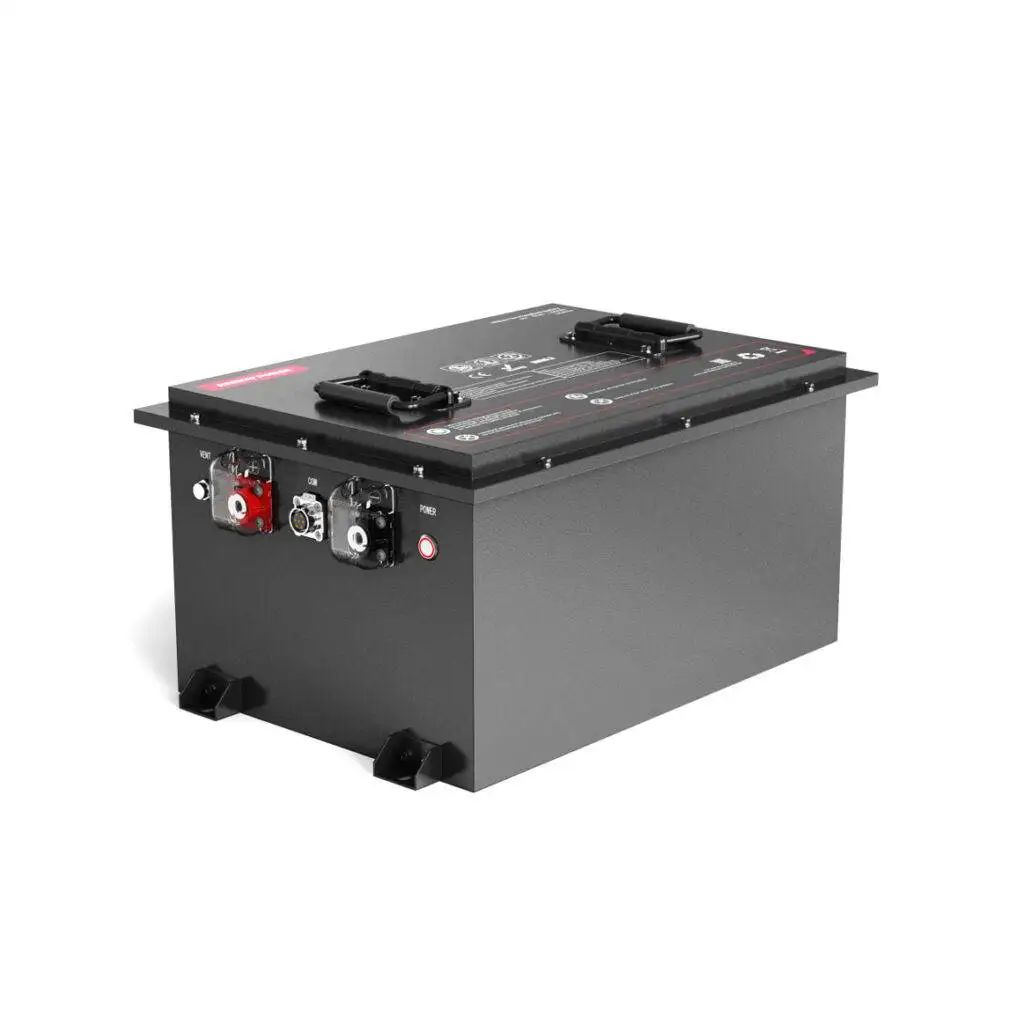
Modern golf cart fleets lose time and money every day on lead‑acid batteries that need watering, equalizing, and frequent replacement. LiFePO₄ lithium batteries eliminate that burden, delivering true zero‑maintenance operation, 2–3× longer life, and up to 40% more usable capacity per charge, which directly cuts fleet downtime and operating costs over time.
Why Golf Cart Fleets Still Struggle with Maintenance Today
Golf and resort operators commonly run fleets of 20–100+ carts, and nearly all still rely on traditional 6V or 8V lead‑acid batteries. The industry standard is to replace these batteries every 3–5 years, with many fleets replacing them even sooner due to poor maintenance or aggressive usage patterns. Routine maintenance includes weekly watering, terminal cleaning, and periodic equalization charges, which add up to several hours of labor per month for a mid‑sized fleet.
Total cost of ownership is often underestimated. A single 48V lead‑acid pack for a golf cart can cost $800–$1,200, but when combined with charger upgrades, labor, disposal fees, and lost cart availability, the real cost per cycle is much higher. Fleets that operate 365 days a year effectively see battery replacement every 2–3 years, turning a one‑time purchase into a recurring $10,000–$50,000+ fleet expense over a decade.
This model also creates operational headaches. Chargers must be set to match lead‑acid chemistry, battery voltage drops noticeably over the day, and deep discharges accelerate sulfation and shorten life. Many fleets end up overstaffing or underutilizing carts to avoid mobbing all at once, which hurts revenue potential and customer satisfaction.
How Traditional Lead‑Acid Batteries Fall Short for Fleets
When comparing lead‑acid to modern lithium for golf carts, the practical differences are stark:
Maintenance labor – Lead‑acid batteries require regular watering (every 2–4 weeks), terminal cleaning, and equalization charges; lithium LiFePO₄ batteries require none.
Life span – Lead‑acid packs typically last 300–500 cycles, while LiFePO₄ batteries routinely exceed 3,000–6,000 cycles at 80% depth of discharge.
Usable capacity – Lead‑acid should only be discharged to 50% to avoid damage; lithium can safely use 80–95% of rated capacity every day.
Weight – A 48V/100Ah lead‑acid pack can weigh 250–300 lbs; a comparable LiFePO₄ pack weighs 90–120 lbs, reducing rolling resistance and tire wear.
Charging time – Lead‑acid often needs 8–10 hours for a full charge; modern lithium supports 2–4 hour charging without damage.
For fleets, this translates into measurable pain points: more technician time spent on battery routines, shorter daily range that forces carts off the course early, higher capital costs from frequent replacements, and increased risk of downtime during peak hours.
What Makes a True Zero‑Maintenance Lithium Battery for Fleets?
A zero‑maintenance lithium battery for golf cart fleets is built around LiFePO₄ (lithium iron phosphate) chemistry, combined with an industrial‑grade Battery Management System (BMS). This design eliminates the need for:
Watering or electrolyte checks
Equalization or desulfation cycles
Terminal cleaning or anti‑corrosion sprays
Manual balancing between cells
The key components are:
High‑quality LiFePO₄ cells in 36V, 48V, 72V, or 96V configurations (e.g., 36V 100Ah, 48V 100Ah, 48V 150Ah)
Fully sealed, IP66–rated enclosure so the battery can withstand washing, rain, and vibration
Integrated BMS that continuously monitors voltage, temperature, and current, protecting against overcharge, over‑discharge, short circuits, and thermal runaway
Plug‑and‑play compatibility with common golf cart makes (e.g., Club Car, EZGO, Yamaha) and chargers designed for LiFePO₄
With this setup, the battery is set and forget: install once, charge normally, and let the BMS handle everything else for years.
Why LiFePO₄ (Not NMC or Lead‑Acid) Is the Right Choice
LiFePO₄ is the only lithium chemistry that reliably delivers zero‑maintenance performance for fleet golf carts because of its unique profile:
Very high cycle life (typically 3,000–6,000 cycles at 80% depth of discharge)
Stable chemistry that resists thermal runaway, making it safer than NMC in high‑vibration environments
Flat voltage curve that maintains full power until near the end of discharge
Wider operating temperature range (–20°C to +60°C) compared to lead‑acid
In practice, this means a single LiFePO₄ battery can last 8–12 years in a fleet setting, compared with 3–5 years for lead‑acid, with far more consistent performance and range day after day.
How Zero‑Maintenance Lithium Batteries Compare to Lead‑Acid
| Feature | Traditional Lead‑Acid | Zero‑Maintenance LiFePO₄ |
|---|---|---|
| Maintenance required | Yes (weekly watering, cleaning) | No (fully sealed, no user service) |
| Cycle life (80% DoD) | 300–500 cycles | 3,000–6,000 cycles |
| Usable capacity (typical) | ~50% of rated capacity | 80–95% of rated capacity |
| Weight (48V 100Ah pack) | 250–300 lbs | 90–120 lbs |
| Daily range (typical cart) | 15–20 miles | 20–30+ miles |
| Charging time (full charge) | 8–10 hours | 2–4 hours |
| Replacements per 10 years (fleet) | 2–3 times | 0–1 time |
| Environmental impact | Acid disposal, higher CO₂ per mile | No maintenance waste, lower CO₂ per mile |
Over a 5‑year fleet life, switching to zero‑maintenance lithium typically reduces total battery OPEX by 30–50% and eliminates hundreds of maintenance hours.
How to Choose the Right Zero‑Maintenance Lithium Battery for a Fleet
Selecting the right zero‑maintenance lithium battery for a golf cart fleet involves four key steps:
Determine voltage and capacity needs
Identify the cart’s system voltage (36V, 48V, 72V, or 96V).
Estimate daily usage (miles per day, hills, AC usage) to choose capacity (e.g., 48V 100Ah vs. 48V 150Ah).
For fleets, 48V 100Ah to 48V 150Ah is common to balance range and cost.
Verify compatibility
Confirm that the lithium battery fits the cart’s battery compartment or mounting tray.
Ensure the BMS supports the charger’s voltage and charge profile (typically 54–58V for 48V LiFePO₄).
Check whether the cart’s controller and charger can handle lithium or if an upgrade is needed.
Evaluate BMS and safety features
Look for a fully integrated BMS with overvoltage, undervoltage, overtemperature, and short‑circuit protection.
Confirm the battery is sealed and rated for outdoor use (IP66 or similar).
Ask for cycle life data at 80% depth of discharge, not just “rated cycles.”
Partner with a qualified OEM/ODM supplier
Choose a manufacturer that specializes in golf cart LiFePO₄ batteries and offers fleet pricing, documentation, and support.
Confirm warranty terms (typically 3–5 years or X cycles) and after‑sales service availability.
How to Implement Zero‑Maintenance Lithium Across a Fleet
Deploying zero‑maintenance lithium batteries across a golf cart fleet is a structured process that can be rolled out in phases:
Audit the current fleet
List all carts by make, model, year, and current battery configuration.
Record average daily usage, range limitations, and recurring maintenance issues.
Select a pilot group
Start with 2–4 carts in the highest‑use areas (e.g., course marshals, shuttles).
Install zero‑maintenance lithium batteries and document range, charging time, and technician feedback.
Standardize specifications
Based on the pilot, choose one or two standard lithium battery models (e.g., 48V 100Ah and 48V 150Ah) for the fleet.
Update charger settings or replace chargers to match LiFePO₄ profiles.
Roll out in batches
Replace batteries in batches (e.g., 10–20 carts at a time) to avoid disrupting operations.
Train staff on the new charging routine and emergency procedures.
Monitor and optimize
Track battery performance (range, charge time, state of health) over 3–6 months.
Adjust fleet scheduling or charging schedules based on real data.
Where a Zero‑Maintenance Lithium Battery Delivers the Most Value
A zero‑maintenance LiFePO₄ battery is not just an upgrade—it’s a productivity tool that can be tailored to specific fleet roles.
1. Golf Course Shuttles (365‑day operation)
Problem: Carts run 10–12 hours daily, lead‑acid batteries degrade quickly, and carts often return with low charge.
Traditional approach: Rotate batteries, replace packs every 3–4 years, schedule weekly maintenance.
After switching to zero‑maintenance lithium:
Range increases from 15–20 miles to 25–30 miles per charge.
Charging time drops from 8–10 hours to 3–4 hours, allowing faster turnaround.
No watering or terminal cleaning frees up 8–12 technician hours per month for a 20‑cart fleet.
Key benefit: Higher cart availability, fewer battery replacements, and lower labor costs.
2. Resort & Hotel Carts (Frequent guest use)
Problem: Carts are used by guests with varying driving styles, leading to inconsistent battery life and deep discharges.
Traditional approach: Staff must constantly check and charge batteries, often leaving spare lead‑acid carts idle.
After switching to zero‑maintenance lithium:
BMS protects against deep discharge, so batteries last longer even with aggressive use.
Lower weight improves handling and reduces tire wear.
Carts can be charged overnight or during short breaks, eliminating the need for large spare fleets.
Key benefit: More reliable service, fewer spare carts needed, and improved guest experience.
3. Community & Retirement Carts (Long life priority)
Problem: These fleets run year‑round but with lower daily use, yet still require frequent lead‑acid replacements due to sulfation.
Traditional approach: Replace batteries every 4–5 years, despite moderate usage.
After switching to zero‑maintenance lithium:
Batteries last 8–12 years with no watering or equalization.
Consistent voltage output means carts perform as well on day 1 as on day 1,000.
Lower long‑term cost per mile, even with lighter usage patterns.
Key benefit: Predictable long‑term cost, less administrative work, and higher reliability.
4. Event & Tournament Fleets (High‑intensity, short‑term use)
Problem: During tournaments, carts are used 2–3 shifts per day, leading to rapid battery wear and potential downtime.
Traditional approach: Rent extra batteries or use multiple shifts of carts, increasing logistics complexity.
After switching to zero‑maintenance lithium:
2–4 hour fast charging allows carts to run multiple shifts with minimal downtime.
Higher usable capacity means fewer charge cycles per day.
BMS prevents overuse and protects against accidental over‑discharge.
Key benefit: More carts available per event, simpler logistics, and stronger reliability under stress.
Why Redway Battery Is Built for Fleet Operators
Redway Battery is a trusted OEM lithium battery manufacturer based in Shenzhen, China, with over 13 years of experience in LiFePO₄ solutions for golf carts and forklifts. Their 48V LiFePO₄ golf cart batteries are designed specifically for fleet use, offering high cycle life (>6,000 cycles at 80% DoD), sealed IP66 enclosures, and robust BMS protection.
Redway Battery supports full OEM/ODM customization, so fleet operators can specify voltage, capacity, dimensions, connectors, and even branding to match their carts and standards. With four advanced factories and ISO 9001:2015 certification, Redway delivers high‑performance, durable LiFePO₄ packs that are truly zero‑maintenance when installed correctly.
Redway Battery’s engineering team works directly with fleet managers to audit existing carts, recommend optimal battery configurations, and support fast charging and long life in real‑world conditions. Their 24/7 after‑sales service ensures that any questions or issues are resolved quickly, minimizing downtime for golf cart operators who depend on reliability.
Why Now Is the Right Time to Upgrade to Zero‑Maintenance Lithium
Three trends are converging to make zero‑maintenance lithium the new standard for golf cart fleets:
Falling lithium prices – Over the past 5 years, LiFePO₄ battery costs have dropped significantly, reducing the payback period from 4–6 years to 2–3 years in many fleets.
Rising labor costs – With maintenance and technician labor becoming more expensive, eliminating weekly watering and cleaning directly improves the fleet’s bottom line.
Demand for sustainability – Resorts and golf courses are under pressure to reduce waste; lithium batteries last 2–3× longer and eliminate the acid disposal and recycling burden of lead‑acid.
For fleets still on lead‑acid, the case is clear: upgrading to a zero‑maintenance lithium battery like Redway Battery’s LiFePO₄ golf cart packs is no longer a premium upgrade—it’s a cost‑effective, future‑proof operational decision.
Frequently Asked Questions
How long does a zero‑maintenance lithium golf cart battery last?
A quality LiFePO₄ battery typically lasts 3,000–6,000 cycles at 80% depth of discharge, translating to 8–12 years in most fleet environments.
Do I need a new charger when switching to lithium?
Yes, a charger specifically designed for LiFePO₄ (not lead‑acid) is required to match the correct voltage and charge profile and avoid damage.
Can zero‑maintenance lithium batteries be used in cold weather?
Modern LiFePO₄ batteries can discharge in temperatures as low as –20°C, and many include low‑temperature protection to prevent charging below 0°C.
How does lithium affect the resale value of my golf carts?
Carts with modern lithium batteries typically command higher resale value due to longer range, lower maintenance, and newer technology.
Are OEM/ODM lithium batteries for fleets more expensive than off‑the‑shelf options?
OEM/ODM batteries may have a slightly higher upfront cost but save money long‑term through better fit, longevity, and support; Redway Battery offers fleet pricing that improves ROI.
Sources
Golf Cart LiFePO4 Battery Product Page – Redway Tech
Golf Cart Lithium LiFePO4 Battery Series – Redway Battery
Golf Cart Lithium Battery Sizing & Selection Guide – Keheng Battery
Redway Power LiFePO4 Golf Cart Battery Brochure – ENF Solar
Liamolite Golf Cart Battery Guide – Alibaba Product Page
Redway Power: Advanced LiFePO4 Battery Solutions for Forklift & Golf Cart – Newsfile
Redway Power 12V LiFePO4 Battery Application Article – Love.Light.Delivery
Redway Tech: Best EZ GO Golf Cart Batteries for Longevity
Redway Battery: Golf Cart Battery Product Tag Page
Redway Power Unveils Advanced LiFePO4 Battery Solutions for Forklift and Golf Cart – Newsfile
For connected guidance and the next practical steps, use the Best Golf Cart Batteries: Picked by Use Case, Not by Brand.
