




REDWAY BATTERY / KNOWLEDGE
What should you check when a lithium golf cart battery will not charge?
Redway Battery Editorial Team
Talk / Battery Q&A
Overnight a fleet cart shows full empty bars and the charger LED never moves past error or standby.
Direct answer: Suspect BMS charge lockout or a mismatched charger before assuming cell failure. Verify LiFePO4 charger voltage class, pack temperature, connectors/fuses, and BMS fault codes (Bluetooth/CAN where equipped), and avoid bypassing protection.
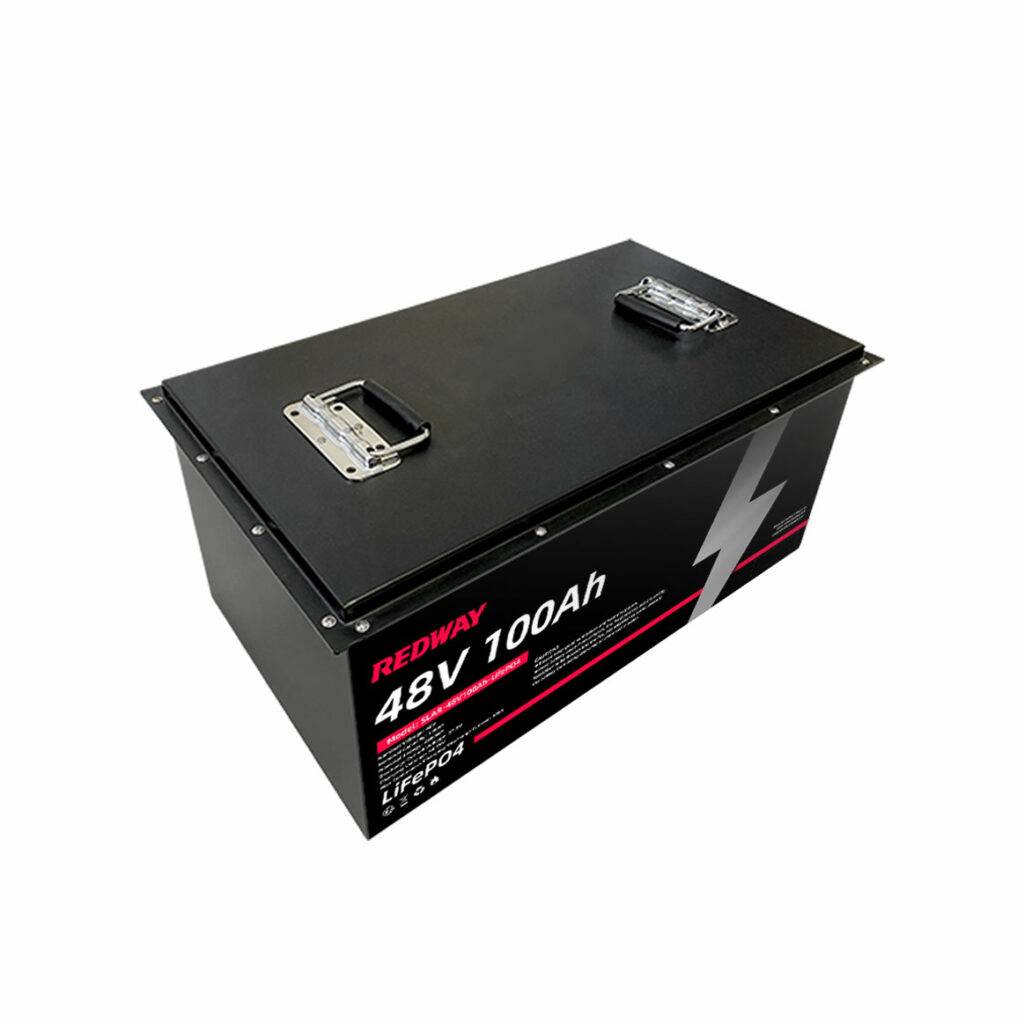
A LiFePO4 golf cart pack that suddenly “won’t charge” is often protecting itself. Redway’s 48V 100Ah and 72V 100Ah golf cart batteries include BMS functions; when cell voltage, temperature, or current limits are violated, charge current can be blocked until conditions clear. That behavior is intentional, not random failure.
Work the basics before replacing hardware. Confirm the charger is a LiFePO4 charger for the correct voltage class (48V / 51.2V nominal vs 72V class) and that AC input and output connectors are fully seated. Many “dead” packs are paired with leftover lead-acid chargers that never reach the correct absorption voltage—or that the BMS rejects. Check pack temperature: charging is commonly restricted near freezing on LiFePO4 systems; the 72V 100Ah page cites about 7.68 kWh energy and long cycle life (over 6,000 cycles at 80% DOD), but chemistry still needs an allowed charge temperature window.
Next, read BMS status if the pack offers Bluetooth or CAN. Look for cell under-voltage lockout after deep discharge, over-temperature, or charge over-current faults. A pack left at a very low state of charge may need a wake/recovery procedure from the manufacturer rather than a standard charger handshake. Inspect main fuse, orange connector keys, and any cart-side kill switch. Measure open-circuit pack voltage with a meter; a near-zero reading suggests a tripped protection device or open connection, while a mid voltage with no charge current points to handshake or configuration issues.
Do not bypass the BMS or jump cells with improvised supplies. If recovery is needed, use documented procedures or Redway support. After restoration, review why lockout happened—chronic deep discharge, wrong charger, water ingress on connectors, or excessive parasitic drains.
Practical answer: treat no-charge events as BMS diagnostics first; verify charger voltage class and temperature; use monitoring tools; only then escalate to warranty or cell-level service.
Seasonal patterns matter. After winter storage, packs left near empty are more likely to enter under-voltage protection; a spring commissioning pass that verifies open-circuit voltage and charger handshake prevents opening-day failures. Moisture in connectors after pressure washing is another common charge interrupter—dry and reseat before replacing packs. Keep one known-good charger as a test asset so technicians can separate cart wiring faults from charger faults in minutes.
If multiple carts fail the same night, suspect site power, a batch of incorrect chargers, or a procedure change—not simultaneous cell failure across the fleet.
↳ Replying to Redway Battery Editorial Team
Stock the correct LiFePO4 chargers beside the packs. A cheaper lead-acid charger creates repeat “dead battery” tickets that look like warranty failures. Include monitoring accessories in the capital buy if the SKU supports Bluetooth/CAN.
↳ Replying to Procurement perspective
Specify charger current within the pack’s allowed charge rate and ensure cart parasitic loads cannot drain packs to recovery-only states during storage weeks. Align 48V vs 72V SKUs so barns never cross-plug chargers.
↳ Replying to Selection/Engineering perspective
Use a checklist: AC power → charger model → connector → pack temp → BMS app codes → fuse. Record fault codes before clearing them. If under-voltage recovery is required, follow Redway guidance rather than jump-starting with another pack.
Suspect BMS charge lockout or a mismatched charger before assuming cell failure. Verify LiFePO4 charger voltage class, pack temperature, connectors/fuses, and BMS fault codes (Bluetooth/CAN where equipped), and avoid bypassing protection.
Editorial Q&A for battery selection and operations. Product figures cited from Redway product pages.
Related products
 Redway 48V 100Ah Golf Cart LiFePO4 Battery
 72V 100Ah LiFePO4 Golf Cart Battery
 48V 100Ah LiFePO4 Golf Cart Battery
Related articles & discussions
- How Can Rapid Recharge Lithium Batteries Ensure Continuous Golf Cart Operation?
- Understanding 48V 200Ah LiFePO4 Golf Cart Batteries: Performance, Design, and Real-World Value
- How Do You Maintain Lithium Server Batteries?
- What Are the Key Features of Redway Battery’s Latest Golf Cart Lithium Batteries?
- Golf Cart Battery Market – Global Industry Size, Share, Trends, and Forecast
- How Can Maintenance-Free Lithium Batteries Replace Lead-Acid Units in Golf Carts?
- How Can 36V, 48V, and 72V Lithium Golf Cart Batteries Redefine the Future of Electric Mobility?
- Why is a high‑safety lithium iron phosphate (LiFePO₄) battery chemistry the best long‑term solution for demanding applications?
- How Can a Golf Cart Lithium Battery with a Wide Operating Temperature Range Redefine Outdoor Mobility Efficiency?
- What Is the Best Zero‑Maintenance Lithium Battery for a Golf Cart Fleet?
