




REDWAY BATTERY / KNOWLEDGE
What Makes Drop-In Replacement Lithium Batteries the Future for Existing Golf Cart Platforms?
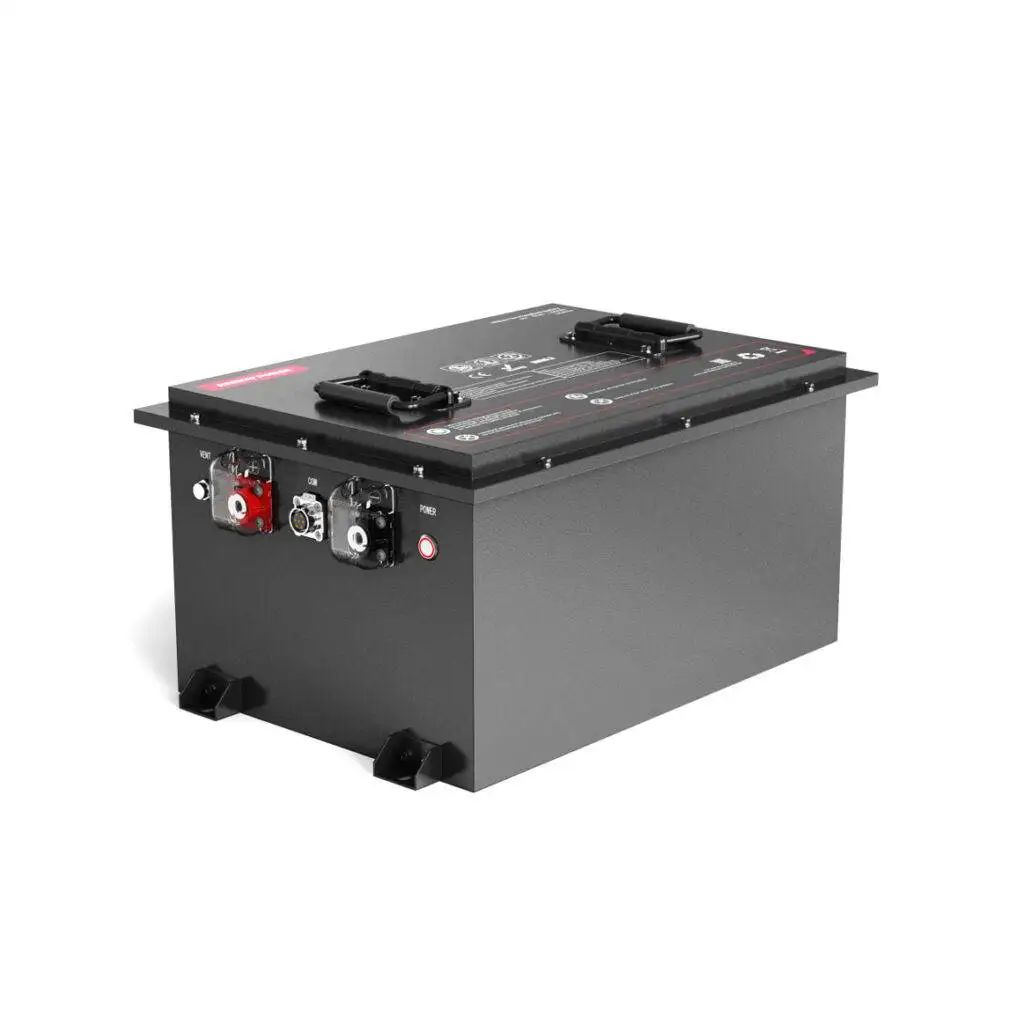
The evolution of golf cart power systems is accelerating as operators demand longer range, faster charging, and lower maintenance. Drop-in lithium batteries like those from Redway Battery are redefining fleet efficiency, offering immediate upgrades without redesigning existing carts. This article explores why now is the moment to modernize your golf cart powertrain.
How Is the Golf Cart Power Industry Changing and Why Does It Matter?
Golf carts are increasingly used beyond courses—in resorts, airports, gated communities, and industrial sites. According to Allied Market Research, the global golf cart market surpassed USD 1.6 billion in 2024 and is projected to reach USD 2.3 billion by 2030, growing at a CAGR of over 6%. However, much of the active fleet still relies on outdated lead-acid batteries with limited lifespans and high maintenance costs. Fleet owners are under pressure to reduce downtime and operate sustainably, yet replacing entire vehicles is often cost-prohibitive.
Operators report recurring issues: slow charging, excessive weight, and declining range. A single day of lost operation due to battery failure can mean hundreds of dollars in lost rentals or labor inefficiency. Meanwhile, regulators and end-users are pushing for cleaner, low-emission, energy-efficient solutions—pressing fleet managers to adapt quickly.
What Are the Pain Points for Traditional Battery Systems?
High maintenance demand – Lead-acid batteries require regular watering, equalization charging, and terminal cleaning.
Short lifespan – Typically last only 2–3 years under heavy usage, leading to frequent replacements.
Energy inefficiency – Usable capacity is usually less than 50% of total rated capacity due to voltage drop-off.
Heavy weight – Adds stress to vehicle suspension and reduces operating efficiency.
Environmental concerns – Disposal of lead-acid batteries has ecological and compliance risks.
These constraints leave many golf cart operators searching for a practical, low-friction way to upgrade—without overhauling the entire electrical system.
Why Are Traditional Replacement Solutions No Longer Enough?
Historically, fleet managers either stocked spare lead-acid batteries or overhauled carts completely when upgrading. Both approaches are costly and inefficient. Lead-acid replacements deliver marginal performance improvements, while full rebuilds require significant downtime and technical reconfiguration. Additionally, as lithium technology prices drop by over 80% in the last decade (data from BloombergNEF), the economic case now strongly favors lithium retrofits.
What Is a Drop-In Replacement Lithium Battery Solution?
A drop-in replacement lithium battery is engineered to be a direct swap for a standard lead-acid pack—same voltage, same form factor, same connectors—yet delivers exponentially higher performance. Redway Battery’s drop-in LiFePO4 solutions fit seamlessly into existing golf carts, delivering superior longevity, fast charging, and minimal maintenance. No wiring modifications or controller changes are needed.
Key capabilities include:
Intelligent BMS (Battery Management System) for real-time health monitoring
Over 3,500 charge cycles—up to 10 years of life expectancy
Integrated overcharge, short circuit, and thermal protection systems
60–70% weight reduction compared to equivalent lead-acid units
How Do Drop-In Lithium Batteries Compare to Traditional Options?
| Feature | Lead-Acid Battery | Redway Drop-In Lithium Battery |
|---|---|---|
| Cycle Life | 500–700 cycles | 3,500+ cycles |
| Weight | Very heavy | Up to 70% lighter |
| Charging Time | 8–10 hours | 2–3 hours |
| Maintenance | Frequent | None |
| Energy Efficiency | ~70% | >95% |
| Environmental Impact | Hazardous waste risk | Eco-friendly, recyclable |
| Lifetime Cost | High (frequent replacement) | Lower (longer lifespan) |
For the surrounding sizing, selection, installation and maintenance decisions, continue with the Lithium Golf Cart Battery: What Changes, What It Costs, What Breaks.
How Can Fleet Operators Implement Drop-In Lithium Batteries Step-by-Step?
Assessment – Evaluate current golf cart models, battery compartment dimensions, and voltage requirements (e.g., 36V, 48V).
Selection – Choose compatible Redway Battery modules based on performance needs—standard or customized OEM packs.
Installation – Remove old lead-acid units and drop in lithium packs using the same cabling system.
Integration – Connect the existing charger (if compatible) or upgrade to a lithium charger recommended by Redway Battery.
Testing & Commissioning – Verify voltage, start-up, load performance, and BMS connectivity.
Operation & Maintenance – Minimal upkeep—periodic firmware checks and simple diagnostic readings.
Which Real-World Examples Show Success After Transition?
Case 1: Golf Course Fleet (200 Carts)
Problem: Frequent downtime, high labor cost for maintenance.
Traditional approach: Regular battery top-ups and early replacements.
After upgrade: Redway LiFePO4 packs increased range by 40%. Fleet availability improved from 82% to 97%.
Key benefit: Maintenance cost dropped by over 60%.
Case 2: Resort Shuttle Service
Problem: Limited battery autonomy for multi-shift operations.
Traditional approach: Overnight charging and mid-day recharge cycles.
After upgrade: Lithium batteries allowed full-day use with fast 2-hour recharge.
Key benefit: Guest satisfaction scores improved due to zero downtime.
Case 3: Industrial Facility Transportation
Problem: Weight of lead-acid units impacted acceleration and load balance.
Traditional approach: Use of oversized motors to compensate.
After upgrade: Redway Battery lighter packs reduced weight by 250 lbs per cart, enhancing maneuverability.
Key benefit: Reduced energy consumption by 25%.
Case 4: Golf Cart Rental Company
Problem: Battery replacements every two years affecting ROI.
Traditional approach: Scheduled lead-acid replacement program.
After upgrade: Redway lithium units have been operating for four years with negligible degradation.
Key benefit: Operating profit margins rose 15%.
Why Should Operators Transition Now?
Lithium prices are stable, and infrastructure standards are widely available. Shifting now helps operators secure long-term cost advantages before regulation or competition pressures increase. Redway Battery’s ISO-certified manufacturing and global after-sales support ensure reliability for both new fleets and retrofits. The ease of adopting drop-in lithium solutions means your existing carts can transform into high-efficiency, low-maintenance assets almost overnight.
FAQ
1. Can I install drop-in lithium batteries myself?
Yes, if standard safety procedures are followed. Redway provides manuals and remote technical support.
2. Are drop-in lithium batteries compatible with my existing charger?
Many are compatible, but Redway recommends confirming charger parameters or upgrading to an optimized lithium charger.
3. How long do these lithium batteries last?
Typically up to 10 years or 3,500 charge cycles, depending on usage.
4. Does weather affect performance?
Redway’s LiFePO4 chemistry performs reliably between -20°C and 60°C, making it suitable for most climates.
5. What warranty do Redway batteries include?
Up to 5 years standard warranty, with extended support options for OEM clients.
Sources
Allied Market Research – Golf Cart Market Outlook 2024–2030: https://www.alliedmarketresearch.com/golf-cart-market
BloombergNEF – Lithium-Ion Battery Price Survey 2024: https://about.bnef.com/blog/global-lithium-ion-battery-prices
International Energy Agency – Clean Energy Technology Report 2024: https://www.iea.org/reports/clean-energy-technology-guide
U.S. Department of Energy – EV Battery Recycling Fact Sheet: https://www.energy.gov/articles/ev-battery-recycling
Redway Battery Official Website: https://www.redwaybattery.com
