




REDWAY BATTERY / KNOWLEDGE
How do you receive and move a heavy lithium forklift battery shipment safely?
Redway Battery Editorial Team
Talk / Battery Q&A
A warehouse expects its first pallet delivery of lithium forklift batteries next week. The receiving team usually handles cartons, not single items weighing several hundred kilograms.
Direct answer: Plan it before the truck arrives: know the freight terms and who unloads, have lifting equipment rated for the heaviest pack, inspect packaging and labels before signing, note any damage on the delivery document and photograph it, then check each battery and store it indoors within the listed storage temperature until installation. Never sign a damaged delivery as clean.
Know the weights. The 48V 420Ah lists about 190 kg, the 36V 700Ah (690Ah) about 330 kg, and the 80V 700Ah (690Ah) about 1,227 kg. Add pallet and packaging. OSHA’s truck rule requires a conveyor, overhead hoist or equivalent material handling equipment for handling batteries, so check that your truck, hoist and slings are rated for the load, and ask Redway where the lifting points are.
Freight terms. Redway pages list delivery terms such as FOB, EXW and CIF. Under each, the point where risk passes and who arranges insurance differ, so read the contract and know who you claim against if goods arrive damaged. Lithium batteries ship as dangerous goods (UN3480, Class 9); see our shipping guide for the marks to expect.
Before signing. Check the number of pieces against the packing list, look for crushed or wet packaging, broken straps, forklift damage or tilted crates, and check the dangerous-goods marks and labels are present. Photograph each pallet. If anything is wrong, write it on the delivery document before signing and tell the carrier and supplier the same day.
After unloading. Open and inspect each battery for case damage, loose parts, smell or heat. Check the serial numbers against the documents. If the pack has a display, note the state of charge and any alarm. Do not charge or install a battery that looks damaged; isolate it, label it and contact the supplier before doing anything else.
Storage before installation. The forklift pages list a storage temperature of 5–35 °C. Store indoors, dry, on a level floor, away from combustibles, chargers and traffic routes, with terminals covered. Ask Redway what state of charge to keep in storage and how often to check it if installation is delayed. Plan the fitting with the fit and counterweight checklist.
↳ Replying to Redway Battery Editorial Team
Agree freight terms, insurance and unloading responsibility in the order, and ask for the packing list and weights before dispatch. That decides who pays if a pallet is damaged.
↳ Replying to Procurement perspective
Compare each pack’s weight and dimensions with your handling equipment and route to the charging area. A pack over a tonne may need a different lift path than expected.
↳ Replying to Selection/Engineering perspective
Keep a receiving checklist with photos, serial numbers and state of charge. Store packs within 5–35 °C and check them on a set schedule until fitted.
Plan it before the truck arrives: know the freight terms and who unloads, have lifting equipment rated for the heaviest pack, inspect packaging and labels before signing, note any damage on the delivery document and photograph it, then check each battery and store it indoors within the listed storage temperature until installation. Never sign a damaged delivery as clean.
Verify before ordering: Lifting points, storage state of charge and check intervals are not published; request them from Redway with the order.
Sources checked: OSHA 29 CFR 1910.178.
Editorial Q&A for battery selection and operations. Product figures cited from Redway product pages.
Related products
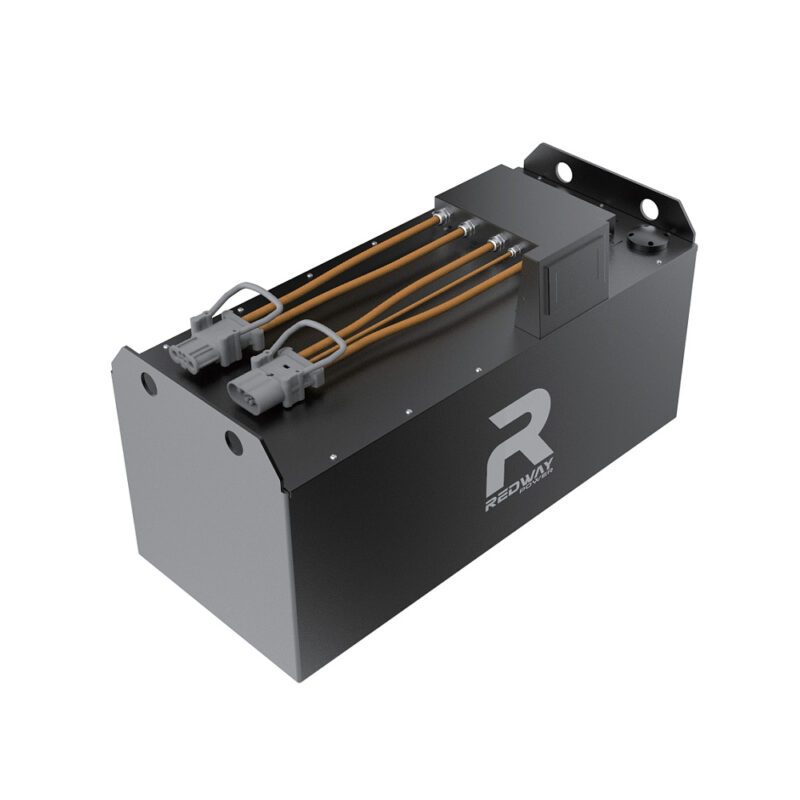
 48V 400Ah (51.2V 420Ah) Lithium Forklift Battery
 36V 700Ah (38.4V 690Ah) Lithium Forklift Battery
 80V 700Ah (690Ah) Forklift Lithium Battery
Related articles & discussions
- Can a 48V Controller Handle 72V?
- What Are the Best Energy Storage Solutions for Material Handling?
- What Makes the 6-85-13.wc Forklift Battery Ideal for Heavy-Duty Use?
- How to Choose the Right Forklift Battery Capacity for Heavy Loads?
- How Often Should Forklifts Undergo Routine Inspections?
- Why Are Lithium-Ion Forklift Batteries Revolutionizing Material Handling?
- What Makes the IC Cushion Forklift 3000-6500lbs Ideal for Heavy-Duty Use?
- What Makes the 18-85-21 Forklift Battery Ideal for Heavy-Duty Use?
- What Makes IC Cushion Forklifts Ideal for Heavy-Duty Applications?
- What Makes the DP60-100N3 Diesel Forklift Ideal for Heavy-Duty Operations?
