REDWAY BATTERY / KNOWLEDGE
How do you size a PM-LV rack battery bank for a given daily home load?

Redway Battery Editorial Team
Talk / Battery Q&A
A homeowner wants backup for essential loads and asks how many 5 kWh rack modules to buy.
Direct answer: Start from the daily energy of the loads you want backed up, divide by the usable share and inverter efficiency, then check that the modules’ combined current covers your peak power. Example: 9 kWh per day needs about 12 kWh of nominal battery under the stated assumptions, so two 5.12 kWh modules fall short and three give margin.
Gather three numbers: daily energy (kWh) of the loads you want backed up, peak power (kW) when several run together, and days of autonomy if the grid or solar fails. Take the figures from bills or a plug-in meter, and list essentials only, such as refrigeration, lighting, internet and a heating pump.
Know the modules. The PM-LV51100-3U is listed at 51.2V, 100Ah, 5.12 kWh, 42 kg and 420 × 440 × 136 mm. The PM-LV51200-5U is 10.24 kWh, about 77 kg and 570 × 440 × 222 mm. The PowerAll page lists 5.37 kWh per battery unit and up to six units (32.25 kWh). The rack pages give different maximum parallel counts (64 for the 3U page, 16–32 for the 5U pages), so check the number against your inverter.
The arithmetic: nominal kWh needed = daily kWh ÷ (usable share × inverter efficiency). Example, using assumptions rather than Redway data: 9 ÷ (0.80 × 0.92) is about 12.2 kWh. Two PM-LV51100-3U modules give 10.24 kWh, which is short. Three give 15.36 kWh, which leaves margin for ageing and a cloudy day. The pages quote cycle life at 80% DOD, but the usable window depends on the BMS and inverter settings, so confirm it with Redway.
Then check power. Each module lists 100A maximum continuous charge and discharge, about 5.1 kW at 51.2V nominal. Modules in parallel add capacity and current capability, but the real limit is the inverter and the wiring. Add up starting surges too: pumps and compressors can draw several times their running power for a moment. Verify the inverter’s surge rating against your list.
Finally, plan for growth and verification. Leave space to add modules, and read our post on paralleling PM-LV rack batteries of mixed age before mixing old and new units. After commissioning, run a capacity test and record it as your baseline. Solar recharge capacity is a separate calculation and is not covered here.
↳ Replying to Redway Battery Editorial Team
Quote against usable, not nominal, energy. Ask each installer to state the usable share and efficiency they assumed, so two quotes of “10 kWh” can be compared fairly.
↳ Replying to Procurement perspective
Work from measured daily kWh and peak kW. Check module count against the inverter’s battery current and the parallel limit on the product page. Keep headroom of at least one module for ageing.
↳ Replying to Selection/Engineering perspective
After commissioning, record the first full-discharge result as the baseline, and repeat it yearly. Keep the module serial numbers and installation dates, because they matter if you add units later.
Start from the daily energy of the loads you want backed up, divide by the usable share and inverter efficiency, then check that the modules’ combined current covers your peak power. Example: 9 kWh per day needs about 12 kWh of nominal battery under the stated assumptions, so two 5.12 kWh modules fall short and three give margin.
Verify before ordering: Usable depth of discharge and inverter pairing must be confirmed by Redway; the 80% and 92% figures are assumptions.
Editorial Q&A for battery selection and operations. Product figures cited from Redway product pages.
Related products
 51.2V 100Ah Server Rack Battery
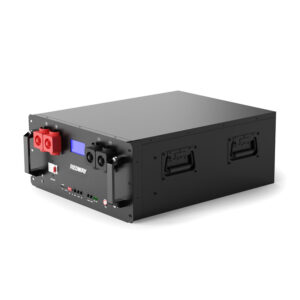 51.2V 200Ah 10kWh Server Rack Battery (5U)
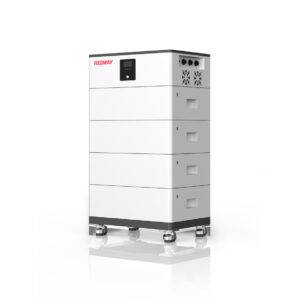 51.2V All-in-One Home-ESS System PowerAll (5kWh/10kWh/16kWh/21kWh/26kWh/32kWh)
Related articles & discussions
- How Rack Battery Systems Enhance Energy Storage Efficiency
- How to Choose the Best Home Power Backup Solution for Your Needs
- Which Home Energy Storage System Is Right for You?
- How to Implement an Overall Power Solution for Home Energy Storage Systems
- How to Inventory Mainstream Battery Cell Suppliers for Home Energy Storage Systems (Home-ESS)
- A Practical Guide to LiFePO4 Server Rack Batteries and Energy Storage Systems
- How Rack Battery Systems Enhance Energy Storage Efficiency
- Is LiFePO4 Truly the Best Choice Over Lithium-Ion for Home Energy Storage Systems?
- How many 200Ah lithium battery can power a home?
- What Is A 100Ah LiFePO4 Rack Battery Used For?