




REDWAY BATTERY / KNOWLEDGE
Can a tow vehicle’s 7-pin trailer plug charge an RV lithium battery?
Redway Battery Editorial Team
Talk / Battery Q&A
A travel-trailer owner upgraded the house bank to lithium and expected the truck’s 7-pin charge pin to keep the batteries full on long highway days.
Direct answer: Usually only a trickle, and often not enough for lithium. Many 7-pin charge circuits use modest wire gauge, share paths with other trailer functions, and see voltage drop that leaves a LiFePO4 bank well below a full charge. Smart alternators may also sag voltage. For reliable charging while towing, fit a DC-DC charger fed by an adequately sized cable from the tow vehicle, or use solar and shore power as the primary methods. Treat the 7-pin charge pin as a maintenance trickle at best unless the vehicle maker documents a high-current trailer charge circuit.
What the 7-pin often provides. One pin is commonly an auxiliary or charge feed. On many trucks it is fused at a modest rating and wired with thin cable over a long run. Voltage at the trailer may sit too low to finish a lithium charge even when the truck battery is healthy.
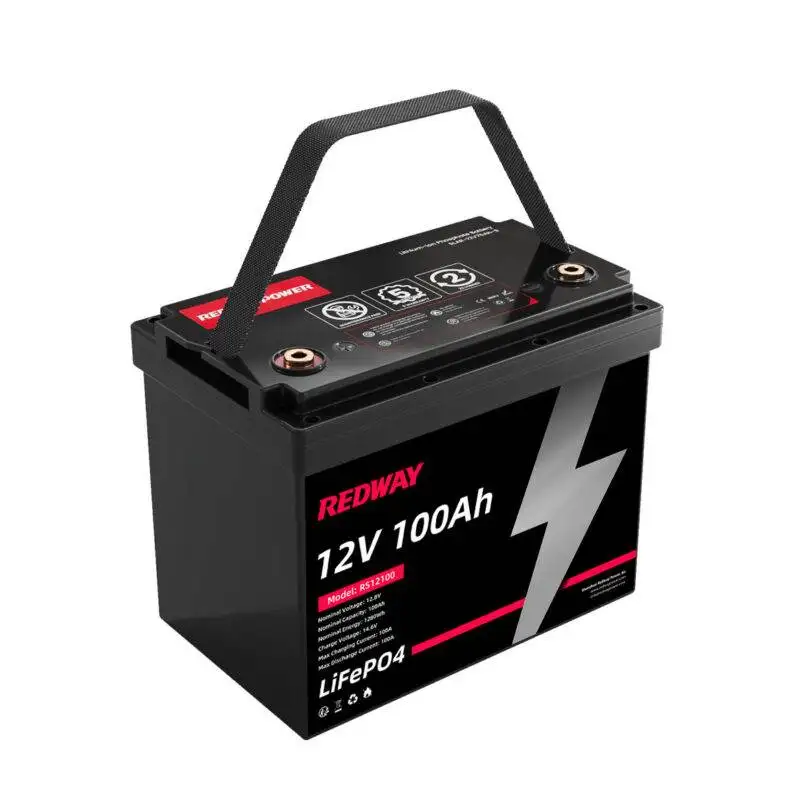
Lithium needs. Packs such as the 12V 100Ah, 12V 150Ah (about 1.92 kWh) and 12V 200Ah (about 2.5 kWh) want a proper LiFePO4 charge profile into the mid-14V range for a full charge. A sagging 13.x V feed may barely offset a fridge load; see sizing for fridge and inverter loads.
Better approach. A DC-DC charger with lithium profile, sized cable, and fusing at both ends uses the alternator correctly and protects against BMS disconnect spikes; see alternator charging with DC-DC. Some owners add a dedicated high-current umbilical instead of relying on the 7-pin.
Measurement. With the trailer connected and fridge running, measure voltage at the house battery while driving at highway speed and at idle. If voltage never reaches the lithium absorption range, the 7-pin path is not doing useful charging. Also check that current into the bank is more than a few amps.
Expectations. Set trip plans around solar and campsite hookups if you skip DC-DC. Do not assume overnight highway miles will refill a depleted bank after dry camping.
Safety. Do not bypass fuses to force more current through the 7-pin harness—trailer connectors and thin wire are fire risks when overloaded. Keep charge wiring supported and chafe-protected at the hitch.
Vehicle differences. A few trucks offer genuine high-output trailer battery charging; follow that OEM manual if you have one. Otherwise plan a DC-DC install and size it to both the alternator continuous rating and the battery charge limit.
↳ Replying to Redway Battery Editorial Team
Tell buyers early that 7-pin charging is not a substitute for DC-DC or shore power on lithium RVs.
↳ Replying to Procurement perspective
If relying on the tow vehicle, specify cable gauge, fuse rating and a lithium DC-DC charger in the conversion scope.
↳ Replying to Selection/Engineering perspective
Verify charge voltage at the house bank on a real drive before trusting the setup on a long dry-camp trip.
Usually only a trickle, and often not enough for lithium. Many 7-pin charge circuits use modest wire gauge, share paths with other trailer functions, and see voltage drop that leaves a LiFePO4 bank well below a full charge. Smart alternators may also sag voltage. For reliable charging while towing, fit a DC-DC charger fed by an adequately sized cable from the tow vehicle, or use solar and shore power as the primary methods. Treat the 7-pin charge pin as a maintenance trickle at best unless the vehicle maker documents a high-current trailer charge circuit.
Verify before ordering: Tow-vehicle charge-pin capacity is vehicle-specific; confirm with the truck maker and size any DC-DC charger to the battery and alternator.
Editorial Q&A for battery selection and operations. Product figures cited from Redway product pages.
Related products
 12V 100Ah Lithium Battery (LiFePO4, Self-heating, OEM)
 12V 200Ah Lithium Battery
 12V 150Ah Lithium Battery
Related articles & discussions
- What Are the Differences Between Golf Cart and RV Deep Cycle Batteries?
- How to Choose the Best Lithium Battery Chargers for Your RV: A Comprehensive Review
- How Lithium Batteries Enhance Your RV Adventures
- Building a High-Capacity 12V 560Ah Lithium RV Battery Pack: Expert Guide
- How Many Deep-Cycle Batteries Do I Need for My RV?
- Can I just replace my RV battery with a lithium battery?
- Can I Use a 4.8V Charger on a 3.7V Battery?
- How Does ESS RV Battery System Work?
- What Makes the Litime 12V 200Ah Plus Lithium LiFePO4 RV Battery Stand Out?
- How to Keep Your RV Battery Warm in Winter: Tips and Tricks
