




REDWAY BATTERY / KNOWLEDGE
What fire-code questions should you ask before putting rack batteries indoors?

Redway Battery Editorial Team
Talk / Battery Q&A
A business wants to put several 10 kWh rack batteries in a back office and asks whether there are fire rules for that, or whether it is like installing a UPS.
Direct answer: Yes, there usually are. Many jurisdictions regulate stationary battery systems through fire and electrical codes, often based on NFPA 855 and NFPA 70 (NEC), and may ask for equipment listed to UL 9540 or fire-test data from UL 9540A. What applies depends on your location, the total energy, the room and the building use. Ask your authority having jurisdiction (AHJ) and insurer before ordering, and ask the supplier which listings and test reports it can document for the exact model.
What the standards are. NFPA 855, Standard for the Installation of Stationary Energy Storage Systems, sets minimum requirements for mitigating ESS hazards; NFPA lists the 2026 edition as current, but your jurisdiction may enforce an earlier one. UL 9540A is a test method for thermal-runaway fire propagation in battery energy storage systems; UL Solutions describes it as the consensus standard cited in NFPA 855 for large-scale fire testing. UL 9540 is the safety standard for energy storage systems and equipment.
What the Redway pages list. The PM-LV51200-5U lists 10.24 kWh, IP21 and certifications “UL 1642, UL 1973, IEC 62619, IEC 62133, CE, RoHS, UN38.3, MSDS”. The PM-LV51100-3U lists about 5 kWh, IP21 and “Dry Indoor Space, Server Room, Data Center” as usage locations. The PowerAll all-in-one lists indoor use, IP40, and stacks from 5.37 to 32.25 kWh. The pages do not list a UL 9540 system listing or a UL 9540A report. Ask for certificate numbers and the scope of each document.
Questions for the AHJ: which code edition applies; whether the total energy in the room crosses a threshold that triggers extra requirements; whether the room needs a fire rating, separation, detection, ventilation or explosion control; spacing between units and from exits; whether a UL 9540 listing or UL 9540A data is required; and what permit drawings they want.
Questions for the insurer: whether they need to be told, what documents they want, and whether they have their own requirements on location, detection or suppression.
Questions for the supplier: certificates and test reports by model number, the system configuration they cover, the maximum number of units per installation, recommended clearances, and the emergency response information for the product. Treat this article as a checklist of questions, not compliance advice; only the AHJ can say what your site needs. For sizing the bank itself, see sizing a rack battery bank for a daily load.
↳ Replying to Redway Battery Editorial Team
Ask the AHJ and insurer before the purchase order. A room upgrade, detection or a different location can cost more than the batteries, and you want that number in the budget.
↳ Replying to Procurement perspective
Collect energy per unit and total installed kWh, the room dimensions, the listings and test reports, and clearances. Those are the inputs a fire official usually asks for.
↳ Replying to Selection/Engineering perspective
Keep the battery room clear of storage and combustible material, keep access to the disconnects free, and test any detection system on the schedule the AHJ sets.
Yes, there usually are. Many jurisdictions regulate stationary battery systems through fire and electrical codes, often based on NFPA 855 and NFPA 70 (NEC), and may ask for equipment listed to UL 9540 or fire-test data from UL 9540A. What applies depends on your location, the total energy, the room and the building use. Ask your authority having jurisdiction (AHJ) and insurer before ordering, and ask the supplier which listings and test reports it can document for the exact model.
Verify before ordering: Requirements are jurisdiction-specific. A UL 9540 listing or UL 9540A report is not shown on the Redway pages; ask what Redway can document per model.
Sources checked: NFPA 855 (NFPA); UL 9540A test method (UL Solutions); NFPA 70 (NFPA).
Editorial Q&A for battery selection and operations. Product figures cited from Redway product pages.
Related products
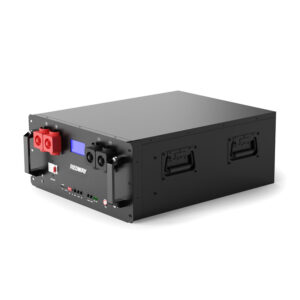 51.2V 200Ah 10kWh Server Rack Battery (5U)
 51.2V 100Ah Server Rack Battery
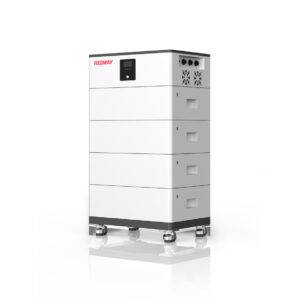 51.2V All-in-One Home-ESS System PowerAll (5kWh/10kWh/16kWh/21kWh/26kWh/32kWh)
Related articles & discussions
- Safe Lithium Ion Battery Fire Extinguisher
- Can lithium batteries catch fire when not in use?
- What Causes Most Lithium Battery Fires?
- Will LiFePO4 Catch Fire?
- How to Understand UL 1642 for Lithium Server Rack Batteries?
- Where To Find LFP Rack Batteries With UL Ratings?
- Can Leaking Batteries Start a Fire? Understanding the Risks
- What Are Essential Lithium Forklift Battery Fire Safety Guidelines?
- Which batteries are most likely to catch fire?
- How to Protect Your Home from Lithium-Ion Battery Fire Risks
