




REDWAY BATTERY / KNOWLEDGE
How does a self-heating rack battery behave in a cold cabinet?

Redway Battery Editorial Team
Talk / Battery Q&A
A farm installs a rack battery in an unheated outbuilding where winter nights drop well below freezing, and asks whether the self-heating option will keep it working.
Direct answer: Redway’s rack modules list charging from 0°C and discharging from -20°C, so below freezing the BMS should block charging until the cells are warm enough. Self-heating, listed as an optional upgrade on these models, is meant to warm the cells so charging can resume. How and when it switches on, what powers it and how much energy it uses are not published, so ask for those details in writing before relying on it.
Page figures. The PM-LV51200-5U (51.2V 200Ah, 10.24 kWh), PM-LV48150-4U (48V 150Ah, 7.2 kWh) and PM-LV51150-4U (51.2V 150Ah, 7.68 kWh) list charge 0°C to 60°C, discharge -20°C to 60°C, IP21 and self-heating among optional upgrades.
How heating usually works. In general, a self-heating battery uses a heater controlled by the BMS that switches on when cell temperature is below a set point and a charge source is present, and switches off once the cells are warm. Some designs can also draw heater power from the battery itself. Which approach a specific Redway model uses is not stated on the pages.
What it means in practice. On a cold morning, solar or grid charging may not start at once; the system may first spend energy on heating. If heating can draw from the battery, a long cold spell without charge could use stored energy. A self-heated battery still discharges within its listed -20°C limit.
Questions to ask. At what cell temperature does heating start and stop? What powers it? What is the heater power and typical warm-up time? Does the inverter see a heating state or alarm? Is heating available on the exact model and voltage you are ordering, and how does it affect warranty?
Other ways to keep it warm. Insulating the cabinet, placing it against an inside wall or adding a thermostatically controlled cabinet heater may be simpler in some sites. Do not wrap modules in insulation that blocks their ventilation or cable access.
After a cold snap. Check the alarm log for low-temperature events, confirm that charging resumed, and look at firmware notes for heating behaviour. For general placement, see indoor installation questions and annual inspection.
↳ Replying to Redway Battery Editorial Team
Compare the extra cost of a self-heating module with insulating or heating the cabinet; the best choice depends on how cold the site gets and for how long.
↳ Replying to Procurement perspective
Ask for the heating start and stop temperatures, heater power source, heater power and warm-up time before designing around it.
↳ Replying to Selection/Engineering perspective
After cold spells, review low-temperature alarms and charging history, and check that cabinet vents and cable entries stay clear.
Redway’s rack modules list charging from 0°C and discharging from -20°C, so below freezing the BMS should block charging until the cells are warm enough. Self-heating, listed as an optional upgrade on these models, is meant to warm the cells so charging can resume. How and when it switches on, what powers it and how much energy it uses are not published, so ask for those details in writing before relying on it.
Verify before ordering: Heating thresholds, heater power and warm-up time are not published; do not design around them until Redway confirms them for the exact model.
Editorial Q&A for battery selection and operations. Product figures cited from Redway product pages.
Related products
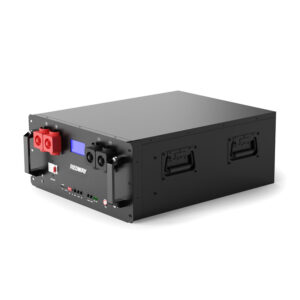 51.2V 200Ah 10kWh Server Rack Battery (5U)
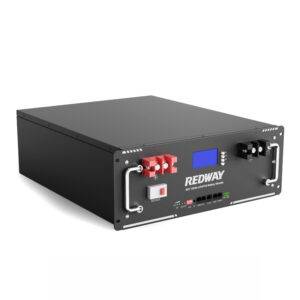 48V 150Ah 7kWh Server Rack Battery (4U)
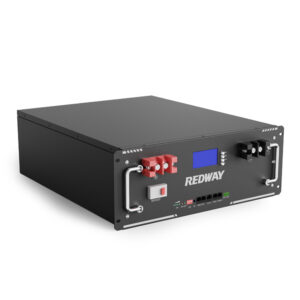 51.2V 150Ah 7kWh Server Rack Battery (4U)
Related articles & discussions
- Why do batteries struggle in cold?
- How Can You Insulate Lithium Batteries for Cold Environments?
- What Are Cold Cranking Amps (CCA) and Why Are They Important for Your Vehicle?
- Is It OK to Store Batteries in a Cold Garage?
- How Do Lithium Batteries Perform In Cold Storage Warehouse?
- What Are the Best Practices for Storing LiFePO4 Batteries in Cold Weather?
- What Happens if a Lithium Battery Gets Too Cold?
- What Happens If You Leave Batteries in Cold Weather?
- Can You Use Lithium Boat Batteries in Cold Weather?
- Does Cold Temperature Hurt Batteries?
