




REDWAY BATTERY / KNOWLEDGE
Why does the dash battery gauge look wrong after switching a golf cart to lithium?
Redway Battery Editorial Team
Talk / Battery Q&A
A course converted its carts from lead-acid to lithium. Drivers say the dash gauge shows full for most of the round and then falls to empty within minutes.
Direct answer: Most original golf cart gauges estimate charge from pack voltage using a lead-acid curve. A LiFePO4 pack holds an almost flat voltage over most of its capacity and then falls quickly near empty, so a lead-acid gauge reads high for a long time and then drops suddenly. Use a state-of-charge reading from the battery itself (display, app or a lithium-aware meter) and treat the old gauge as unreliable until it is replaced or reprogrammed.
Why the gauge misreads. A lead-acid pack loses voltage fairly steadily as it discharges, so a voltmeter-style gauge can map volts to a rough percentage. LiFePO4 cells keep a much flatter voltage through the middle of their range. The pack voltage also sags under load and recovers at rest, so a gauge that samples voltage while the cart climbs may jump around. The gauge is not broken; it is calibrated for a different chemistry.
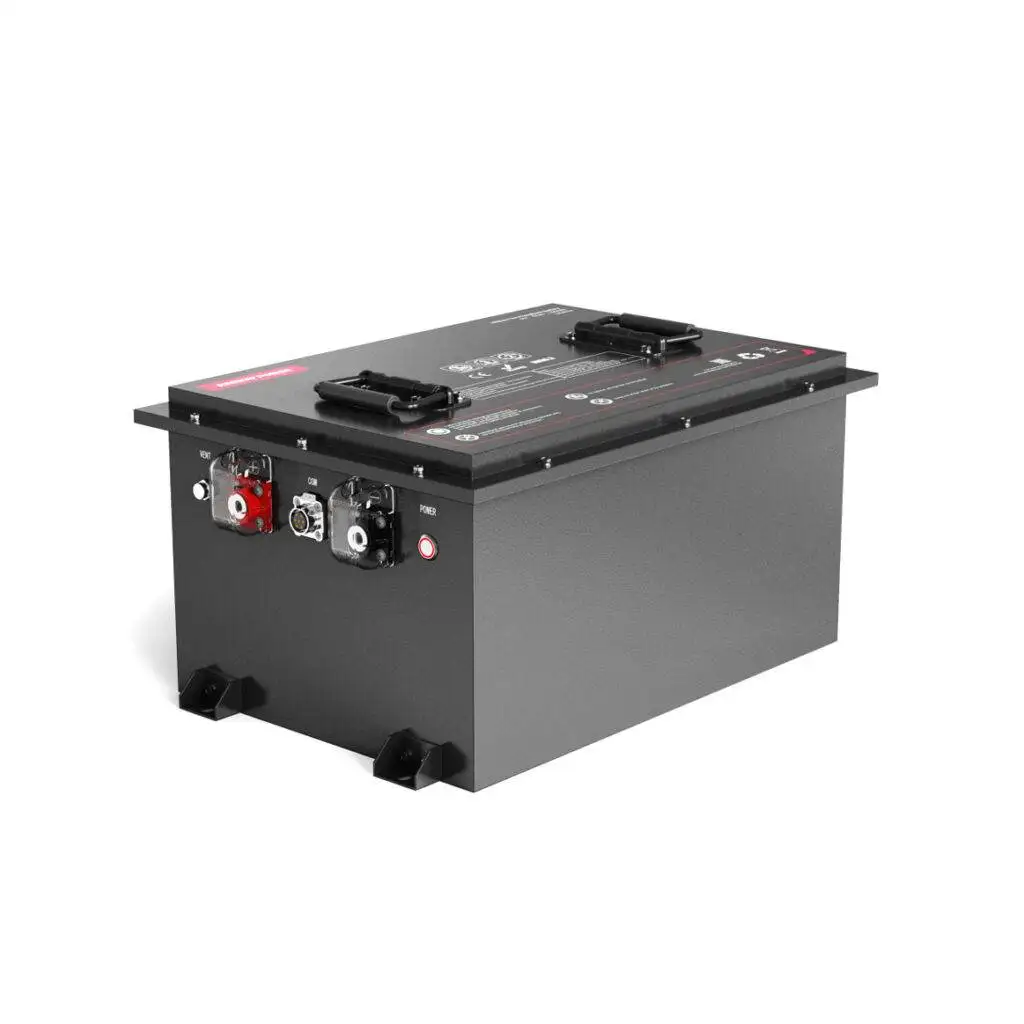
Check the voltage windows. Redway’s 48V 100Ah (S51105) lists 51.2V nominal, 58.4V maximum charge and 40V cut-off. The 48V 150Ah (S48150P) lists 48V nominal, 54.75V maximum and 37.5V cut-off, so even two 48V lithium packs give a gauge different numbers. The 36V 100Ah lists 38.4V nominal, 43.8V and 30V. A gauge set for a 36V or 48V lead-acid pack will not match any of these exactly.
What to use instead. The 48V 100Ah page lists an LCD screen, Bluetooth and an app among its optional upgrades, and its maintenance chart says to monitor the SOC meter regularly. A state-of-charge figure from the battery management system counts charge in and out, which is more useful than voltage on a flat curve. Our post on Bluetooth apps and cell voltage covers what the app can show. Ask Redway which display or meter ships with the pack you ordered.
Fixing the dash. Options depend on the cart make and model: some controllers or gauges can be reprogrammed for lithium, some gauges can be replaced with a lithium-aware unit, and some fleets simply cover the old gauge and fit the battery’s own meter. Check the cart maker’s service information before changing wiring, and do not connect a meter to battery communication ports without the supplier’s wiring details.
Train drivers. Tell drivers what the new reading means and set a return-to-barn point, for example a state-of-charge level agreed with the course manager, rather than waiting for the gauge to reach empty. A pack that reaches its cut-off voltage will be switched off by its protection, which stops the cart where it is. If carts keep cutting out with charge apparently left, see voltage drop under acceleration.
↳ Replying to Redway Battery Editorial Team
Budget a lithium-aware meter or display per cart when you price the retrofit. It is a small cost next to a cart stranded on the back nine.
↳ Replying to Procurement perspective
Original gauges read voltage on a lead-acid curve. LiFePO4’s flat curve and load sag make that unreliable, so take state of charge from the BMS or a coulomb-counting meter.
↳ Replying to Selection/Engineering perspective
Record the battery’s state of charge at check-in each day. If the dash and battery disagree, trust the battery reading and log the cart for gauge work.
Most original golf cart gauges estimate charge from pack voltage using a lead-acid curve. A LiFePO4 pack holds an almost flat voltage over most of its capacity and then falls quickly near empty, so a lead-acid gauge reads high for a long time and then drops suddenly. Use a state-of-charge reading from the battery itself (display, app or a lithium-aware meter) and treat the old gauge as unreliable until it is replaced or reprogrammed.
Verify before ordering: Which meter or display ships with each pack, and whether the cart’s controller or gauge can be reprogrammed, depends on the order and the cart make; confirm with Redway and the cart maker.
Editorial Q&A for battery selection and operations. Product figures cited from Redway product pages.
Related products
 48V 100Ah LiFePO4 Golf Cart Battery
 48V 150Ah LiFePO4 Golf Cart Battery (S48150P)
 36V 100Ah LiFePO4 Golf Cart Battery
Related articles & discussions
- How to Upgrade a Golf Cart Charging System?
- Are Lithium Batteries a Cost-Effective Upgrade for Golf Carts?
- How to Choose the Right Wire Gauge for a 3000-Watt Inverter
- Can I Use LiFePO4 in a Golf Cart? Exploring the Benefits and Upgrades
- How Can Golf Cart Battery Upgrades Improve Performance and Efficiency?
- What Is the Best Golf Cart Battery Meter for Optimal Performance?
- What You Need to Know About Upgrading Your Golf Cart to Lithium Batteries
- How to Upgrade Your Golf Cart to Lithium Batteries: A Comprehensive Guide
- Are Lithium Batteries Worth It for a Golf Cart? Upgrade Your Golf Cart Battery to Lithium for Enhanced Performance and Efficiency
- How Does a 48-Volt Golf Cart Battery Meter Enhance Performance?
