




REDWAY BATTERY / KNOWLEDGE
Does a lithium golf cart battery need a storage or sleep switch, and when should you use it?
Redway Battery Editorial Team
Talk / Battery Q&A
A resort parks part of its lithium golf cart fleet for six weeks in the low season and found two carts would not wake up last year.
Direct answer: Use a disconnect or the BMS sleep or storage mode whenever a cart will sit for more than a couple of weeks without charging. Lithium batteries self-discharge slowly, but carts have small permanent loads, such as gauges, GPS trackers, controller standby and Bluetooth modules, that can run a battery down to its low-voltage protection. Store part-charged, disconnected and checked monthly.
Why carts go flat. Self-discharge is low: the 48V 150Ah page lists under 2% per month. The bigger drain is the cart: a few tens of milliamps all day add up to several amp-hours a month, plus anything accidentally left on. When the battery reaches the BMS cut-off, it shuts down to protect the cells, and some chargers then cannot see it.
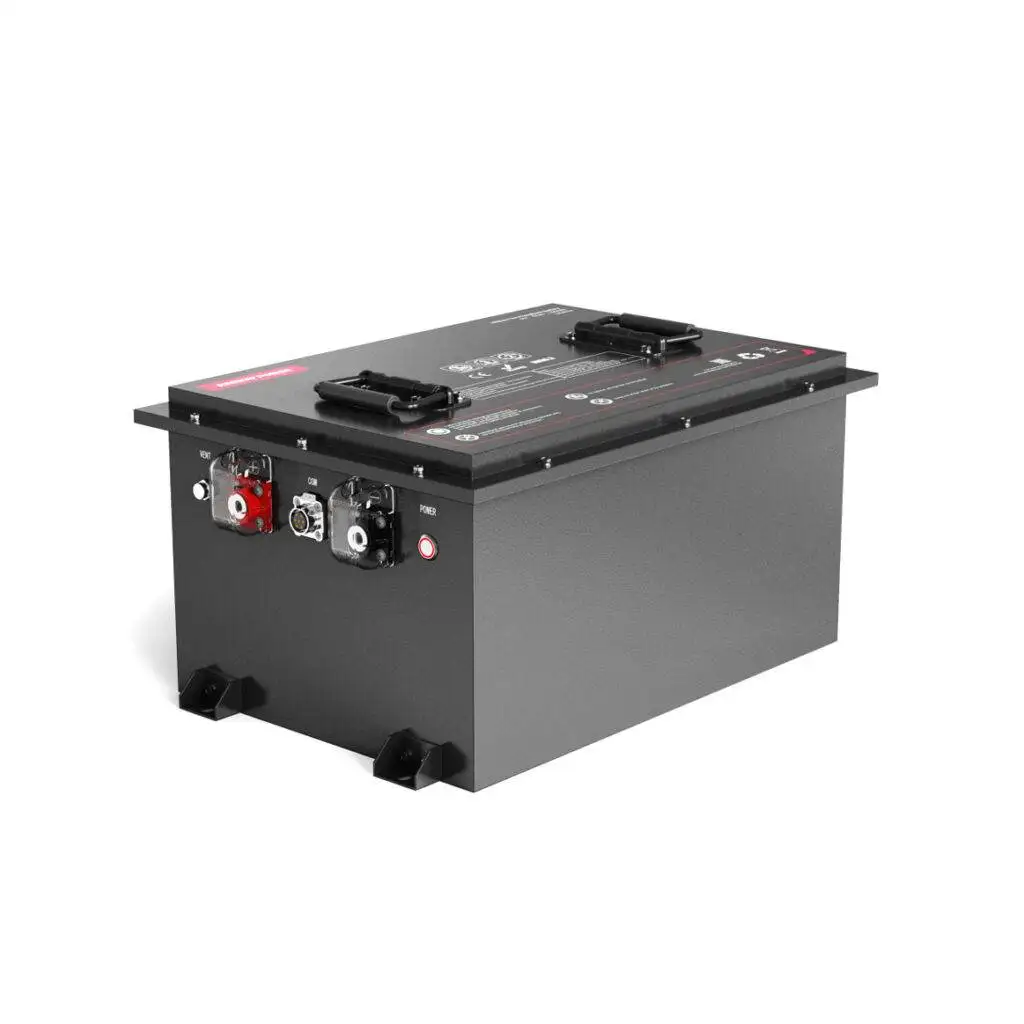
What a switch does. A main battery disconnect or the BMS storage mode removes all cart loads. The run/tow switch on many carts is not the same; it may leave meters and some electronics powered. Pages such as the 36V 100Ah and 48V 150Ah list a power switch; ask how your model’s switch and any sleep function work.
Storage routine. Charge to the storage level the supplier recommends, often around half charge rather than full, switch the battery off or into storage mode, and note the date and SOC. Store dry and within the storage temperature range. Check monthly and top up if SOC falls; see off-season storage SOC.
Waking up. Switch on, check the display or app, then charge fully before use. If the battery shows nothing or the charger will not start, it may be in deep protection; follow the supplier’s wake-up procedure rather than forcing it with another charger. See a battery that won’t charge after lockout.
Monitoring. Batteries such as the 48V 100Ah (S51105) list Bluetooth, CAN and RS485, and the 48V 150Ah lists Bluetooth as an option; these modules draw a small current themselves unless the battery is in storage mode.
Fleet practice. Label stored carts, keep a storage log, and stagger restart so charging circuits are not overloaded on the first day.
Short stops. For a few days, leaving the battery on is usually fine if the cart is not left with lights or accessories on.
↳ Replying to Redway Battery Editorial Team
Ask for a disconnect or sleep function in the specification; one locked-out battery costs more in call-outs than the switch.
↳ Replying to Procurement perspective
Measure the cart’s key-off current once; it tells you how long a battery can sit before it reaches protection.
↳ Replying to Selection/Engineering perspective
Check stored carts monthly and record SOC, and charge fully before returning them to service.
Use a disconnect or the BMS sleep or storage mode whenever a cart will sit for more than a couple of weeks without charging. Lithium batteries self-discharge slowly, but carts have small permanent loads, such as gauges, GPS trackers, controller standby and Bluetooth modules, that can run a battery down to its low-voltage protection. Store part-charged, disconnected and checked monthly.
Verify before ordering: Sleep and storage functions and recommended storage SOC are model-specific; confirm with Redway.
Editorial Q&A for battery selection and operations. Product figures cited from Redway product pages.
Related products
 48V 100Ah LiFePO4 Golf Cart Battery
 48V 150Ah LiFePO4 Golf Cart Battery (S48150P)
 36V 100Ah LiFePO4 Golf Cart Battery
Related articles & discussions
- How to Quick-Disconnect Parallel 48V Batteries?
- Do Batteries in Parallel Drain Equally?
- How to Store LiFePO4 Batteries for Optimal Performance in Winter
- What Are the Best Golf Cart Batteries for Solar Power Storage?
- Understanding the Self-Discharge Rate of Batteries Over 90 Days at 25℃
- What Is Low Voltage for a 12V LiFePO4 Battery?
- High Voltage Energy Storage Battery, the Ultimate Guide
- Do power inverters drain battery?
- How Can Low Voltage Battery Solutions Benefit Telecom?
- How do I keep my LiFePO4 battery warm in winter?
