




REDWAY BATTERY / KNOWLEDGE
How should lithium battery cartons be labelled and marked for transport?
Redway Battery Editorial Team
Talk / Battery Q&A
A distributor’s warehouse received a pallet of lithium batteries and is not sure the carton markings are correct for onward shipping to its own customers.
Direct answer: For batteries shipped on their own, each package normally shows the UN number and proper shipping name (UN3480, Lithium ion batteries), shipper and consignee details, and the Class 9 lithium battery hazard label. By air, UN3480 also needs the Cargo Aircraft Only label and batteries at no more than 30% state of charge. Smaller-battery shipments may use the lithium battery mark instead. The shipper is responsible, but buyers should check on arrival and before reshipping.
Which entry applies. UN3480 is lithium-ion batteries on their own. Batteries packed with equipment are UN3481, and batteries installed in equipment are also UN3481 with a different packing instruction. Vehicles are different again. The entry decides the labels; see shipping lithium batteries by sea or air.
Large batteries. Batteries such as the 12V 100Ah (1,280 Wh), 48V 100Ah golf cart battery (5.12 kWh) or 51.2V 100Ah rack battery are well above 100 Wh, so they are fully regulated dangerous goods, not the small-battery exceptions. Expect a dangerous-goods declaration, UN-specification or approved packaging, and the full label set.
Labels and marks to check. The Class 9 lithium battery label with the battery symbol; the UN number and proper shipping name; shipper and consignee names and addresses; by air, the Cargo Aircraft Only label. The lithium battery mark, a red-hatched border with the UN number, is used mainly for smaller cells and batteries under the reduced-requirement sections. Labels must be legible, not covered by strapping and on the correct face.
State of charge for air. IATA guidance says lithium-ion batteries shipped on their own must be at no more than 30% of rated capacity, and since 1 January 2026 this also applies to batteries packed with equipment.
Sea and road. By sea the IMDG Code applies, and in the US the 49 CFR hazardous materials rules, including 173.185 for lithium batteries. Requirements are similar in principle but not identical; the forwarder confirms.
Buyer checks. Photograph labels on arrival; compare with the shipping documents; keep the UN38.3 test summary and SDS with the stock record. If you reship, you become the shipper: train staff or use a qualified forwarder. See UN38.3 documents.
Damaged packaging. A crushed or wet carton is a reason to quarantine and inspect before reshipping, not to relabel and send on.
↳ Replying to Redway Battery Editorial Team
Put ‘packed, marked and labelled to current IMDG/IATA rules, with photos before dispatch’ in the purchase terms.
↳ Replying to Procurement perspective
Confirm the UN entry and packing instruction for each product type, and ask the forwarder which labels the chosen mode requires.
↳ Replying to Selection/Engineering perspective
Keep a reference photo of a correctly labelled carton for receiving staff, and record any discrepancies on the delivery note.
For batteries shipped on their own, each package normally shows the UN number and proper shipping name (UN3480, Lithium ion batteries), shipper and consignee details, and the Class 9 lithium battery hazard label. By air, UN3480 also needs the Cargo Aircraft Only label and batteries at no more than 30% state of charge. Smaller-battery shipments may use the lithium battery mark instead. The shipper is responsible, but buyers should check on arrival and before reshipping.
Verify before ordering: Labelling depends on mode, battery size and packing instruction; the shipper must apply current regulations. This summary is not a substitute for dangerous-goods training.
Sources checked: IATA: lithium battery shipping guidance; 49 CFR 173.185 (eCFR).
Editorial Q&A for battery selection and operations. Product figures cited from Redway product pages.
Related products
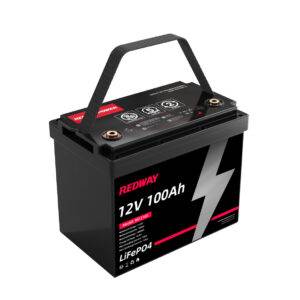 12V 100Ah Lithium Battery (LiFePO4, Self-heating, OEM)
 48V 100Ah LiFePO4 Golf Cart Battery
 51.2V 100Ah Server Rack Battery
Related articles & discussions
- What Are the Best Chargers for Redway LiFePO4 Packs?
- How Can Electric‑Vehicle Makers Safely Transport Compliant Lithium Batteries?
- Understanding the Energy Capacity of the 48V 100Ah LiFePO4 Battery Pack
- Why Is It Bad to Ship Lithium Batteries?
- What Should You Know About Forklift Battery Packs?
- What Applications Are Suitable for the 48V 100Ah LiFePO4 Battery Pack?
- Understanding the Optimal Temperature Range for LiFePO4 Battery Packs
- How does the EU Battery Regulation 2023/1542 affect Chinese manufacturers like Redway Battery?
- Understanding the Voltage and Capacity of the 5KWH LiFePO4 Battery Pack
- EU Batteries Regulation 2026: What Businesses Need to Know
