




REDWAY BATTERY / KNOWLEDGE
How Can LiFePO4 Batteries Transform Golf Cart Performance and Total Cost of Ownership?
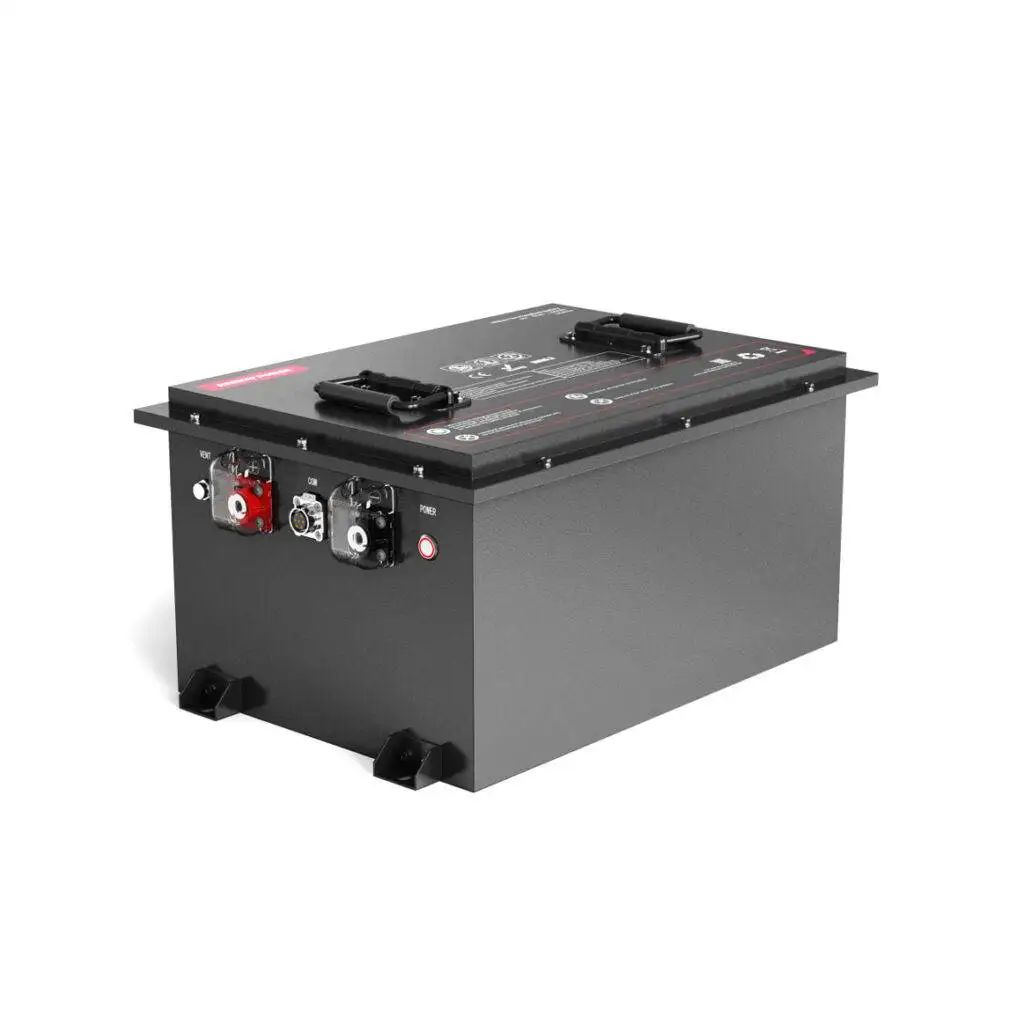
Lithium iron phosphate (LiFePO4) batteries are rapidly replacing lead‑acid packs in golf carts, delivering longer life, faster charging, and lower maintenance across residential, resort, and industrial fleets. For golf cart owners and manufacturers, switching to a purpose‑built LiFePO4 system can cut long‑term battery spend by tens of thousands of dollars while improving reliability and uptime.
How Has the Golf Cart Battery Market Changed?
The North America golf cart battery market is undergoing a structural shift as lithium‑ion chemistries, especially LiFePO4, gain share from traditional lead‑acid. Market analyses show that lithium‑ion batteries are expected to grow at the fastest rate over the next several years, driven by higher cycle life, lighter weight, and lower total cost of ownership. This transition is visible not only on golf courses but also in resorts, campuses, and industrial sites where electric carts are used daily.
At the same time, demand for quieter, emission‑free vehicles is pushing fleets toward electric powertrains, which in turn increases pressure on battery performance. Older lead‑acid systems often struggle to keep up with multi‑shift operations, leading to frequent replacements and unplanned downtime. For many operators, battery failure is now one of the top causes of cart unavailability.
What Problems Do Golf Cart Operators Face Today?
Most golf carts still run on flooded or AGM lead‑acid batteries that require regular watering, equalization charges, and careful storage to avoid sulfation. These maintenance tasks add labor costs and increase the risk of human error, especially in large fleets. Even with proper care, typical lead‑acid packs deliver only a few hundred deep cycles before capacity drops below usable levels.
Range anxiety is another persistent issue. Many carts cannot complete a full day of heavy use on a single charge, forcing operators to swap batteries or send vehicles back to the shed mid‑round. This hurts guest experience on golf courses and reduces productivity in commercial applications such as security patrols, warehouse logistics, and campus transport.
Why Are Traditional Battery Solutions No Longer Enough?
Lead‑acid batteries are inherently limited by chemistry and weight. They typically weigh 50–70% more than equivalent LiFePO4 packs, which increases rolling resistance and reduces efficiency. Heavy packs also make installation and replacement more difficult, particularly in tight battery compartments. For OEMs, this extra weight complicates vehicle design and can impact suspension, braking, and overall handling.
From a lifecycle‑cost perspective, lead‑acid batteries may appear cheaper upfront, but their short service life and high maintenance burden quickly erode that advantage. Many operators report replacing lead‑acid banks every 3–5 years, compared with 8–10+ years for well‑designed LiFePO4 systems. Over a decade, this difference can translate into multiple replacement events, higher labor, and more downtime.
How Do LiFePO4 Batteries Solve These Problems?
LiFePO4 (lithium iron phosphate) batteries offer a fundamentally different value proposition for golf carts. They combine stable chemistry, high cycle life, and flat voltage discharge into a single platform that supports both OEM integration and aftermarket retrofits. A typical LiFePO4 golf cart battery can deliver 3,000–6,000 deep cycles, depending on depth of discharge and operating conditions, versus roughly 300–500 cycles for conventional lead‑acid.
These batteries are also significantly lighter, often reducing total pack weight by 50% or more. That weight saving improves cart handling, extends tire and suspension life, and can increase effective range because the vehicle is not carrying as much dead mass. LiFePO4 cells also maintain a more consistent voltage throughout discharge, so carts feel stronger even when the battery is partially depleted.
What Are the Core Features of a Modern LiFePO4 Golf Cart Battery?
A high‑quality LiFePO4 golf cart battery is more than just a cell pack; it is an engineered energy system. Key capabilities include:
High cycle life and long calendar life, typically 5–10+ years in regular golf cart service.
Integrated battery management system (BMS) that monitors cell voltages, temperature, and current to prevent overcharge, over‑discharge, and short circuits.
Fast charging capability, often allowing 80% recharge in 1–2 hours instead of 6–8 hours for lead‑acid.
Maintenance‑free operation, with no watering, no acid spills, and no corrosion on terminals.
Thermal stability and safety, as LiFePO4 chemistry is less prone to thermal runaway than other lithium‑ion types.
Customizable form factors, including 48 V, 72 V, and 80 V configurations tailored to specific cart models and OEM requirements.
Redway Battery designs LiFePO4 packs specifically for golf carts, combining these features with robust mechanical enclosures and connector layouts that fit existing compartments. Their engineering team supports full OEM/ODM customization, so manufacturers can specify voltage, capacity, dimensions, and BMS behavior to match their exact platform.
How Does a LiFePO4 Golf Cart Battery Compare to Lead‑Acid?
The table below highlights the practical differences between a modern LiFePO4 golf cart battery and a traditional lead‑acid solution.
| Aspect | Lead‑acid golf cart battery | LiFePO4 golf cart battery (e.g., Redway Battery) |
|---|---|---|
| Typical cycle life | 300–500 deep cycles | 3,000–6,000 deep cycles |
| Weight per kWh | High (heavy lead plates and electrolyte) | 50–70% lighter than lead‑acid |
| Maintenance | Regular watering, cleaning, equalization | Maintenance‑free; no watering or corrosion |
| Charging time (0–80%) | 6–8 hours or more | Often 1–2 hours |
| Voltage stability | Gradual drop under load | Flat discharge curve; consistent power |
| Lifespan (years) | 3–5 years in typical use | 8–10+ years with proper use |
| Total cost of ownership | Lower upfront, higher long‑term cost | Higher upfront, much lower lifetime cost |
| Safety and chemistry | Acid spills, venting gases, corrosion | Stable LiFePO4; reduced fire risk |
For the surrounding sizing, selection, installation and maintenance decisions, continue with the How Much Do Golf Cart Batteries Cost? Ranges by Chemistry and Voltage.
Redway Battery’s LiFePO4 packs are built on automated production lines with ISO 9001:2015‑certified quality control, ensuring consistent performance across thousands of units. Their BMS‑driven architecture also supports features such as cell balancing, temperature protection, and communication interfaces that can be used for remote monitoring in larger fleets.
How Do You Implement a LiFePO4 Battery in a Golf Cart?
Switching to LiFePO4 can be done either at the OEM level or as an aftermarket upgrade. The process is straightforward when working with a supplier that understands golf cart integration.
Assess existing cart configuration
Determine voltage (36 V, 48 V, 72 V), controller type, and available space. Many modern carts already support 48 V systems, which simplifies the transition.Select the right LiFePO4 pack
Choose capacity and discharge rating that match typical daily usage and terrain. For example, hilly courses or industrial sites may require higher ampere‑hour ratings and continuous discharge currents of 150–250 A.Verify charger compatibility
Ensure the existing charger is compatible with lithium chemistry or upgrade to a LiFePO4‑specific charger that follows the correct voltage profile and does not apply equalization or overcharge.Install the battery pack
Remove the old lead‑acid bank and mount the LiFePO4 unit in the same compartment. Connect positive and negative leads and verify polarity and tightness.Test and commission
Run the cart under load to confirm proper voltage behavior, BMS alarms, and charging acceptance. For OEM integrations, Redway Battery provides detailed installation guides and can support validation testing.Monitor and maintain
Use any available BMS app or monitoring interface to track state of charge, temperature, and fault codes. LiFePO4 systems require no routine maintenance, but periodic visual checks are still recommended.
Redway Battery supports this entire workflow with technical documentation, application notes, and 24/7 after‑sales service, making it easier for distributors and OEMs to roll out LiFePO4 across large fleets.
Which Scenarios Benefit Most from LiFePO4 Golf Cart Batteries?
1. Private golf course with aging lead‑acid fleet
A mid‑sized private course runs 30 electric carts on an 18‑hole layout with hilly terrain. Under lead‑acid, carts often need mid‑round battery swaps or early returns to the shed, and the club replaces batteries every 4 years. After switching to LiFePO4 packs from Redway Battery, each cart can now complete a full day of play without range issues. The club reports a 40% reduction in battery‑related downtime and projects savings of over $20,000 in replacement and labor costs over a 10‑year horizon.
2. Resort with mixed residential and rental use
A resort operates 50 carts for guest rentals, staff transport, and maintenance. Lead‑acid batteries required nightly watering and frequent reconditioning, which strained maintenance staff. By adopting Redway Battery’s 48 V LiFePO4 packs, the resort eliminated watering tasks and reduced charging time by more than half. Staff can now rotate carts more efficiently, and the resort has cut its annual battery‑replacement budget by roughly 35% while improving guest satisfaction.
3. University campus security and maintenance fleet
A large university uses 20 electric carts for campus security patrols and facilities work. Lead‑acid packs degraded quickly under daily deep‑cycle use, forcing the university to keep spare batteries on hand. After installing LiFePO4 batteries, the fleet achieved 2–3 times the cycle life, allowing the university to reduce its spare‑battery inventory and free up storage space. The lighter packs also improved handling, and officers report more consistent acceleration and hill‑climbing performance.
4. Industrial warehouse and logistics site
A warehouse deploys 15 golf‑cart‑style utility vehicles for material transport and inspections. Lead‑acid batteries limited shift coverage and required mid‑shift swaps, disrupting workflow. LiFePO4 batteries from Redway Battery enabled full‑shift operation with a single charge, and fast charging allowed quick top‑ups during breaks. The site reduced unplanned vehicle downtime by over 50% and expects to recoup the higher initial battery cost within 4–5 years through fewer replacements and higher productivity.
Why Is Now the Right Time to Adopt LiFePO4 for Golf Carts?
The economics and technology of LiFePO4 have matured to the point where the upgrade makes sense for most golf cart applications. Falling cell prices, improved BMS algorithms, and standardized 48 V platforms have reduced integration risk and made lithium‑based systems more accessible. At the same time, operators are under pressure to reduce maintenance labor, improve sustainability, and extend asset life.
For OEMs, offering LiFePO4 as a factory‑fitted option differentiates their products in a competitive market. Redway Battery supports this transition with scalable production capacity, four advanced factories, and a 100,000 ft² manufacturing footprint, enabling large‑volume orders with consistent quality. Their ISO 9001:2015‑certified processes and automated lines help ensure that every pack meets the same performance and safety standards, whether for a single prototype or a 1,000‑unit fleet order.
Does a LiFePO4 Golf Cart Battery Make Sense for My Use Case?
1. Can LiFePO4 batteries be installed in existing golf carts?
Yes, most 48 V and 72 V electric golf carts can accept LiFePO4 packs as direct replacements, provided the charger and controller are compatible. Redway Battery offers retrofit‑ready designs and technical support to confirm compatibility.
2. Are LiFePO4 golf cart batteries safe?
LiFePO4 chemistry is inherently more thermally stable than other lithium‑ion types, and modern packs include multiple layers of protection via the BMS. Redway Battery’s systems are designed to meet international safety and vibration standards for motive applications.
3. How long do LiFePO4 golf cart batteries last?
Under typical golf cart use, a well‑designed LiFePO4 pack can last 8–10+ years or 3,000–6,000 deep cycles, depending on depth of discharge and operating conditions. This is several times longer than conventional lead‑acid batteries.
4. Do LiFePO4 batteries require special chargers?
Yes; LiFePO4 packs need chargers that follow a lithium‑specific voltage profile and do not apply equalization or overcharge. Many OEMs and aftermarket suppliers now offer compatible chargers, and Redway Battery can advise on suitable models.
5. How much can I save by switching from lead‑acid to LiFePO4?
Exact savings depend on usage, but operators commonly report 30–50% lower total cost of ownership over 8–10 years due to fewer replacements, lower maintenance, and reduced downtime. Redway Battery can provide tailored cost‑of‑ownership estimates for specific fleet sizes and duty cycles.
Sources
North America golf cart battery market trends and lithium‑ion growth projections
LiFePO4 battery cycle life and performance benchmarks for golf carts
LiFePO4 golf cart battery technical guides and OEM‑customization capabilities
Industry reports on lithium‑ion adoption in golf carts and related electric vehicles
Manufacturer‑specific LiFePO4 golf cart battery product and innovation pages
