REDWAY BATTERY / KNOWLEDGE
How do you calculate lithium vs lead-acid payback for a 20-cart fleet using your own numbers?
Redway Battery Editorial Team
Talk / Battery Q&A
A club with 20 carts on lead-acid batteries due for replacement wants to know when lithium would pay for itself, and the board wants the calculation, not a brochure figure.
Direct answer: Build the comparison per cart, then multiply by 20. On the lead-acid side count battery sets over a fixed period, watering and cleaning labour, energy, and any downtime cost. On the lithium side count packs, any new chargers, installation parts and labour, and energy. Payback is the extra upfront cost divided by the yearly saving. We give the method only, because prices, use and labour rates vary too much for a general figure.
Step 1, define the period and use. Pick a period, for example the warranty period. Redway golf cart pages such as the 48V 100Ah and 48V 150Ah list “Warranty: 5 Years”. Count rounds per cart per year and convert to cycles; our post on estimating energy per round shows how to get kWh per round.
Step 2, lead-acid cost per cart for the period: (number of battery sets you would buy in the period × set price), using your own replacement history; plus watering and terminal-cleaning hours per year × labour rate × years; plus energy per year × tariff; plus disposal of old batteries; plus lost rentals or spare carts kept because of battery downtime, if real.
Step 3, lithium cost per cart for the period: pack price; charger cost if your chargers cannot be set to the pack’s profile (the 48V 100Ah lists 58.4V maximum charge, while the 48V 150Ah lists 54.75V, so the two need different settings); installation parts such as hold-downs, cables, and a DC-DC converter if the cart runs 12V accessories (see DC-DC converters); fitting labour; energy per year × tariff.
Step 4, check life assumptions. The pages list more than 6,000 cycles at 80% DOD. A cart that does, say, 300 cycles a year would use far fewer than that within five years (our arithmetic), so the period, not cycle life, is likely to bound the comparison; ask what happens after the warranty ends. Do not mix cycle numbers measured at different depths of discharge.
Step 5, compute: yearly saving = (lead-acid total − lithium total excluding upfront items) ÷ years; payback = (lithium upfront − lead-acid upfront in year one) ÷ yearly saving. Multiply by 20 carts and run a low and a high case. For the buying side, see questions before a fleet order.
↳ Replying to Redway Battery Editorial Team
Use the club’s own invoices for battery sets and the actual watering hours. Ask suppliers for pack, charger and installation prices in one quote, so the upfront side is complete.
↳ Replying to Procurement perspective
Check that the cycle assumption fits your rounds per year and the depth of discharge per day, and that the chosen pack gives the range needed on your longest day.
↳ Replying to Selection/Engineering perspective
Record the hours spent on watering and cleaning for a month before deciding. Measured labour is the input most often guessed, and the board will ask for it.
Build the comparison per cart, then multiply by 20. On the lead-acid side count battery sets over a fixed period, watering and cleaning labour, energy, and any downtime cost. On the lithium side count packs, any new chargers, installation parts and labour, and energy. Payback is the extra upfront cost divided by the yearly saving. We give the method only, because prices, use and labour rates vary too much for a general figure.
Verify before ordering: No prices, savings or payback figures are claimed. Warranty conditions behind “5 Years” are not detailed on the pages; confirm with Redway.
Editorial Q&A for battery selection and operations. Product figures cited from Redway product pages.
Related products
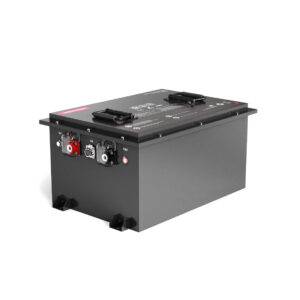 48V 100Ah LiFePO4 Golf Cart Battery
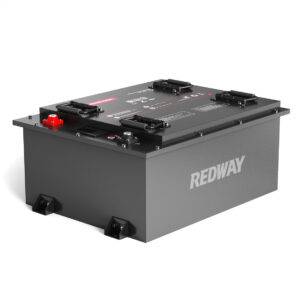 48V 150Ah LiFePO4 Golf Cart Battery (S48150P)
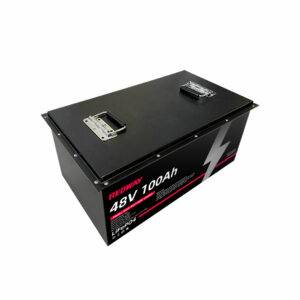 48V 100Ah Lithium Golf Cart Battery
Related articles & discussions
- What Is Lead Acid Battery Cleaner?
- What battery lasts longer lead-acid or lithium?
- Can I Replace Lead-Acid Battery with LiFePO4?
- Can I Charge a Lithium Battery with a Lead Acid Charger?
- Telecom Lithium Battery vs. Lead-Acid Battery: Which Is Better?
- What is the Maximum Voltage for a 48V Lead Acid Battery?
- LiFePO4 vs Lead Acid for Forklifts?
- What Are the Benefits of 48V LiFePO4 Over Lead-Acid?
- What Are the Key Differences Between Lithium-Ion and Lead-Acid Batteries for Solar?
- Which Golf Cart Battery Saves More Money: Lithium or Lead-Acid?