REDWAY BATTERY / KNOWLEDGE
Which PowerAll capacity fits a home: 5, 10, 16, 21, 26 or 32 kWh?

Redway Battery Editorial Team
Talk / Battery Q&A
A homeowner with rooftop solar wants to cover evening use and keep the fridge and lights running in short outages, and is offered PowerAll stacks from one to six modules.
Direct answer: Size from the energy you need between sunset and next morning, plus any backup reserve, then check that the inverter’s power can serve your peak loads. For many homes, two or three modules (about 10.75 or 16.12 kWh) cover evening use; one module suits light use or backup of a few circuits; five or six suit high use, electric heating or long backup. Your own meter data decides, not the house size.
Configurations. The PowerAll page lists one to six modules: 5.37, 10.75, 16.12, 21.50, 26.88 and 32.25 kWh (105Ah to 630Ah at 51.2V), weighing 87 to 362 kg, with a 580 × 420 mm footprint and heights from 430 to 1,335 mm. It lists 100A maximum continuous charge and discharge, IP40 for indoor use, horizontal floor installation, air cooling, under 50 dB noise and more than 8,000 cycles at 80% depth of discharge.
Step 1: evening and night energy. From your smart-meter or inverter data, add up energy used from late afternoon to morning on a typical day. Many households can export solar at midday and import at night, so this figure is what the battery replaces.
Step 2: usable capacity. Do not plan to use 100% every day. If you keep a 10 to 20% reserve for outages and battery life, a 10.75 kWh stack gives roughly 8.6 to 9.7 kWh per day. Match this to step 1.
Step 3: power, not just energy. The battery’s listed 100A at 51.2V is about 5 kW; confirm with Redway whether that limit applies per stack or rises with more modules, and check the inverter’s continuous and surge rating. A big stack behind a small inverter still cannot run large loads together.
Step 4: backup. List critical loads (fridge, lights, internet, a pump) and the hours you want them to run. Multiply watts by hours and add it to the reserve.
Step 5: growth. If you expect an electric car or heat pump, choose a configuration that can add modules later, and ask how new modules are added to an older stack. See adding modules of different ages.
Alternatives. Rack modules such as the 51.2V 200Ah 5U (10.24 kWh) or the 51.2V 100Ah 3U suit cabinet installs; see PowerAll vs inverter plus rack battery.
↳ Replying to Redway Battery Editorial Team
Compare price per usable kWh across configurations and include delivery and installation of a 200 to 360 kg stack.
↳ Replying to Procurement perspective
Check inverter continuous power and the battery’s discharge current limit together; energy without power will not run simultaneous loads.
↳ Replying to Selection/Engineering perspective
Leave access space around the stack and plan an annual check of connections, alarms and module temperatures.
Size from the energy you need between sunset and next morning, plus any backup reserve, then check that the inverter’s power can serve your peak loads. For many homes, two or three modules (about 10.75 or 16.12 kWh) cover evening use; one module suits light use or backup of a few circuits; five or six suit high use, electric heating or long backup. Your own meter data decides, not the house size.
Verify before ordering: Whether the 100A limit applies per stack or per module, and the inverter supplied with PowerAll, must be confirmed with Redway.
Editorial Q&A for battery selection and operations. Product figures cited from Redway product pages.
Related products
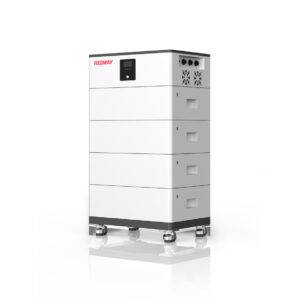 51.2V All-in-One Home-ESS System PowerAll (5kWh/10kWh/16kWh/21kWh/26kWh/32kWh)
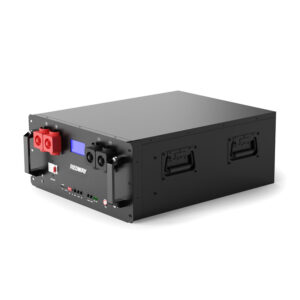 51.2V 200Ah 10kWh Server Rack Battery (5U)
 51.2V 100Ah Server Rack Battery
Related articles & discussions
- How to Determine the Size and Capacity of Your Home Energy Storage System
- How Many kWh Does an AC Use Per Day?
- How Much Electricity Is 30 kWh Per Day?
- What is the Capacity of a 48V Lithium Ion Battery?
- How Do You Test LiFePO4 Battery Capacity?
- What is the Maximum Capacity of a LiFePO4 Battery?
- How Do You Calculate LiFePO4 Battery Capacity?
- How Much Do Forklift Batteries Cost by Type and Capacity?
- How Long Do 28.67 kWh Forklift Batteries Last?
- What Are the Different Capacity Options for 36V LiFePO4 Batteries?