REDWAY BATTERY / KNOWLEDGE
What do 60V lithium batteries suit, and is 60V a golf cart voltage?

Redway Battery Editorial Team
Talk / Battery Q&A
A buyer sees 60V lithium batteries listed next to 48V and 72V golf cart packs and wants to know which vehicles actually use 60V.
Direct answer: 60V is a less common system voltage than 36V, 48V or 72V in golf carts, but some vehicles and controllers are built for it. Redway’s 60V packs list 60.8V nominal, 69.3V maximum charge and 47.5V cut-off. They only suit a vehicle whose controller, motor and accessories are rated for that window. Check the vehicle’s rated battery voltage before buying; a 60V pack does not replace a 48V or 72V pack.
Page figures. 60V 50Ah (titled a golf cart battery): 3.04 kWh, 458 × 260 × 283 mm, 30 kg, 50A continuous, 100A for 5 seconds. 60V 100Ah: 6.08 kWh, 500 × 300 × 350 mm, 64 kg, 50A maximum charge, 100A continuous discharge, 200A for 3 seconds. 60V 200Ah: 12.16 kWh, 999 × 599 × 181 mm, 119 kg, 150A continuous, 300A for 10 seconds. All list IP65, a metal case, an LCD screen and UART, RS485 and CAN-bus.
Why the window matters. A 48V lithium cart pack such as Redway’s 51.2V models charges to 58.4V, and a 72V-class pack to 87.6V. The 60V pack’s 47.5V–69.3V window sits between them. A 48V controller would see too high a voltage; a 72V controller may cut out or refuse to run at 60V levels.
Where 60V is used. Some low-speed vehicles, utility vehicles and other light electric vehicles use 60V systems. The product pages describe golf cart use; other applications are not confirmed on the pages, so ask Redway for the intended uses and any approvals before buying for a different vehicle.
What to check. The vehicle’s rated battery voltage, the controller’s minimum and maximum input voltage, motor rating, controller current against the pack’s continuous rating, space and weight, and charge connector and charger. The 60V packs need a charger with a 69.3V maximum.
Charging and storage. Use a lithium charger set for the pack; the 100Ah and 200Ah list 50A maximum charge current. Store part-charged when off season; see off-season storage. For reading voltage figures, see reading nominal, charge and cut-off voltage.
Before you order. Ask the vehicle maker or dealer for the rated battery voltage and the controller’s input range in writing, and send them to Redway with the order. That avoids a 60V pack arriving for a vehicle that needs 48V or 72V.
↳ Replying to Redway Battery Editorial Team
Confirm the vehicle’s platform voltage in writing before quoting; a wrong-voltage pack is a costly return at 30 to 119 kg.
↳ Replying to Procurement perspective
Check the controller’s input range against 47.5V–69.3V and controller current against 50A, 100A or 150A continuous.
↳ Replying to Selection/Engineering perspective
Use a 69.3V lithium charger within the listed charge current, and store part-charged; check connectors for heat after the first weeks.
60V is a less common system voltage than 36V, 48V or 72V in golf carts, but some vehicles and controllers are built for it. Redway’s 60V packs list 60.8V nominal, 69.3V maximum charge and 47.5V cut-off. They only suit a vehicle whose controller, motor and accessories are rated for that window. Check the vehicle’s rated battery voltage before buying; a 60V pack does not replace a 48V or 72V pack.
Verify before ordering: Applications beyond golf carts are not confirmed on the product pages; check suitability and any vehicle approvals with Redway.
Editorial Q&A for battery selection and operations. Product figures cited from Redway product pages.
Related products
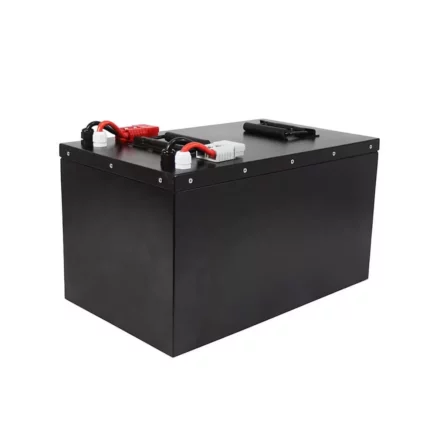 60V 100Ah Lithium Battery
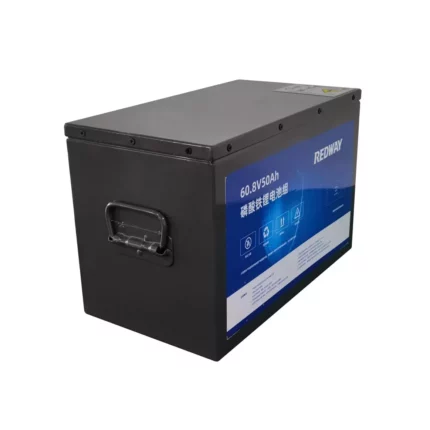 60V 50Ah Lithium Golf Cart Battery
 60V 200Ah Lithium Battery
Related articles & discussions
- How to Choose the Right 60V 200Ah LiFePO4 Battery for Your Needs
- Calculating Speed Based on Power and Voltage
- What Voltage Is Too Low for a 12 Volt Lithium Battery?
- Can golf cart batteries get too low to charge?
- How to Maintain 60V Battery for Maximum Longevity
- What Voltage is Too Low for a Lithium Battery? Understanding Safe Voltage Ranges
- The Ultimate Guide to 60V 100Ah Rechargeable Lithium Battery
- How to Choose the Best Snapper 60V Battery for Your Needs
- The Ultimate Guide to 60v 100ah Lithium Batteries and Beyond
- How Can Low Voltage Battery Solutions Benefit Telecom?