




REDWAY BATTERY / KNOWLEDGE
Can lead-acid and lithium golf cart chargers share one barn without mix-ups?
Redway Battery Editorial Team
Talk / Battery Q&A
A club is converting its fleet to lithium over two seasons, so for a year the barn will hold lead-acid carts, lithium carts and their chargers side by side.
Direct answer: Yes, if each cart can only be connected to its own type of charger and staff know which is which. Assign a charger to each cart type and voltage, label carts and chargers with matching colours or codes, use different connectors where the cart and charger makers allow it, and write a short barn procedure. A charger set for lead-acid, or for a different lithium pack, can undercharge, overcharge or trip the battery protection.
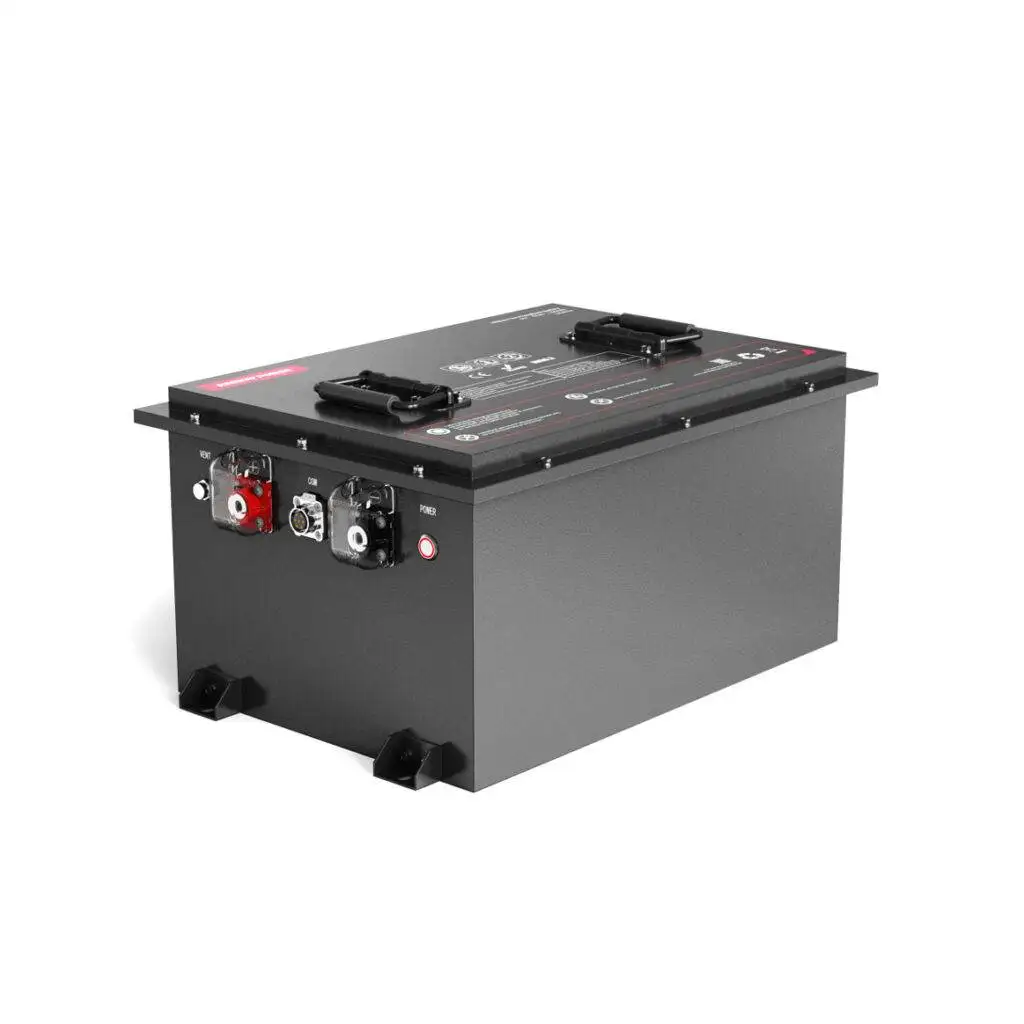
Why profiles differ. Lead-acid chargers use stages and equalisation designed for that chemistry. Lithium packs need a charge to a set voltage limit with no equalising charge. Even lithium packs differ: Redway’s 48V 100Ah (S51105) lists 58.4V maximum charge, the 48V 150Ah (S48150P) lists 54.75V and the 36V 100Ah lists 43.8V. Two carts both called ’48V’ may need different chargers.
Assign and label. Give every charger a code that matches the cart group it serves, for example a colour band on the cart, the charger and the plug. Put the pack model and maximum charge voltage on the charger label. Keep a list of cart numbers by battery type at the barn door.
Connectors. Where possible, fit lithium carts with a charge connector that will not mate with the lead-acid chargers. Check with the cart and charger makers before changing connectors, and keep polarity and current ratings correct.
Barn layout. Group lithium carts and their chargers in one area and lead-acid carts in another, so staff do not reach across rows. Keep the lead-acid area’s ventilation and watering equipment in place until the last lead-acid cart leaves.
Procedure and checks. A one-page procedure should cover: check the colour code, plug in, confirm the charger shows charging, and report any fault. Spot-check weekly that every cart is on the right charger. When a cart will not charge, see lithium cart not charging; for circuit planning, see overnight charging on a shared circuit.
When the last lead-acid cart leaves. Remove or relabel the lead-acid chargers so they cannot be used on lithium carts by mistake, update the barn procedure, and recheck that each remaining charger is set to the right lithium profile for its pack.
↳ Replying to Redway Battery Editorial Team
Standardise one charger specification per cart type on purchase orders, and order labels and connectors with the batteries.
↳ Replying to Procurement perspective
Lead-acid and lithium profiles differ, and lithium packs of the same nominal voltage can have different limits (58.4V vs 54.75V).
↳ Replying to Selection/Engineering perspective
Colour-code carts, chargers and plugs, group them in the barn, and spot-check weekly that each cart is on its own charger.
Yes, if each cart can only be connected to its own type of charger and staff know which is which. Assign a charger to each cart type and voltage, label carts and chargers with matching colours or codes, use different connectors where the cart and charger makers allow it, and write a short barn procedure. A charger set for lead-acid, or for a different lithium pack, can undercharge, overcharge or trip the battery protection.
Verify before ordering: Correct charger profiles and approved connectors for each pack should be confirmed with Redway and the cart and charger makers.
Editorial Q&A for battery selection and operations. Product figures cited from Redway product pages.
Related products
 48V 100Ah LiFePO4 Golf Cart Battery
 36V 100Ah LiFePO4 Golf Cart Battery
 48V 150Ah LiFePO4 Golf Cart Battery (S48150P)
Related articles & discussions
- How Do Wholesale Golf Cart Lithium LiFePO4 Batteries Compare to Lead-Acid?
- How Does Lithium-Ion Compare to Lead-Acid for Golf Cart Batteries?
- Can I charge LFP battery with lead-acid battery charger?
- How To Water A Lead Acid Battery Correctly?
- Why Are GC2 Lithium Batteries Better Than Flooded Lead-Acid for Fleets?
- What Are Lead Acid Batteries Used For In Forklifts?
- What Are the Risks of Lead Acid Battery Acid and How to Manage Them?
- LiFePO4 vs Lead Acid for Forklifts?
- What is the Maximum Voltage for a 48V Lead Acid Battery?
- How To Water A Lead Acid Battery Easily?
