




REDWAY BATTERY / KNOWLEDGE
When does a 24V 550Ah lithium forklift battery make sense?

Redway Battery Editorial Team
Talk / Battery Q&A
A site with 24V pallet trucks is finishing second shifts on smaller lithium packs and wonders whether to jump to a 550Ah-class battery.
Direct answer: A 24V 550Ah (25.6V 560Ah) class pack makes sense when measured shift energy, opportunity-charge access and compartment size all require roughly double the amp-hours of a 24V 280Ah or 24V 230Ah, and the truck can accept the weight and volume. If one mid-shift top-up already covers the duty, a smaller pack is usually the better buy. Size from logged kWh or amp-hours per shift, not from a round catalogue number.
Energy first. The 550Ah-class page describes about 14.3 kWh at 25.6V; a 280Ah pack is in the mid single-digit kWh range at the same voltage. If your trucks use about 6 to 8 kWh per heavy shift with no charge window, the larger pack can remove a battery swap. If they use 3 to 4 kWh and can opportunity-charge at breaks, 230Ah or 280Ah often suffices.
Compartment and weight. Large 24V packs are physically bigger and heavier. Confirm tray length, width, height, connector position and the truck’s minimum battery weight for stability. Lithium is lighter than lead-acid of the same energy, but a 550Ah lithium can still exceed what a small walkie compartment allows.
Charge rate. Check the pack’s maximum continuous charge current and whether your chargers can use it. A large pack that can only trickle on an old charger will not return to service as fast as the Ah rating suggests. Charger profile and communication still matter; see related guidance under choosing among 24V models.
Duty pattern. Multi-shift sites without spares favour higher Ah. Single-shift sites with overnight charge rarely need the top of the range. Seasonal peaks may be better handled with one spare mid-size pack than with oversized packs on every truck.
Maintenance on large packs. More capacity means more cells to stay balanced. Use the display or cloud feed to watch cell spread after full charges, especially in the first weeks.
Voltage family. Stay in true 24V (8-cell LiFePO4 nominal 25.6V) trucks; do not treat a 24V pack as a shortcut for a 36V or 48V truck. Broader voltage-family choices are discussed in comparing voltage families.
Procurement discipline. Ask for a one-week energy log from a current truck before upgrading everyone. One data set prevents buying 550Ah packs for 280Ah duties.
When not to buy 550Ah. Tight compartments, light duty, or chargers that cannot deliver meaningful current into a large pack.
↳ Replying to Redway Battery Editorial Team
Require a shift energy log before approving a jump to 550Ah-class packs so you do not over-buy capacity.
↳ Replying to Procurement perspective
Match compartment, truck minimum weight and charger current to the 560Ah pack before ordering.
↳ Replying to Selection/Engineering perspective
After install, watch cell balance on the larger packs during the first full-charge cycles.
A 24V 550Ah (25.6V 560Ah) class pack makes sense when measured shift energy, opportunity-charge access and compartment size all require roughly double the amp-hours of a 24V 280Ah or 24V 230Ah, and the truck can accept the weight and volume. If one mid-shift top-up already covers the duty, a smaller pack is usually the better buy. Size from logged kWh or amp-hours per shift, not from a round catalogue number.
Verify before ordering: Nameplate Ah, kWh, dimensions and charge limits must be taken from the Redway page or datasheet for the exact 24V model quoted.
Editorial Q&A for battery selection and operations. Product figures cited from Redway product pages.
Related products
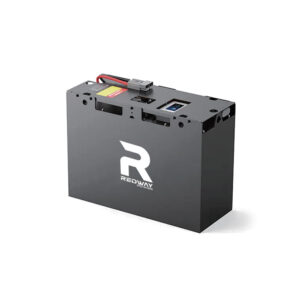 24V 550Ah (25.6V 560Ah) Lithium Forklift Battery
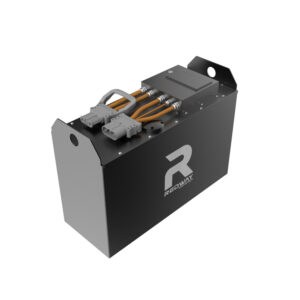 24V 280Ah (25.6V 280Ah) Lithium Forklift Battery
Related articles & discussions
- What Makes the 24V 875Ah Electric Forklift Battery 12-125-15-d Unique?
- What Is 24V 12-85-25 XPB 2 Forklift Battery?
- What Makes Lithium Forklift Batteries More Energy Efficient
- What Is The 24V 560Ah Lithium Forklift Battery F24560L Product?
- What Makes the Electric Forklift Battery 12-85-15, 24V, 595 Ah Stand Out?
- What Makes 24V Electric Lithium-ion Center Control Riders Essential?
- What Are Features Of 24V 12-85-21 XPB 1 Forklift Battery?
- What Makes LiFePO4 Ion Batteries Ideal for Forklifts in Muharraq?
- What Is 24V 12-100-05 XPB 1 Forklift Battery?
- What Is 24V 12-110-15 XPB 1 Forklift Battery?
