




REDWAY BATTERY / KNOWLEDGE
48V 450Ah, 550Ah, 600Ah or 700Ah: which lithium forklift battery suits a heavy-shift truck?
Redway Battery Editorial Team
Talk / Battery Q&A
A cold-chain logistics site runs 48V counterbalance trucks for two long shifts with only short breaks and is choosing among the larger lithium options.
Direct answer: These four models list the same 300A continuous discharge, 1,000A peak for 5 seconds, 12 kW output and 200A maximum charge, so power is similar; the difference is stored energy, size and weight. Choose the smallest one whose usable kWh covers the longest period between charges, that fits the truck’s compartment, and whose weight suits the truck’s counterweight requirement.
Page figures. 48V 450Ah (51.2V 460Ah): 23.55 kWh, 950 × 421 × 450 mm, about 193 kg. 48V 550Ah (51.2V 560Ah): 28.67 kWh, 950 × 592 × 450 mm, about 210 kg. 48V 600Ah (51.2V 630Ah): 32.25 kWh, 950 × 592 × 450 mm, about 228 kg. 48V 700Ah (51.2V 690Ah): 770 × 768 × 450 mm, about 230 kg. All list IP54, RS485/CAN/4G, REMA connectors, charge from 0°C to 55°C and 200A charge between 10°C and 45°C.
A spec to confirm. The 700Ah page also lists 32.25 kWh, but 690Ah × 51.2V is about 35.3 kWh; the inch conversions on the 550Ah and 600Ah pages do not match the millimetre widths either. Ask Redway for the datasheet values before planning on the larger figure.
Energy per shift. Measure or estimate kWh used between charging opportunities, from truck hour meters and the existing battery’s discharge, and add a reserve of 20 to 30%. If trucks can charge during breaks, the battery only needs to cover the longest stretch between charges; see opportunity charging. Without break charging, the battery must cover the whole shift or more.
Charge time. At the listed 200A, adding 80% to a 630Ah battery takes at least about 2.5 hours, plus taper, and longer outside 10°C to 45°C. Larger batteries need more charger power or longer charging windows; see planning charger power.
Fit and counterweight. Compartment length, width, height and connector position decide what fits. Heavier is not always worse: the truck’s data plate states a minimum battery weight for stability. Check with the truck maker; see lighter batteries and counterweight.
Cold stores. Charging current is limited outside 10°C to 45°C, so in cold-chain work, plan charging in a warmer area.
Smaller options. If kWh needs are lower, see 48V 280Ah, 300Ah and 420Ah.
↳ Replying to Redway Battery Editorial Team
Avoid buying the largest battery ‘just in case’; a smaller one plus break charging often costs less and weighs less.
↳ Replying to Procurement perspective
Choose by usable kWh between charges and compartment dimensions; current capability is the same across these four models.
↳ Replying to Selection/Engineering perspective
Large packs have many cells; check cell voltage spread in monitoring monthly and keep connectors clean and tight.
These four models list the same 300A continuous discharge, 1,000A peak for 5 seconds, 12 kW output and 200A maximum charge, so power is similar; the difference is stored energy, size and weight. Choose the smallest one whose usable kWh covers the longest period between charges, that fits the truck’s compartment, and whose weight suits the truck’s counterweight requirement.
Verify before ordering: Energy value for the 700Ah model and some inch conversions on these pages are inconsistent; confirm datasheet figures with Redway.
Editorial Q&A for battery selection and operations. Product figures cited from Redway product pages.
Related products
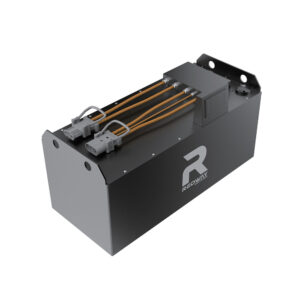 48V 450Ah (51.2V 460Ah) Lithium Forklift Battery
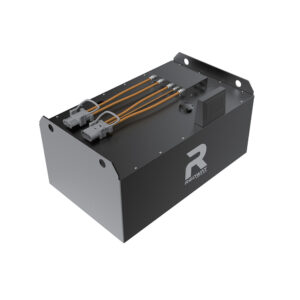 48V 550Ah (51.2V 560Ah) Lithium Forklift Battery
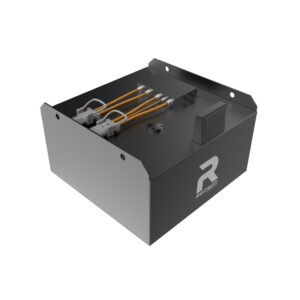 48V 700Ah (51.2V 690Ah) Lithium Forklift Battery
Related articles & discussions
- Is Lithium Battery the Best Choice for Forklifts in South Africa?
- What Makes LiFePO4 Battery Forklifts in Israel a Top Choice?
- What is the Advantage of 48V Battery?
- What is the Advantage of 48V?
- Is an LFP forklift battery the best choice for Colombia?
- Are Li-ion Battery Forklifts the Best Choice for Australia?
- Is lithium forklift power the smart choice in Ecuador?
- What Makes Forklift LiFePO4 Battery Peru a Smart Choice?
- What Makes Lithium Forklift Batteries a Smart Choice in Peru?
- Is Lithium Ion Forklift Battery the Best Choice in Saudi Arabia?
