




REDWAY BATTERY / KNOWLEDGE
Can a home battery start a well pump or central air conditioner?

Redway Battery Editorial Team
Talk / Battery Q&A
A rural homeowner wants backup for a deep-well pump and a central air conditioner from a new hybrid inverter and lithium bank, and asks if nameplate running watts are enough.
Direct answer: Only if the inverter’s surge capability and the battery’s short-time discharge current cover the motor’s locked-rotor amps (LRA) or starting kilowatts for long enough for the motor to spin up, and the continuous ratings cover running load plus other critical loads. Running-watt stickers understate start current. Soft starters or soft-start drives often make the difference. Size from measured or nameplate LRA, not from hope.
Surge is the bottleneck. Induction motors draw several times running current at start. The inverter must supply that surge; the battery must deliver the matching DC current without BMS peak cut-off. All-in-one systems such as PowerAll (about 5.37–32.25 kWh class options) and rack banks built from 51.2V 200Ah 5U (10.24 kWh) or 51.2V 150Ah 4U (7.68 kWh) modules need an inverter whose surge curve matches the motor.
Well pumps. Deep wells and long cables raise starting demand. Note LRA and voltage on the pump plate. Consider a soft starter, and put the pump on a critical-loads panel so other loads do not stack during start. Confirm cable voltage drop does not steal surge headroom.
Central air. Compressor LRA is often the hardest residential start. Many backup designs run a smaller window unit or heat-pump air handler instead of the full central compressor unless the inverter is explicitly surge-rated for that LRA. Related inverter surge behaviour on smaller systems is discussed in RV air-conditioner surge and BMS cut-out when an inverter starts.
Battery side. Parallel rack modules increase available current if the BMS and busbars allow it. Communication should report charge and discharge limits accurately; see inverter compatibility and sizing the bank.
Test before relying on it. With the grid disconnected in a controlled test, start the pump or AC while logging AC voltage dip, inverter fault codes and battery peak current. One successful start is not enough—repeat from the SOC you expect in a real outage.
Mitigations. Soft starters, soft-start thermostats, staging so pump and AC never start together, and larger inverter surge headroom. Sometimes the right answer is a critical-loads design without the central compressor on backup.
Procurement. Ask the inverter maker for motor-start guidance and ask Redway for pack peak discharge figures for the proposed module count—documents available on request if not on the public page.
↳ Replying to Redway Battery Editorial Team
Budget soft-start hardware early; it is often cheaper than jumping a whole inverter size class.
↳ Replying to Procurement perspective
Collect LRA and running amps from pump and AC nameplates before choosing inverter and battery current ratings.
↳ Replying to Selection/Engineering perspective
Witness a black-start test at the reserve SOC you plan to keep, and keep the log with the system file.
Only if the inverter’s surge capability and the battery’s short-time discharge current cover the motor’s locked-rotor amps (LRA) or starting kilowatts for long enough for the motor to spin up, and the continuous ratings cover running load plus other critical loads. Running-watt stickers understate start current. Soft starters or soft-start drives often make the difference. Size from measured or nameplate LRA, not from hope.
Verify before ordering: Motor LRA and inverter surge curves are application-specific; confirm peak battery current and inverter pairing with the inverter maker and Redway.
Editorial Q&A for battery selection and operations. Product figures cited from Redway product pages.
Related products
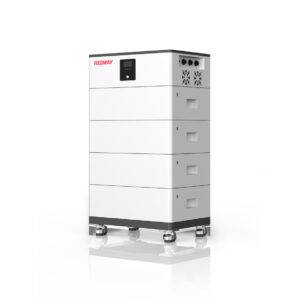 51.2V All-in-One Home-ESS System PowerAll (5kWh/10kWh/16kWh/21kWh/26kWh/32kWh)
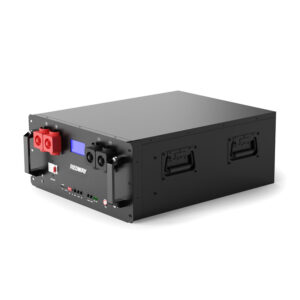 51.2V 200Ah 10kWh Server Rack Battery (5U)
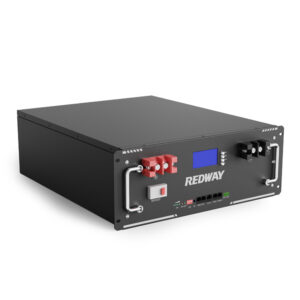 51.2V 150Ah 7kWh Server Rack Battery (4U)
Related articles & discussions
- How To Store Batteries Safely At Home Or Office?
- How to Choose the Best Solar Battery System for Your Home
- How to Apply for the Energy Efficient Home Grant in the UK
- How to Choose the Best Off-Grid Solar Solutions for Your Home
- Introduction to Eguana Evolve Home Energy Storage System in North America
- LiFePO4 vs Lithium Ion: Best for Home Storage?
- How a 10 kW Lithium-Ion Battery Benefits Homes and Businesses
- What Are the Benefits of Home Wind Energy Systems?
- How to Choose the Best Home Power Backup Solution for Your Needs
- How to Implement an Overall Power Solution for Home Energy Storage Systems
