




REDWAY BATTERY / KNOWLEDGE
Why does a rack battery show less capacity after months on float?

Redway Battery Editorial Team
Talk / Battery Q&A
A telecom site has kept 51.2V rack batteries on charge for eight months with almost no outages; the first long outage ended sooner than the displayed state of charge suggested.
Direct answer: Usually it is a measurement and balance issue first, and a real capacity loss second. A LiFePO4 battery held at full charge seldom does a full cycle, so the BMS’s state-of-charge estimate drifts and cells may drift apart; the displayed capacity can then differ from what the battery delivers. Real capacity also fades slowly with time, faster when kept full and warm. Do a controlled full charge and discharge to find out which it is.
Why the estimate drifts. Most BMSs count amp-hours in and out and recalibrate at full and empty. LiFePO4 voltage is very flat in the middle of its range, so voltage alone says little about charge. Months of standby with tiny currents give the counter little to work with, and small errors build up.
Why cells drift. Balancing usually happens near full charge. If float voltage is set slightly below the level at which balancing starts, cells are not balanced; if it is set high, the battery sits at high charge permanently. A low cell then ends the discharge early.
What real fade looks like. Calendar ageing is faster at high state of charge and high temperature. In a warm cabinet the loss is real but gradual. A single short outage after months on float is more often a calibration or balance symptom.
How to check. Follow the maker’s procedure: charge fully at the specified voltage and hold until current tapers so cells balance; discharge at a known, moderate load to cut-off while logging amp-hours and cell voltages; recharge fully. Compare measured amp-hours with the rating: the 51.2V 100Ah lists 58.4V maximum charge and 40V cut-off, the 51.2V 200Ah the same window at 200Ah, and the 15-cell 48V 100Ah 54.75V and 37.5V.
Settings to review. LiFePO4 does not need a lead-acid style float. Ask Redway for recommended charge and float voltages for standby use, and use closed-loop communication so the inverter or rectifier follows BMS limits; see reading SOC, SOH and alarms. Keep cabinet temperature within the 0°C to 60°C charge range listed, and cooler where possible.
When to raise a claim. If a balanced, calibrated battery still delivers well below rating, record test conditions and data and contact the supplier; see paralleling batteries of different ages if adding modules.
↳ Replying to Redway Battery Editorial Team
Ask that standby-use charge settings are written into the order, so a site does not find out about calibration needs during an outage.
↳ Replying to Procurement perspective
Separate SOC display error from capacity loss with a logged full cycle; use cell voltage spread at end of discharge to spot imbalance.
↳ Replying to Selection/Engineering perspective
Schedule a calibration cycle at least yearly on standby sites, and log cabinet temperature, since heat is a main driver of fade.
Usually it is a measurement and balance issue first, and a real capacity loss second. A LiFePO4 battery held at full charge seldom does a full cycle, so the BMS’s state-of-charge estimate drifts and cells may drift apart; the displayed capacity can then differ from what the battery delivers. Real capacity also fades slowly with time, faster when kept full and warm. Do a controlled full charge and discharge to find out which it is.
Verify before ordering: Balancing thresholds, recommended float voltage and calibration procedures are BMS-specific; obtain them from Redway for the module and firmware in use.
Editorial Q&A for battery selection and operations. Product figures cited from Redway product pages.
Related products
 51.2V 100Ah Server Rack Battery
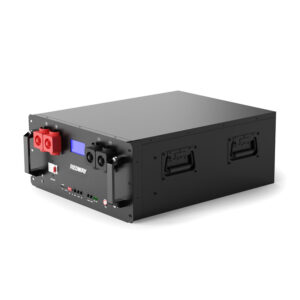 51.2V 200Ah 10kWh Server Rack Battery (5U)
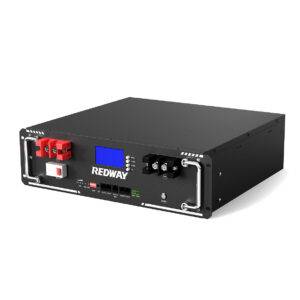 48V 100Ah Server Rack Battery
Related articles & discussions
- What is the capacity of a 32650 LiFePO4 battery?
- What Is the Best SoC for Lithium-Ion Battery?
- What is C20 Capacity?
- What Is C20 Battery Capacity?
- Understanding the Energy Capacity of a 100Ah 48V Battery
- What is the capacity of the cell in 32650?
- Which LiFePO4 Forklift Battery Capacity (Ah) Do I Need?
- What Are High-Capacity Lithium Batteries and How Do They Work?
- What Is Battery Reserve Capacity and Why Is It Important?
- How To Decide What Forklift Capacity You Need?
