




REDWAY BATTERY / KNOWLEDGE
What happens to a Club Car onboard computer (OBC) when you switch to lithium?
Redway Battery Editorial Team
Talk / Battery Q&A
A golf course is converting older 48V Club Car carts to lithium and the technician finds an onboard computer in the charging circuit.
Direct answer: The OBC was designed to control charging for a lead-acid pack, so with lithium it can stop charging early, prevent a non-original charger from starting, or misjudge charge state. Most conversions either bypass it for charging or leave it in place but ‘fool’ it, depending on model year, and use a charger with a lithium profile. The right method is model-specific; follow the cart’s service information and the battery supplier’s instructions.
Which carts. Many electric Club Car models from the mid-1990s to around 2013 to 2014 use an OBC; later carts generally do not. Serial number prefix and charger type help identify them. Check your cart’s documents.
Why it conflicts. The OBC tells the charger when to start and stop based on lead-acid voltages and its own charge history. A lithium battery has a different voltage curve and its BMS controls the charge. Common results are short range from incomplete charging, random stops or no charging at all.
How conversions handle it. Published guides describe two approaches: wiring the charger receptacle directly to the battery so the OBC is out of the charge path, or, on some Precedent model years, keeping the OBC connected for drive functions but changing specific wires so it no longer blocks charging. Wire colours and pins differ by year. Do not cut wires without the correct diagram.
Charger. After the change, use a charger with the lithium profile approved for the battery. Redway’s 48V 200Ah short size (S51200A) lists 58.4V maximum charge, 40A standard charge (about 5 hours), 180A continuous discharge and 200A peak for 30 seconds; the 48V 100Ah (S51105) lists 5.12 kWh, 100A continuous and 200A peak; the 48V 150Ah 7.2 to 7.68 kWh. Ask Redway for charger specification and any interlock wiring.
Other systems. The OBC on some carts also handles functions such as charger interlock that prevents driving while plugged in. Keep a working interlock. 12V accessories need a DC-DC converter; see DC-DC converters for golf carts. Speed or controller settings are not changed by the OBC bypass.
After conversion. Charge fully, drive a full round, recharge and confirm the charger ends normally. Check for fault codes. For fuse and cable sizing, see main fuse and cable sizing.
Fleet conversions. Do one cart first, document the exact wiring change for that model year, and photograph it before converting the rest.
↳ Replying to Redway Battery Editorial Team
Include OBC handling, charger, interlock check and labour in the per-cart conversion price; it varies by model year.
↳ Replying to Procurement perspective
Identify model year and OBC type first, then choose the bypass method and charger from the cart’s wiring diagram.
↳ Replying to Selection/Engineering perspective
Record the wiring change in each cart’s file so future technicians do not reinstate lead-acid charging logic.
The OBC was designed to control charging for a lead-acid pack, so with lithium it can stop charging early, prevent a non-original charger from starting, or misjudge charge state. Most conversions either bypass it for charging or leave it in place but ‘fool’ it, depending on model year, and use a charger with a lithium profile. The right method is model-specific; follow the cart’s service information and the battery supplier’s instructions.
Verify before ordering: OBC wiring differs by model year; follow Club Car service information. Redway charger specifications must be requested.
Editorial Q&A for battery selection and operations. Product figures cited from Redway product pages.
Related products
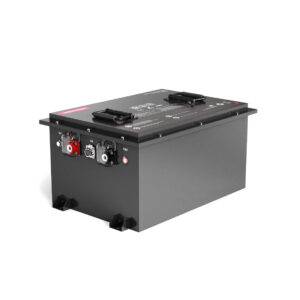 48V 100Ah LiFePO4 Golf Cart Battery
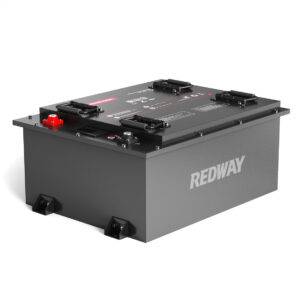 48V 150Ah LiFePO4 Golf Cart Battery (S48150P)
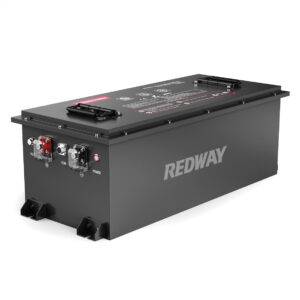 48V 200Ah LiFePO4 Golf Cart Battery (S51200A, Short Size)
Related articles & discussions
- How to Upgrade a Golf Cart Charging System?
- What’s a Reliable 48V Charger for My Golf Cart?
- Are Lithium Batteries a Cost-Effective Upgrade for Golf Carts?
- Can I Use LiFePO4 in a Golf Cart? Exploring the Benefits and Upgrades
- How Can Golf Cart Battery Upgrades Improve Performance and Efficiency?
- When Should You Upgrade Your Forklift for Optimal Performance
- Where Is Golf Cart Lithium Conversion Near Me?
- What You Need to Know About Upgrading Your Golf Cart to Lithium Batteries
- What Is A 48V Golf Cart Battery Charger Used For? Essential Functions and Benefits
- Is a 48V golf cart lithium battery the smartest upgrade for modern fleets?
