




REDWAY BATTERY / KNOWLEDGE
Can you install server rack batteries without a rack cabinet?

Redway Battery Editorial Team
Talk / Battery Q&A
A small office wants two 51.2V rack modules beside a hybrid inverter but hopes to skip buying a full battery cabinet to save cost.
Direct answer: Sometimes, if the modules are mechanically supported, kept indoors in a dry area within their IP and temperature ratings, cabled without strain on terminals, and installed to local electrical and energy-storage rules. A cabinet is not only cosmetics: it provides mounting rails, protection from accidental contact, cable management and often the airflow path the designer assumed. Skipping it without an engineered alternative can fail inspection or damage connectors. When in doubt, use a listed cabinet or frame the supplier approves.
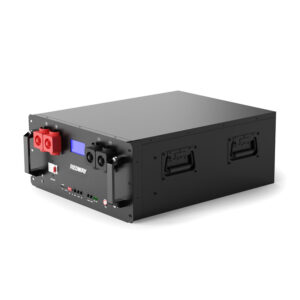
What ‘rack battery’ implies. Modules such as the 51.2V 100Ah 3U, 51.2V 200Ah 5U (10.24 kWh) and 51.2V 50Ah 2U PRO (2.56 kWh) are built to standard rack heights. The 2U PRO page notes an IP21 rating for dry indoor spaces and mentions an optional cabinet—signals that open placement needs care.
Mechanical support. Modules need a level, load-rated shelf or rails. Do not stack by resting weight on the plastic or sheet-metal lid alone unless the datasheet allows stacking. Secure against tip-over in seismic or high-traffic areas.
Electrical and access. Keep terminal covers on, maintain working clearance for service, and strain-relieve cables so plugs are not levers. Follow cable gauge and clearance guidance; see location, clearance and cable gauge.
Environment. Keep modules out of wet rooms and direct sun. Self-heating options still belong in controlled cabinets or rooms; see self-heating in cold cabinets. Telecom-style installs may use outdoor cabinets designed for that duty; see telecom vs standard modules.
Codes. Stationary energy storage installations may fall under local adaptations of documents such as NFPA 855 and the electrical code. AHJ requirements for working space, disconnects and fire considerations can effectively require an enclosure even if the module powers on without one.
When skipping a cabinet is reasonable. A single module on a purpose-built indoor shelf next to the inverter, with covers, labels and a clear disconnect path, in a locked equipment room—after confirming with the supplier and inspector.
When it is not. Public corridors, damp basements, unstable furniture, or multi-module banks that need interlocking and neat busbars. Cabinet cost is usually smaller than a failed inspection or damaged BMS connector.
Parallel banks without a cabinet are especially awkward: master/slave communication cables need strain relief and protection from casual contact. Commissioning parallel modules is easier in a rail cabinet; see commissioning parallel rack batteries.
Insurance and landlord rules. Some commercial leases and insurers expect ESS equipment to sit in listed enclosures. Check those documents early; they can override a DIY shelf plan even when the electrical inspector is flexible.
↳ Replying to Redway Battery Editorial Team
Compare cabinet cost with inspection risk and connector damage risk before deleting it from the bill of materials.
↳ Replying to Procurement perspective
If open-mounting, produce a short method statement covering support, IP rating, clearances, earthing and disconnects for the AHJ.
↳ Replying to Selection/Engineering perspective
Check fixings and cable strain at the first service visit; loose open-frame installs show problems early.
Sometimes, if the modules are mechanically supported, kept indoors in a dry area within their IP and temperature ratings, cabled without strain on terminals, and installed to local electrical and energy-storage rules. A cabinet is not only cosmetics: it provides mounting rails, protection from accidental contact, cable management and often the airflow path the designer assumed. Skipping it without an engineered alternative can fail inspection or damage connectors. When in doubt, use a listed cabinet or frame the supplier approves.
Verify before ordering: Local code and the module installation manual decide whether open mounting is allowed; confirm with Redway and the authority having jurisdiction.
Sources checked: NFPA 855 (overview).
Editorial Q&A for battery selection and operations. Product figures cited from Redway product pages.
Related products
 51.2V 100Ah Server Rack Battery
 51.2V 200Ah 10kWh Server Rack Battery (5U)
 51.2V 50Ah Server Rack Battery PRO
Related articles & discussions
- How Can LiFePO4 Batteries Last Longer in Server Racks?
- What Makes 72V LiFePO4 Batteries Ideal for Server Racks?
- Understanding Redway Battery Server Rack Lithium Solutions: A Complete Guide
- How to Extend Server Rack Battery Life and Maintenance Tips
- How to Extend Server Rack Battery Lifespan?
- Why Select Redway Lithium Server Rack Batteries for High Efficiency?
- How to Choose a 48V 100Ah Server Rack LiFePO4 Battery from a Chinese Factory?
- What Is A Rack Unit Or “U” In Server Mounting?
- Why Use Server Rack Batteries in Data Centers?
- Where To Buy Server Rack Batteries Online?
