




REDWAY BATTERY / KNOWLEDGE
Who needs the 100V 50Ah high-voltage rack system with a BCU?

Redway Battery Editorial Team
Talk / Battery Q&A
A factory wants about 25 kWh of storage for a three-phase hybrid inverter, and the installer must choose between a 51.2V rack bank and a high-voltage stack.
Direct answer: High-voltage stacks suit projects whose inverter has a high-voltage battery input, usually three-phase commercial or larger residential hybrid inverters. Stacking modules in series lowers the current for the same power, which simplifies cabling at 15 to 30 kW. If the inverter is a 48V model, a high-voltage stack cannot be used; a 51.2V rack bank is the right choice.
What the system is. The PM-HV10250-3U module lists 102.4V, 50Ah, 5.12 kWh, 580 × 440 × 132.4 mm, 43 kg, 50A maximum continuous charge and discharge, 25A standard, 60A peak, IP20 for indoor use, RS485/CAN and more than 8,000 cycles at 80% depth of discharge. Three to six modules in series give 307.2V to 614.4V nominal and 15.36 to 30.72 kWh, with working ranges from 240V to 700.8V.
What the BCU does. In series stacks, a battery control unit sits above the modules: it switches the high-voltage output, handles pre-charge, aggregates module data and talks to the inverter. Ask Redway which BCU model ships with the system, what its contactor and fuse ratings are, and which inverter protocols it supports.
Who benefits. At 25 kW, a 51.2V bank would need roughly 500A, while a 512V stack needs about 50A. That difference matters for cable size, switchgear and losses on commercial sites. The page’s system table lists maximum power outputs of 15 to 30 kW for three to six modules; those figures imply currents close to the 50A module maximum, so check continuous versus standard current for your duty.
Inverter compatibility. The page lists inverter brands that also make 48V products, so confirm the exact high-voltage inverter model and its battery voltage window against the stack’s range for your module count.
Alternatives. For homes and small sites with 48V inverters, a 51.2V bank such as the 51.2V 200Ah 5U (10.24 kWh, 100A) or the PowerAll stack fits. See 48V or 51.2V for your inverter.
Safety and codes. Several hundred volts DC needs qualified installers, lockable isolation and arc-flash awareness. Stationary systems are commonly assessed to UL 1973 and installed to NFPA 855 or local equivalents; ask for documents rather than assuming listings. See fire-code questions for indoor racks.
↳ Replying to Redway Battery Editorial Team
Confirm the inverter first; a high-voltage stack bought for a 48V inverter is unusable. Ask for BCU, cabinet and cables in one quote.
↳ Replying to Procurement perspective
Check the inverter’s battery voltage window against the stack range for 3 to 6 modules, and size protection for the system current.
↳ Replying to Selection/Engineering perspective
Use isolation procedures before any work, and review module data via the BCU monthly for cell or temperature imbalance between modules.
High-voltage stacks suit projects whose inverter has a high-voltage battery input, usually three-phase commercial or larger residential hybrid inverters. Stacking modules in series lowers the current for the same power, which simplifies cabling at 15 to 30 kW. If the inverter is a 48V model, a high-voltage stack cannot be used; a 51.2V rack bank is the right choice.
Verify before ordering: BCU model, protection ratings and inverter protocol support are not detailed on the page; obtain them from Redway before design.
Sources checked: NFPA 855 (NFPA).
Editorial Q&A for battery selection and operations. Product figures cited from Redway product pages.
Related products
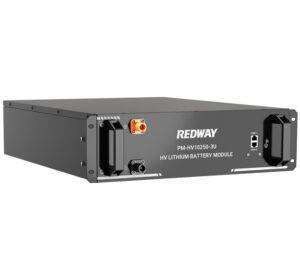 High Voltage Server Rack System 100V 50Ah LiFePO4 Battery (with BCU/MCU)
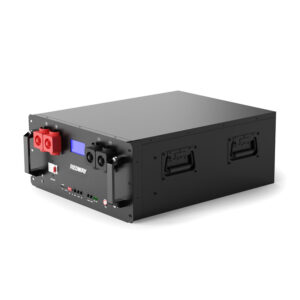 51.2V 200Ah 10kWh Server Rack Battery (5U)
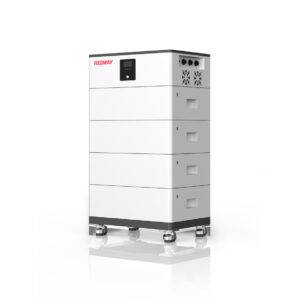 51.2V All-in-One Home-ESS System PowerAll (5kWh/10kWh/16kWh/21kWh/26kWh/32kWh)
Related articles & discussions
- Why the High Voltage Energy Storage Battery – LiFePO4 Battery OEM from Redway is Essential for Modern Energy Solutions
- Why Choose PowerTower High Voltage Energy Storage Batteries from Redway Battery?
- How to Choose the Right Battery Rack for Your Telecom System
- What is a Rack Battery System and How Does it Work?
- How Does ESS RV Battery System Work?
- What Are the Advantages of a Rack Battery System Over Traditional Energy Storage Systems?
- What Are the Key Components of a Rack Battery System?
- How to Choose and Optimize BSL-BOXHEV High Voltage Residential Solar Batteries
- How to Self-Install a Lithium Home ESS System?
- How to Choose the Best Lithium-Ion Rack Battery System OEMs
