REDWAY BATTERY / KNOWLEDGE
Busbars or daisy-chain cables for parallel rack batteries?

Redway Battery Editorial Team
Talk / Battery Q&A
An installer paralleling four 51.2V rack modules asks whether to daisy-chain terminals or build a busbar with equal leads.
Direct answer: Prefer a properly sized busbar or common junction with equal-length, equal-gauge cables from each module, correctly torqued lugs, and protection per the electrical design. Daisy-chaining heavy loads from one module’s terminals to the next often makes the first pack carry more current and hit BMS limits early. Follow the battery parallel instructions and local code for conductor ampacity. Modules such as 100Ah, 150Ah and 200Ah class racks follow the same current-sharing physics.
Why sharing matters. Unequal resistance means unequal current. Packs such as 51.2V 100Ah 3U rack, 51.2V 200Ah 5U rack (about 10.24 kWh) and 51.2V 150Ah 4U rack (about 7.68 kWh) should each see similar path resistance to the inverter.
Commissioning. Match SOC before paralleling and verify currents after; see parallel commissioning and different SOC readings.
Hardware. Use listed busbars or distributor blocks rated for the sum current, with fuses or breakers as the design requires. Cable gauge guidance context: cable gauge and clearance.
Daisy-chain pitfalls. Short jumpers between packs look tidy but create a ladder of voltage drop. If manuals allow limited daisy-chain for communication only, keep power on a star or bus layout.
Torque and inspection. Re-torque after thermal cycles per the schedule; loose lugs look like weak modules.
Inverter side. Closed-loop current limits should reflect the paralleled bank; see CAN/RS485 connection.
Code. Conductor sizing and protection remain under local electrical rules (for example NEC concepts in the US)—use a licensed electrician. Keep serial numbers, photos and settings notes with the site file for later service or claims. Prefer written confirmation when thresholds, warranties, packing modes or inverter settings are involved. Re-check the live Redway product table before the purchase order is issued. Train the people who will operate or receive the equipment, not only the buyer who signed the quote. Schedule a short review after the first weeks of use so habits and settings can be corrected early. Documents such as manuals and test summaries are available on request when not shown on the public page. Keep serial numbers, photos and settings notes with the site file for later service or claims. Prefer written confirmation when thresholds, warranties, packing modes or inverter settings are involved.
↳ Replying to Redway Battery Editorial Team
Design equal-length power leads to a busbar rather than daisy-chaining load current pack-to-pack.
↳ Replying to Procurement perspective
Commission with matched SOC and measure per-module current under load.
↳ Replying to Selection/Engineering perspective
Put torque checks for busbar lugs on the annual inspection list.
Prefer a properly sized busbar or common junction with equal-length, equal-gauge cables from each module, correctly torqued lugs, and protection per the electrical design. Daisy-chaining heavy loads from one module’s terminals to the next often makes the first pack carry more current and hit BMS limits early. Follow the battery parallel instructions and local code for conductor ampacity. Modules such as 100Ah, 150Ah and 200Ah class racks follow the same current-sharing physics.
Verify before ordering: Parallel wiring details follow the module manual and local electrical code; confirm with the installer and Redway parallel limits for the models used.
Sources checked: NFPA 70 (NFPA).
Editorial Q&A for battery selection and operations. Product figures cited from Redway product pages.
Related products
 51.2V 100Ah Server Rack Battery
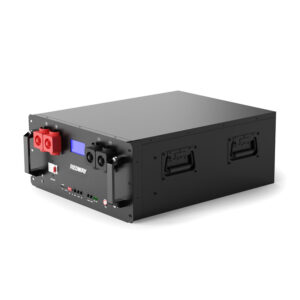 51.2V 200Ah 10kWh Server Rack Battery (5U)
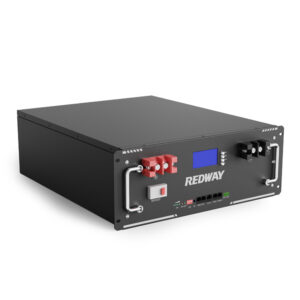 51.2V 150Ah 7kWh Server Rack Battery (4U)
Related articles & discussions
- Can I put 2 lithium batteries in parallel?
- How do you charge a LiFePO4 battery in parallel?
- What Are These Cables That Connect Golf Cart Batteries?
- What Is NEP Trunk Cable End Cap Used For?
- Series vs Parallel Battery Connections: Which Is Best for Your Application?
- What is the best way to connect 2 batteries in parallel?
- How to Safely Parallel 48V Battery Strings?
- Why not put batteries in parallel?
- How to Maximize Battery Connections in Parallel for Optimal Performance
- What Are The Differences Between Series Vs Parallel Batteries?