




REDWAY BATTERY / KNOWLEDGE
What state of charge should you store LiFePO4 golf cart batteries for the off-season?

Redway Battery Editorial Team
Talk / Battery Q&A
A northern club winterizes carts in an unheated barn from November through March.
Direct answer: Store around mid state of charge (about 40–60% unless your Redway manual says otherwise), disconnect drains, keep packs dry within their temperature guidance, and check every 1–2 months. Do not store empty or on lead-acid trickle chargers.
Off-season storage is where many golf cart lithium packs are unintentionally abused—left fully empty on the trailer or kept on a trickle charger designed for lead-acid. For Redway packs such as the 48V 50Ah and 36V 50Ah (S3856) golf cart batteries, storage policy should follow LiFePO4 practice and the pack’s stated environmental windows.
Published cues: the 48V 50Ah page cites 51.2V nominal class operation, lifecycle messaging over 6,000 cycles at 80% DOD, and an operating temperature range from −20°C to 65°C. The 36V 50Ah (S3856) page cites about 2.15 kWh nominal energy (56Ah capacity messaging on that page), the same long cycle-life framing (over 6,000 cycles at 80% DOD / over 15,000 at 60% DOD), suitable for seasonal carts that sit idle.
Recommended storage approach used across LiFePO4 fleet practice: store around a mid state of charge (commonly near 40–60% SOC unless your Redway manual specifies otherwise), disconnect parasitic drains or the cart’s main switch, park in a dry area within the pack’s allowed temperature window, and check voltage every 1–2 months. Avoid storing at 0% after the last autumn round—under-voltage lockout over a long idle period is a frequent spring failure. Avoid leaving incompatible lead-acid maintainers connected; use a LiFePO4-compatible maintainer only if documentation allows float/storage modes for that SKU.
If the cart shares a barn with wide temperature swings, prioritize thermal shelter over “full charge for winter.” A full charge left for months is less ideal than a mid-SOC storage point with occasional top-up. Before first spring use, warm the pack into the allowed charge range, verify open-circuit voltage, then charge with the correct LiFePO4 charger.
Answer: store mid-SOC, electrically isolate, keep dry and within temperature ratings (−20°C to 65°C operating guidance on these pages is not a substitute for a storage manual, but it frames the climate envelope), and never use lead-acid trickle chargers as a winter crutch.
Clubs with large fleets should assign a storage owner and a simple log: date, SOC or voltage, and barn location. Rotating which carts sit on the cold wall of the building reduces repeat freeze stress on the same packs. When spring commissioning finds a locked-out BMS, recover with approved procedures rather than jump-packing, then revisit whether autumn storage SOC was set too low.
↳ Replying to Redway Battery Editorial Team
Include correct LiFePO4 maintainers or scheduled spring chargers in the winterization budget. Saving money with lead-acid tenders creates spring warranty noise.
↳ Replying to Procurement perspective
For fleets in harsh climates, prefer packs with clear BMS low-temp protections and monitoring. Align storage SOP with the −20°C to 65°C style operating windows published on these golf cart pages and any stricter storage notes in the manual.
↳ Replying to Selection/Engineering perspective
Log mid-SOC storage voltage targets per voltage class (36V vs 48V). Schedule a mid-winter inspection. Before first charge in spring, confirm pack temperature is in the allowed charge range.
Store around mid state of charge (about 40–60% unless your Redway manual says otherwise), disconnect drains, keep packs dry within their temperature guidance, and check every 1–2 months. Do not store empty or on lead-acid trickle chargers.
Editorial Q&A for battery selection and operations. Product figures cited from Redway product pages.
Related products
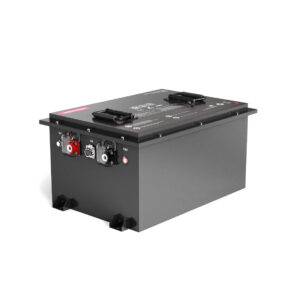 48V 50Ah LiFePO4 Golf Cart Battery
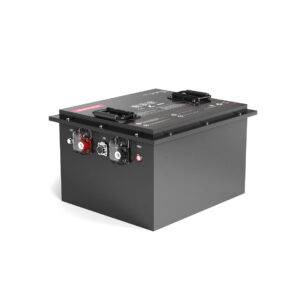 36V 50Ah LiFePO4 Golf Cart Battery (S3856)
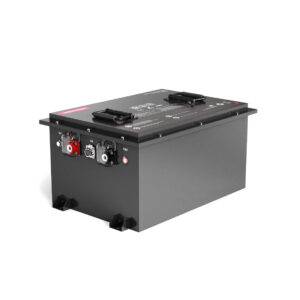 48V 100Ah LiFePO4 Golf Cart Battery
Related articles & discussions
- How Can a Golf Cart Lithium Battery with a Wide Operating Temperature Range Redefine Outdoor Mobility Efficiency?
- Understanding 48V 200Ah LiFePO4 Golf Cart Batteries: Performance, Design, and Real-World Value
- How Do You Maintain Lithium Server Batteries?
- What Are the Key Features of Redway Battery’s Latest Golf Cart Lithium Batteries?
- Golf Cart Battery Market – Global Industry Size, Share, Trends, and Forecast
- How Do Redway Power Battery Systems Deliver Reliable, Long‑Life Energy Storage?
- How Can Maintenance-Free Lithium Batteries Replace Lead-Acid Units in Golf Carts?
- How Can 36V, 48V, and 72V Lithium Golf Cart Batteries Redefine the Future of Electric Mobility?
- Why is a high‑safety lithium iron phosphate (LiFePO₄) battery chemistry the best long‑term solution for demanding applications?
- What Is the Best Zero‑Maintenance Lithium Battery for a Golf Cart Fleet?
