




REDWAY BATTERY / KNOWLEDGE
How do you set the SOC reserve and depth of discharge on a home battery?

Redway Battery Editorial Team
Talk / Battery Q&A
A homeowner with a hybrid inverter and rack battery wants cheaper evening self-consumption but still enough reserve for overnight outages.
Direct answer: Set a minimum SOC reserve for backup, then allow the inverter to cycle only the capacity above that reserve. Depth of discharge is the usable band between the reserve floor and the charge ceiling. Typical practice is to keep a meaningful reserve for outages, avoid sitting at empty or absolute full for long periods, and follow the inverter and battery manuals rather than copying someone else’s numbers. Review the settings seasonally as loads and outage risk change.
Where the settings live. On all-in-one systems such as PowerAll (capacities from about 5.37 kWh to 32.25 kWh), reserve and work-mode limits are usually in the system app or display. On modular racks such as the 51.2V 100Ah and 51.2V 200Ah 5U (10.24 kWh), the hybrid inverter’s battery menu often sets min SOC, backup SOC and charge limits while the BMS enforces hard cut-offs. Confirm closed-loop communication if used; see closed-loop vs open-loop.
Reserve versus DoD. Reserve is the SOC you refuse to use in normal grid-tied cycling so it remains for an outage. DoD is how deep you discharge within the allowed band. A 20% reserve on a 10 kWh bank leaves about 8 kWh for daily cycling if the inverter is allowed to use down to that floor. Write both numbers on the system label so operators do not change one without the other.
Why not empty the pack every day. Hard BMS cut-offs and sudden inverter shutdowns are disruptive. Leaving headroom also reduces time spent at extreme SOC. Cycle-life claims on product pages are tied to stated DoD; see what 80% DoD cycle claims mean.
Backup planning. Size the reserve from critical loads and expected outage length, not from a round number alone. For related planning see sizing a rack bank for daily load. Charge behaviour should match LiFePO4 profiles; see LiFePO4 charge-controller settings.
Charge ceiling. Some owners cap charge below 100% for calendar life; others charge full before storm season. Follow the inverter maker’s LiFePO4 profile and the battery’s charge voltage window, and note that rack modules commonly list wide operating windows such as about -20°C to 60°C on the 5U page—still keep indoor installation within the manual.
Monitoring. Read SOC and alarms from the display or app; see reading SOC, SOH and alarms. If SOC drifts between parallel modules, calibrate after a full charge when the manual allows.
Seasonal review. Raise reserve before storm season; lower it slightly in mild months if bill savings matter more and outage risk is low. Document every change with date and reason.
↳ Replying to Redway Battery Editorial Team
Write the target backup hours into the purchase decision so the bank is not oversized for cycling yet undersized for reserve.
↳ Replying to Procurement perspective
Set min SOC and charge limits in the inverter to sit safely inside the BMS hard limits, then document the values.
↳ Replying to Selection/Engineering perspective
Review reserve monthly against outage history and verify SOC accuracy after firmware or inverter changes.
Set a minimum SOC reserve for backup, then allow the inverter to cycle only the capacity above that reserve. Depth of discharge is the usable band between the reserve floor and the charge ceiling. Typical practice is to keep a meaningful reserve for outages, avoid sitting at empty or absolute full for long periods, and follow the inverter and battery manuals rather than copying someone else’s numbers. Review the settings seasonally as loads and outage risk change.
Verify before ordering: Exact menu names and recommended reserve percentages are inverter- and model-specific; confirm with the inverter manual and Redway for the battery delivered.
Editorial Q&A for battery selection and operations. Product figures cited from Redway product pages.
Related products
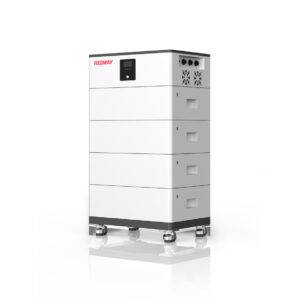 51.2V All-in-One Home-ESS System PowerAll (5kWh/10kWh/16kWh/21kWh/26kWh/32kWh)
 51.2V 100Ah Server Rack Battery
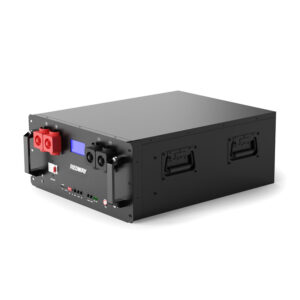 51.2V 200Ah 10kWh Server Rack Battery (5U)
Related articles & discussions
- How Home-Ess Energy Storage Models Transform Energy Management
- HOME-ESS V2G/V2H Charging Station
- Why Lithium-Ion Batteries Are Essential for Home Energy Storage Systems
- What Lithium Home ESS Capacity Suits You?
- How Residential Energy Storage Systems Are Shaping the Future of Energy Independence
- How to Design a Rack Battery System for Your Home or Business
- How to Inventory Mainstream Battery Cell Suppliers for Home Energy Storage Systems (Home-ESS)
- Understanding the Optimal SOC Range for LiFePO4 Batteries
- What’s the Life Expectancy of Lithium Home ESS Batteries?
- A Significant Opportunity for Sonnen All HOME-ESS Businesses
